Practical Considerations for Sallen-Key Filter Using OPA4863

Thread Starter

sreedev27

Joined Jan 16, 2026
36
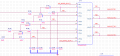
I have designed a 2nd-order Sallen-Key filter with a 3 kHz cutoff frequency using the OPA4863PWR. I wanted to check whether, similar to ideal vs practical integrators, there are any non-ideal effects that need to be considered here.

Specifically, do factors such as finite gain-bandwidth, slew rate, or output loading significantly affect the cutoff frequency or Q of a Sallen-Key filter at 10 kHz? Also, are any additional components or precautions typically required to ensure stable practical behavior?
 

LvW

Joined Jun 13, 2013
1,993
I suppose that you are speaking about a S&K lowpass filter, correct?

In this context, it is interesting - even very important - to know the opamp configuration you are using:
(a) unity gain, (b) gain of two or (c) any other gain.

More than that, in any case you will notice that the maximum attenuation within the stopband will be limited - and the output signal will even rise again for very high frequencies. This is a well-known disadvantage of S&K lowpass filters.

Responsible for this unwanted effect is the feedback capacitor:
For rising frequencies the "normal" signal at the opamps output will continuosly become smaller and - at the same time - an increasing portion of the input signal can reach the opamps output node (with a finite output impedance) directly via the capacitor in the feedback path.
 

Thread Starter

sreedev27

Joined Jan 16, 2026
36
I suppose that you are speaking about a S&K lowpass filter, correct?

In this context, it is interesting - even very important - to know the opamp configuration you are using:
(a) unity gain, (b) gain of two or (c) any other gain.
Yes, its a 2nd order unity S&K lowpass filter.
 

Thread Starter

sreedev27

Joined Jan 16, 2026
36
hi s27,
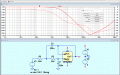
This is a section of your basic circuit, for reference, using LTSpice with the equiv TI model.
Thank you for sharing this section of the basic circuit and the LTSpice simulation using the equivalent TI model. I’ve also run simulations on my side. I mainly wanted to check if there are any precautions or non-ideal effects I should be aware of when moving to practical implementation similar to the considerations we usually take for a practical integrator
 

crutschow

Joined Mar 14, 2008
38,314
The 2-pole filter will also feed through spikes if the input has any fast edges, such as a pulse or square-wave.

You can avoid that rise in gain at high frequencies, and the spikes by simple addition of an RC low-pass filter at the input to the S-K filter, forming a 3-pole filter.
That also gives a faster 18dB/octave rolloff beyond the corner.
Here's a reference for determining the optimum resistor values.

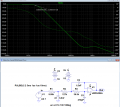
Edit: Below is an example 2kHz 3-dB corner, 3-pole, Bessel S-K circuit:
Note there is no rise in gain at high frequencies due to feedthrough, even with a low-frequency 1MHz op amp.


1772219543015.png
 
Last edited:

Ian0

Joined Aug 7, 2020
13,097
Do you really need a Q higher than 0.5? If not use an RCRC filter, which avoids the problem of a rising hf response.
If the next stage feeds a high impedance input, you can manage without the op-amp.
 

LvW

Joined Jun 13, 2013
1,993
Do you really need a Q higher than 0.5? If not use an RCRC filter, which avoids the problem of a rising hf response.
If the next stage feeds a high impedance input, you can manage without the op-amp.
There are other active filter topologies which do not exhibit the rising hf response (typical for S&K filters only).
 

Ian0

Joined Aug 7, 2020
13,097
There are other active filter topologies which do not exhibit the rising hf response (typical for S&K filters only).
True, there’s MFB, but it has an inverting output and therefore needs either a split supply or the non-inverting inout biassing to half supply, and there’s LC Which would need an absurdly large inductance at that impedance. Then there’s Tow-Thomas and Kerwin–Huelsman–Newcomb both of which need three op-amps.
 

crutschow

Joined Mar 14, 2008
38,314
Because it needs the non-inverting input biassed to the average DC voltage of the signal, and S&K and RCRC don't.
Don't see how that's true.
The non-inverting S&K won't amplify any signal level below zero with only one supply.
The inverting MFB won't amplify any signal level above zero with only one supply.
 

Ian0

Joined Aug 7, 2020
13,097
Don't see how that's true.
The non-inverting S&K won't amplify any signal level below zero with only one supply.
The inverting MFB won't amplify any signal level above zero with only one supply.
Assuming a single supply, with an AC signal that is biassed to the half-supply point.
An MFB filter will need the non-inverting input of the op-amp connected to the half supply point.
A unity-gain S&K can be used with no connection to the half-supply point. The capacitor that goes to earth can go to the negative supply.
S&K filters with gain also be used with no connection the half supply point, provided that the gain is rolled off to unity at DC by putting a capacitor in series with the lower gain resistor, and that capacitor can connect to the negative supply.
 

crutschow

Joined Mar 14, 2008
38,314
Assuming a single supply, with an AC signal that is biassed to the half-supply point.
An MFB filter will need the non-inverting input of the op-amp connected to the half supply point.
A unity-gain S&K can be used with no connection to the half-supply point. The capacitor that goes to earth can go to the negative supply.
S&K filters with gain also be used with no connection the half supply point, provided that the gain is rolled off to unity at DC by putting a capacitor in series with the lower gain resistor, and that capacitor can connect to the negative supply.
Okay.
But I don't see that as a significant difference between the two.
 
Top