Discharging/charging a cap for stopping - sizing & practical considerations?

Thread Starter

meld2020

Joined Mar 14, 2016
44
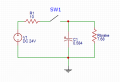
We are utilizing a brake installed on an electric motor to ensure the equipment doesn't move when throttle is not applied -- a pretty simple application using the controller and supplemental electronics that are paired with the system. The brake is more of a parking brake, however, and simply halts the vehicle too abruptly, despite the extremely low travel speeds. In the interest of not shearing anything within the drivetrain components, I want to install a capacitor to drop the voltage from nominal voltage (Vs) down to a known "pull-in" voltage which the brake manufacturer specifies as where the coil begins to push the contact plates away from the driveshaft -- where it all begins -- at about 19V. So:

Vs = 24V = Starting voltage (we are driving, brake is energized/pulled AWAY from shaft)
Vf = 19.2V = Ending voltage (we are stopping/almost stopped, brake is almost completely engaged to the shaft in it's normally STOPPED condition)
R = 7.68 ohms; Calculated as a 75W rated brake, presumably the continuous rating. This may be more complex during brief moments of pull-in. (75 / 24) gives 3.125. (24 / 3.125) = 7.68.
I've decided a 1s stop will be a good initial test, so will be sizing my cap accordingly.

For capacitor discharge functionality, I have:
Vc = Vo * e^(-t / RC)
19.2 = 24 * e^ (-1 / (7.68)(C)
C = ~0.584F

I think the more technical aspect of this revolves around the series resistor for the charging aspect of the circuit. Since max Q is observed at t=0 during charging, or "not braking," I will want to charge as quickly as possible so C does not delay acceleration when the operator opts to drive. I don't really want to use a massive power resistor, so I think the technical analysis may reside in heat dissipation through the series resistor when considering how often this charge cycle may be active, i.e., tapping the accelerator repeatedly when inching the equipment into position. This would not be even close to continuous, so would using a 10W resistor or something with the value I need to relatively quickly charge the cap be acceptable? Thoughts?

Thanks,
 

Attachments

Last edited:

AlbertHall

Joined Jun 4, 2014
12,619
As drawn the maximum voltage across the brake will be about 10V because of the potential divider of R1 and the brake resistance.
Make R1 much lower value, perhaps 0.5Ω or less.
The other problem is that a 0.5F 24V capacitor is going to be pretty big.
 

Hymie

Joined Mar 30, 2018
1,347
We are utilizing a brake installed on an electric motor to ensure the equipment doesn't move when throttle is not applied -- a pretty simple application using the controller and supplemental electronics that are paired with the system. The brake is more of a parking brake, however, and simply halts the vehicle too abruptly, despite the extremely low travel speeds. In the interest of not shearing anything within the drivetrain components, I want to install a capacitor to drop the voltage from nominal voltage (Vs) down to a known "pull-in" voltage which the brake manufacturer specifies as where the coil begins to push the contact plates away from the driveshaft -- where it all begins -- at about 19V. So:

Vs = 24V = Starting voltage (we are driving, brake is energized/pulled AWAY from shaft)
Vf = 19.2V = Ending voltage (we are stopping/almost stopped, brake is almost completely engaged to the shaft in it's normally STOPPED condition)
R = 7.68 ohms; Calculated as a 75W rated brake, presumably the continuous rating. This may be more complex during brief moments of pull-in. (75 / 24) gives 3.125. (24 / 3.125) = 7.68.
I've decided a 1s stop will be a good initial test, so will be sizing my cap accordingly.

For capacitor discharge functionality, I have:
Vc = Vo * e^(-t / RC)
19.2 = 24 * e^ (-1 / (7.68)(C)
C = ~0.584F

I think the more technical aspect of this revolves around the series resistor for the charging aspect of the circuit. Since max Q is observed at t=0 during charging, or "not braking," I will want to charge as quickly as possible so C does not delay acceleration when the operator opts to drive. I don't really want to use a massive power resistor, so I think the technical analysis may reside in heat dissipation through the series resistor when considering how often this charge cycle may be active, i.e., tapping the accelerator repeatedly when inching the equipment into position. This would not be even close to continuous, so would using a 10W resistor or something with the value I need to relatively quickly charge the cap be acceptable? Thoughts?

Thanks,

While you might have calculated a capacitance value whereby the voltages within the circuit will behave as you want – given the required value of the capacitor, a much better solution will be to use electronic control of the applied voltages. That way you will have precise control of when things happen.
 

Thread Starter

meld2020

Joined Mar 14, 2016
44
As drawn the maximum voltage across the brake will be about 10V because of the potential divider of R1 and the brake resistance.
Make R1 much lower value, perhaps 0.5Ω or less.
The other problem is that a 0.5F 24V capacitor is going to be pretty big.
Yes, the "10" in there was a value generated by my schematic builder by default. Forgot to remove it. Thanks
 

Thread Starter

meld2020

Joined Mar 14, 2016
44
If there were a regulator supplying the voltage to this system, would that regulator (20A) potentially overload during the initial cap charge? Isn't this essentially a short for a very brief period?
 

AlbertHall

Joined Jun 4, 2014
12,619
It depends what value you eventually use for R1 and what the regulator does if overloaded. At switch on the circuit will look like just R1 to the supply so that resistor will limit that initial surge.

The regulator might respond to overloads in two different ways.
1. It might just limit the maximum current by momentarily reducing the voltage (going into constant current mode) and in this case it will simply limit the speed at which the capacitor will charge.
2. An overload might shut down the supply completely until the power is cycled. In this case the circuit will fail if the supply is overloaded.
 

Thread Starter

meld2020

Joined Mar 14, 2016
44
It depends what value you eventually use for R1 and what the regulator does if overloaded. At switch on the circuit will look like just R1 to the supply so that resistor will limit that initial surge.

The regulator might respond to overloads in two different ways.
1. It might just limit the maximum current by momentarily reducing the voltage (going into constant current mode) and in this case it will simply limit the speed at which the capacitor will charge.
2. An overload might shut down the supply completely until the power is cycled. In this case the circuit will fail if the supply is overloaded.
The regulator specifies a "max capacitive load" as "unlimited," but I'm not 100% certain that's what this pertains to. Really a shame the brake load is relatively small.
 

shortbus

Joined Sep 30, 2009
10,050
Really a shame the brake load is relatively small.
You mention "brake". What type of brake, a data sheet for it? Seems like maybe the brake needs adjusting, shouldn't be going from full off to full on, if it is intended to be in a "vehicle" brake system.
 

Hymie

Joined Mar 30, 2018
1,347
We are utilizing a brake installed on an electric motor to ensure the equipment doesn't move when throttle is not applied -- a pretty simple application using the controller and supplemental electronics that are paired with the system. The brake is more of a parking brake, however, and simply halts the vehicle too abruptly, despite the extremely low travel speeds. In the interest of not shearing anything within the drivetrain components, I want to install a capacitor to drop the voltage from nominal voltage (Vs) down to a known "pull-in" voltage which the brake manufacturer specifies as where the coil begins to push the contact plates away from the driveshaft -- where it all begins -- at about 19V. So:

Vs = 24V = Starting voltage (we are driving, brake is energized/pulled AWAY from shaft)
Vf = 19.2V = Ending voltage (we are stopping/almost stopped, brake is almost completely engaged to the shaft in it's normally STOPPED condition)
R = 7.68 ohms; Calculated as a 75W rated brake, presumably the continuous rating. This may be more complex during brief moments of pull-in. (75 / 24) gives 3.125. (24 / 3.125) = 7.68.
I've decided a 1s stop will be a good initial test, so will be sizing my cap accordingly.

For capacitor discharge functionality, I have:
Vc = Vo * e^(-t / RC)
19.2 = 24 * e^ (-1 / (7.68)(C)
C = ~0.584F

I think the more technical aspect of this revolves around the series resistor for the charging aspect of the circuit. Since max Q is observed at t=0 during charging, or "not braking," I will want to charge as quickly as possible so C does not delay acceleration when the operator opts to drive. I don't really want to use a massive power resistor, so I think the technical analysis may reside in heat dissipation through the series resistor when considering how often this charge cycle may be active, i.e., tapping the accelerator repeatedly when inching the equipment into position. This would not be even close to continuous, so would using a 10W resistor or something with the value I need to relatively quickly charge the cap be acceptable? Thoughts?

Thanks,
From your posts I’m trying to work out what voltage Vs time you want from your brake control circuit.

From what you say, the electric brake is being applied too abruptly and you want to slow the rate of brake application.

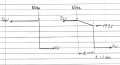
To help my understanding I have attached 2 diagrams, one showing the applied brake circuit voltage dropping from 24V to 0V once the brake is applied.

The second diagram shows what I think you want, when the brake is applied, the voltage reduces over 1 second from 24V to 19.2V, after which it reduces to 0V.

Is my understanding of what you want correct?

Brake control voltages.jpg
 
Top