40 LED Cascaded Decade Counter

Thread Starter

Brotron

Joined Aug 8, 2024
27
I was trying to build an analog counter with chips I had on hand, and then it got out of hand. I breadboarded this circuit and it worked, I built a protoboard from it and it worked until I mounted it and then a section went dark. Now Ive rebuilt the board twice and I cant get it to work at all. Here is the wiring diagram, is there something inherently wrong with this circuit that would make the chips fail? Not shown in the diagram but all the LEDs were grounded with 200 ohms so they were receiving around 15 milliamps. Thanks for any help!
 

Attachments

MrChips

Joined Oct 2, 2009
34,628
For one thing, you are missing proper power-line filtering. Put a 0.1 μF ceramic disc capacitor between +V and GND at every IC. Also add a 10 μF electrolytic capacitor between +V and GND.

Don't leave any input pin not connected to something. You have one CD4017 chip with pin-15 not connected.
 

Thread Starter

Brotron

Joined Aug 8, 2024
27
For one thing, you are missing proper power-line filtering. Put a 0.1 μF ceramic disc capacitor between +V and GND at every IC. Also add a 10 μF electrolytic capacitor between +V and GND.

Don't leave any input pin not connected to something. You have one CD4017 chip with pin-15 not connected.
Thank you, I will filter the ICs and the power. So If I am not using one of the LED output pins, should run that pin to ground? The missing pin 15 is connected pin 11 of the last chip on the board. I accidentally left it off of the diagram.
 

boostbuck

Joined Oct 5, 2017
1,034
Well, if you breadboarded it and worked, and the protoboard worked, then the circuit logic would seem to be ok.

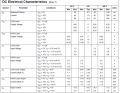
From the datasheet it seems that at 15mA you are exceeding the output current limit, so perhaps the chips are failing due to that.
 

Thread Starter

Brotron

Joined Aug 8, 2024
27
Well, if you breadboarded it and worked, and the protoboard worked, then the circuit logic would seem to be ok.

From the datasheet it seems that at 15mA you are exceeding the output current limit, so perhaps the chips are failing due to that.
Is that the current limit on the 4081B or the 4017BE? I wasn't sure about what kind of current was gong into the 4081B. Only one LED is ever active at a time so I thought the 4017s were good.
 

MrChips

Joined Oct 2, 2009
34,628
Thank you, I will filter the ICs and the power. So If I am not using one of the LED output pins, should run that pin to ground? The missing pin 15 is connected pin 11 of the last chip on the board. I accidentally left it off of the diagram.
Do not connect to unused outputs.
Think of inputs as ears and outputs as mouths. You do not want to gag someone by sticking something in their mouth.
 

AnalogKid

Joined Aug 1, 2013
12,044
So If I am not using one of the LED output pins, should run that pin to ground?
No. That is not what he said. Re-read post #2.

Something true about almost all IC's, all logic IC's, and especially all CMOS logic IC's, is that there should never be unused *inputs* not connected to anything (floating). An unused input should be terminated high or low, depending on the pin function.

ak
 

ElectricSpidey

Joined Dec 2, 2017
3,312
The data sheet shows the current available while maintaining a certain output voltage.

You can get more current from the outputs but with a lower output voltage...the frustrating thing is not being able to get the power ratings of an output pin.

So, for example, at 12-volts VDD you could get 10mA from an output, but the output voltage might be 9 volts, so the power would be .030 watts.

Then you have to consider how long an output is active per second...blah blah blah...etc.

I have gotten 10mA from 4017Bs in many projects. (but not at 6-volts VDD)

If you were actually limited by the current ratings in the datasheet, you wouldn't even be able to drive a transistor into saturation with more than a few mA of collector current.
 
Last edited:

MrChips

Joined Oct 2, 2009
34,628
Oh, one more thing. You cannot use an output to drive an LED and drive another logic circuit at the same time.
You need to buffer the logic signal separately to drive the LED, otherwise the LED is going to disturb the logic output.
 

ElectricSpidey

Joined Dec 2, 2017
3,312
In your second diagram you have your 104 caps in series with the positive power inputs...that's not correct, they should be across the power pins.

It also looks like the 10uf cap is connected wrong.
 
Last edited:
Top