110vac to ~400vdc @ 1ma circuit

Thread Starter

ColonelClarence

Joined Jan 1, 2022
13
I'm looking for a simple 110vac to ~400vdc conversion circuit. This is for an art project and will only be used to drive a 1000ohm/volt voltmeter. Any help would be most appreciated.
 

BobTPH

Joined Jun 5, 2013
11,514
Why would you think you need 400V to drive a voltmeter? A 1000 Ohms per volt meter is actually a 1mA current meter. With a 1000 Ohm resistor in series, you can drive it to full scale with 1 Volt.

Bob
 

Thread Starter

ColonelClarence

Joined Jan 1, 2022
13
The scale on the voltmeter I'm using is 0-750vdc, and it would seem logical that if I want the meter to register 400v, I should supply it with 400v. Thanks for the advice - it will help make the project much easier.
 

Alec_t

Joined Sep 17, 2013
15,117
The scale on the voltmeter I'm using is 0-750vdc
As said above, it is a 1mA basic movement. If full-scale is 750V then the meter has a resistance of 750k, most of which will almost certainly be in the form of a ~750k fixed resistor (or resistor string) wired in series with the movement. If you can carefully take the meter apart and replace the resistor(s) with a lower value (perhaps just remove the resistor altogether), the meter can deflect full-scale with a lower voltage.
 

AnalogKid

Joined Aug 1, 2013
12,126
As said above, it is a 1mA basic movement. If full-scale is 750V then the meter has a resistance of 750k,
Or, maybe, a 2-resistor voltage divider, with the shunt leg in parallel with the coil? Can we confirm this by measuring the meter with an ohmmeter?

ak
 

MisterBill2

Joined Jan 23, 2018
27,504
My suggestions are two: First, get a good magnifier and examine the face of the meter for any notes in very fine print, such as: Internal series resistor xxxohms, or "with external series resistor xxxx ohms"

Next, with a single AAbattery and a resistor of at least 100 ohms, connect the series combination momentarily across the meter, positive to the terminal with the + sign, and see if the pointer moves. Over the years there have been different versions of meters made, some with internal series resistors and others without. There may also be a notation on the back side of the meter, but that is less common.

If you really do need about 400 volts, a voltage tripler should come close, and not be terribly expensive. But that level of DC voltage requires understanding the danger of shocks when working with it.
 

Tonyr1084

Joined Sep 24, 2015
9,744
Welcome to AAC.

What sort of art project are you attempting? With 400VDC comes a tremendous amount of danger. As little as 0.06 amps can be lethal. That's merely 60mA (Milli-Amps). And that's just a number I've heard to be lethal. It could even be lower - I'm admitting I don't know the exact number for a fact. Just repeating something I heard. You'll do well to verify that information for yourself. Preferably not through personal experimentation or experimentation on another living thing.

If you're looking to do one of those wood burning projects where they use high voltage AND CURRENT to burn wood in a lightning sort of pattern - understand they can be quite dangerous. I've sen enough of those video's on YouTube and would never wish to replicate the experiment. However, if I did - then 400VDC would not be a strict requirement. Use of an old automotive coil to generate (change 12VDC into a 3600 volt spark) and burn the wood. But in burning the wood you'll need a water mixed with something else like salt or baking powder - or some other catalyst to cause the current to flow and burn the path.

So that's why I'm asking what your art project is. Help us understand what you want to achieve and someone here will certainly have good advice both on how to accomplish your goal AND how to be safe while doing so.
 

MisterBill2

Joined Jan 23, 2018
27,504
The TS mentioned driving a volt meter to show the voltage. Most of the responses have instantly presumed that it is a standard meter ,one miliamp full scale. I pointed out that the resistor might be internal OR external, and suggested a check to be sure.
An adequate voltage will arc through wood very well, no need for wetting it. Back in grade school I was given a large neon sign transformer, 12000 volts. and 36 miliamps. That voltage would spark through many materials. my favorite trick was drawing an arc through some glass. It seems that at least some kinds of glass are only insulators until they melt, at which time they seem to conduct electricity fairly well. There may be a better explanation but that was what we saw .
 

BobTPH

Joined Jun 5, 2013
11,514
Actually the TS said 1000 Ohms per volt, which is a 1 mA meter.

I agree that the meter may or may have a resistor installed.

Bob
 

Tonyr1084

Joined Sep 24, 2015
9,744
Actually I remember getting lots of weird things in school. My favorite class was "Electronics 101" Mr. Graves (may he rest in peace - natural causes). Man was terrified of electricity. Every time he'd plug something in I'd snap a pair of pliers on the desk top making a sudden and feared "POP". He cursed my name many times. But what a great guy he was.
 

MisterBill2

Joined Jan 23, 2018
27,504
Who were your parents that they allowed this?
I was not a stupid little kid who did not understand, but did random things anyway. By third grade I was building some very simple relay logic with old 110 volt retired industrial relays. Never got hocked, never popped fuses. The circuit analysis was rather simple at the time. And it was not until fifth grade that I got that transformer.
The easy way to avoid getting shocks is first, to know what you are doing, and second, to never touch he bare part of a live wire.
 

MisterBill2

Joined Jan 23, 2018
27,504
A valid point, "mod".
Pot #11 points out that it seems to be a 1 mA meter. In that case the project gets much simpler. Use either a battery and an adjustable resistor or a battery and a small, low voltage and low power, wall wart, if the "ART piece" can tolerate needing to be plugged in. Depending on the supply voltage it might work out to use a 5000 ohm potentiometer to set the meter reading. That should be plenty if the supply is a single "D" cell, but if the supply is a 5 or 6 volt wall wart then 10,000 ohms will be a better choice. Either is far simpler than a 400 volt source, and also less expensive, probably.
 

MisterBill2

Joined Jan 23, 2018
27,504
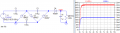
THat looks a lot like the voltage tripler I suggested earlier. You do need to put a 100 ohm resistor in series withC1, because there will be an inrush on the first cycle charging C4.
And I still suggest that you do the check with a battery and resistor first, in case the meter was using an external resistor. That supply will fry a meter that does not have a resistor.
 

ericgibbs

Joined Jan 29, 2010
21,439
hi CC.
I would advise you not to build that circuit in post# 17, it is a non isolated supply. Potentially lethal.

Did you check inside the meter unit for any added resistors.?
E
 
Top