Convert KitchenAid Mixer from 110VAC-220VAC

Thread Starter

Abe2023

Joined Jun 29, 2023
9
Hello everyone, this is my first time posting. My background is industrial automation, so this is something that is not my expertise, so please bear with me.

I have a KitchenAid Mixer (#4KSM6573CCU) from the US that I'm trying to convert to work in Europe. This model is quite unique because it uses a DC Motor unlike the regular models.

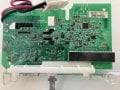
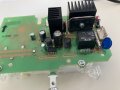
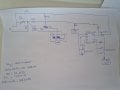
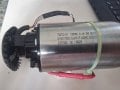
It has one board, the DC motor (120VDC, 2.1A), and a sensor (maybe a hall-effect). I traced the AC part of the PCB connections as best as I could (attached image), and from what I can see, I would only need to replace the MOV (S14K175, 175A RMS), and a capacitor (22uF, rated 250V), I really don't think there's anything else that needs to be done.

The board uses an LNK304PN to convert AC/DC for the MCU circuit which is good for 85-265VAC. From what I traced, they mostly built the PCB right out of the recommended PCB layout from the LNK304PN spec sheet.

For motor controls they use bridge rectifier G2006-BP for the DC motor (preceded by a Triac T2050H-6T and Relay ORWH-SH-112HM3F) which also looks fine to me. I'll have to look again at the relay because the contacts are rated for 10A at 277VAC, but 15A at 125VAC.

I'd appreciate anyone's help and confirmation if replacing those two components should be good enough. Thank you.
 

Attachments

Last edited:

MaxHeadRoom

Joined Jul 18, 2013
30,562
Are you sure it is not a Universal motor?
If the fields are copper wound and not PM, then the odds are it is.
Another clue is if wound fields and are in series with the armature.
Replacing the components you mention does not enable 230v operation?
 

Thread Starter

Abe2023

Joined Jun 29, 2023
9
Are you sure it is not a Universal motor?
If the fields are copper wound and not PM, then the odds are it is.
Another clue is if wound fields and are in series with the armature.
Replacing the components you mention does not enable 230v operation?
I think it's a brushed DC motor. But I'm not really concerned about that side of the circuit. I'm more worried about the MCU part which is the most sensitive.

I haven't tried replacing the components yet. I'm not fully confident yet. I can easily replace through-hole components, but if I blow something SMD, I don't have the tools to repair it.
 

Attachments

Papabravo

Joined Feb 24, 2006
22,058
I think it's a brushed DC motor. But I'm not really concerned about that side of the circuit. I'm more worried about the MCU part which is the most sensitive.

I haven't tried replacing the components yet. I'm not fully confident yet. I can easily replace through-hole components, but if I blow something SMD, I don't have the tools to repair it.
Your last sentence revealed a really good reason why you should not attempt this. Take your time, acquires the tools and the expertise to do this and then attempt it.
 

Thread Starter

Abe2023

Joined Jun 29, 2023
9
Where is the fun in that? Haha. I dont really want to use a transformer in the kitchen, I'd rather just get another mixer. I thought it would be a fun project and a learning experience. I was hoping to get someone who can help me tackle this. I mean if it breaks in the process, its not a big deal.
 

Thread Starter

Abe2023

Joined Jun 29, 2023
9
Where is the fun in that? Haha. I dont really want to use a transformer in the kitchen, I'd rather just get another mixer. I thought it would be a fun project and a learning experience. I was hoping to get someone who can help me tackle this. I mean if it breaks in the process, its not a big deal.
If it breaks, maybe next project is building something from scratch.
 

DickCappels

Joined Aug 21, 2008
10,661
When I moved from the USA to S.E. Asia I left all of my 120 volt appliances behind, except for an electric razor, whim has only lasted a couple of months until I accidentally tried to charge it from 220v.

leave the low voltage stuff behind and enjoy those products designed for your environment. It is more complicated than you think. Even an expensive Kitchen Aid mixer is probably not worth the hassle unless you have no cash
 

Papabravo

Joined Feb 24, 2006
22,058
When I moved from the USA to S.E. Asia I left all of my 120 volt appliances behind, except for an electric razor, whim has only lasted a couple of months until I accidentally tried to charge it from 220v.

leave the low voltage stuff behind and enjoy those products designed for your environment. It is more complicated than you think. Even an expensive Kitchen Aid mixer is probably not worth the hassle unless you have no cash
Well -- assuming you have no cash, I would argue that you have more immediate problems than converting a mixer to work in an environment it was not designed to work in.
 

nsaspook

Joined Aug 27, 2009
16,252
Where is the fun in that? Haha. I dont really want to use a transformer in the kitchen, I'd rather just get another mixer. I thought it would be a fun project and a learning experience. I was hoping to get someone who can help me tackle this. I mean if it breaks in the process, its not a big deal.
Fun, plug it directly into 220VAC and see what happens if you don't really care. :eek: I've lived in SE Asia too with a mixture of 110 and 220 sockets all over the house, all using the same US style plugs. We all bought US appliances on base for use in town. I just used transformers because I had other 'fun' things to do with electronics. When I left, I sold all of my transformers to the next guy.
 

Thread Starter

Abe2023

Joined Jun 29, 2023
9
I got rid of all my appliances but since I knew this thing had a DC motor, I thought there would be a good chance to get it working. I understand this is more complicated than originally anticipated but I really would like to learn. Money, time, value, etc.. aside, if I want to move forward with this, what is the best approach? should I try to model it in SPICE? should I take out parts of the circuit and test? If you shine a light behind the board, you can get a good idea what the PCB connections are.
 

nsaspook

Joined Aug 27, 2009
16,252
I got rid of all my appliances but since I knew this thing had a DC motor, I thought there would be a good chance to get it working. I understand this is more complicated than originally anticipated but I really would like to learn. Money, time, value, etc.. aside, if I want to move forward with this, what is the best approach? should I try to model it in SPICE? should I take out parts of the circuit and test? If you shine a light behind the board, you can get a good idea what the PCB connections are.
Not impossible but it's like looking at an X-ray and deciding where to cut but you're not a surgeon, you've only fixed and set broken bones. If it's a brushed 120 DC motor how to you plan on modifying the Triac control circuit to limit the max DC motor voltage to 120 instead of twice that?
 

Ian0

Joined Aug 7, 2020
13,097
I have a USA spec Kitchen aid, and I run it off my 110V power tool transformer.
It was cheaper to buy it from USA, pay the shipping, VAT and import duty AND buy the power tool transformer than buy a Kitchen Aid mixer in Britain.
 

Thread Starter

Abe2023

Joined Jun 29, 2023
9
Not impossible but it's like looking at an X-ray and deciding where to cut but you're not a surgeon, you've only fixed and set broken bones. If it's a brushed 120 DC motor how to you plan on modifying the Triac control circuit to limit the max DC motor voltage to 120 instead of twice that?
Thank you. That's exactly the kind of help I'm looking for. I forgot about the speed control, so I'll consider that as well. Worse case scenario if I figure out the AC/DC for the MCU, I won't set the speed higher than 50%.

I'm not looking for someone to work out the entire solution for me, just some guidance. Yes, I don't have the full knowledge to tackle this, but that's why I'm here. Its not about saving money on a mixer.

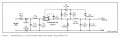
I found out that Power Integrations (manufacturer for the LNK304PN) has a tool called PI Expert, that can generate a power conversion solution. The board seems to follow the example circuit from the spec sheet fairly closely (attached). Next, I'll explore the PI Expert tool and tinker with the component values until I get an acceptable ripple for the MCU. I'll also trace the PCB connections even further and probe the components to fill in some blanks.
 

Attachments

Ya’akov

Joined Jan 27, 2019
10,226
Thanks Ya'akov. It is a KitchenAid Mixer (#4KSM6573CCU). AvE did a good video of the teardown:
I was curious to see if I could find a source for the control module as a replacement. Ironically, the only one I could find was from a UK site, but was for 110V.

If you do modify the board, I would strongly recommend you not count on the idea that you only adjust the speed halfway and instead replace the potentiometer so you (or someone else) can’t accidentally exceed that.

On the other hand, you mentioned a possible hall effect sensor. It it turns out to be a closed loop arrangement, you might find that everything works fine but the duty cycle for the motor power is reduced to match the sensor’s feedback.
 

Thread Starter

Abe2023

Joined Jun 29, 2023
9
I was curious to see if I could find a source for the control module as a replacement. Ironically, the only one I could find was from a UK site, but was for 110V.

If you do modify the board, I would strongly recommend you not count on the idea that you only adjust the speed halfway and instead replace the potentiometer so you (or someone else) can’t accidentally exceed that.

On the other hand, you mentioned a possible hall effect sensor. It it turns out to be a closed loop arrangement, you might find that everything works fine but the duty cycle for the motor power is reduced to match the sensor’s feedback.
Very good point. I saw on the board the connection for the sensor is labelled HES, which makes it more likely to be a hall effect and a closed loop system. That actually adds another unknown into the project because the MCU could be programmed to fault out if the speed is completely different than expected.
 

Ya’akov

Joined Jan 27, 2019
10,226
Very good point. I saw on the board the connection for the sensor is labelled HES, which makes it more likely to be a hall effect and a closed loop system. That actually adds another unknown into the project because the MCU could be programmed to fault out if the speed is completely different than expected.
I hope that it is, in fact, closed loop and the speed regulation doesn’t care if the duty cycle is halved.
 
Top