Thread Starter

PRIYA_______

Joined Jun 11, 2024
6
Given a zener of 4.7V with a knee current of 1mA and a maximum power dissipation of 1W . Design a regulated power supply to deliver a load current ranging from 0 to 50 mA. Given an AC Supply of 230 Vrms , 50 Hz . Design an auxiliary Circuit which gives an output ranging from 8 to 8.4V

i saw this qn in a book
Can anyone tell how to simulate this in lt spice
 

Papabravo

Joined Feb 24, 2006
22,058
You should start with a basic schematic involving a transformer, a bridge rectifier, and filter capacitor. Then you can add circuits to control the current and the Zener diode to make a very crude regulator. Can you do that much to get started?
 

WBahn

Joined Mar 31, 2012
32,702
In a word... no.

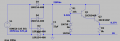
What is your load? R1?

Where are you coming up with a DC voltage source of 7 V?

Have you looked at the specs of the 1N750 and compared it to the information in your question?

This looks like a homework assignment. Is it?

Even if it's not, you will get the most out of the discussion if it is treated like it is.

Your post talks about two distinct circuits, a regulated power supply and an auxiliary circuit. Please describe the relationship between the two. Is the auxiliary circuit intended to take the AC input and get it down to a DC voltage that feeds the regulated supply?

You don't say what the output of the regulated supply is supposed to be? 4.7 V? Or is the 8 V to 8.4 V the desired output?

What components are you allowed to use? Transistors? Opamps? Transformers?

Don't worry about simulating it until you have at least a shot at a circuit that might do something close to what you want. Otherwise, you will end up doing design-by-happening -- throwing stuff at the simulator and making essentially random changes, hoping that, by some miracle, at some point something will just happen to work.
 

MrAl

Joined Jun 17, 2014
13,667
Given a zener of 4.7V with a knee current of 1mA and a maximum power dissipation of 1W . Design a regulated power supply to deliver a load current ranging from 0 to 50 mA. Given an AC Supply of 230 Vrms , 50 Hz . Design an auxiliary Circuit which gives an output ranging from 8 to 8.4V

i saw this qn in a book
Can anyone tell how to simulate this in lt spice
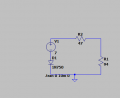
Is that output 8v to 8.4v going to be AC or DC?
What other parts are you allowed to use?
 

ronsimpson

Joined Oct 7, 2019
4,645
It is unclear what we should do but here is a terrible way to do it using a 4.7V Zener diode
Starting on the left side. V1 is the power line 230Vrms, 325Vpk 50hz.
D1-D4 makes DC. 220V with a little ripple.
C1 stores energy.
R1 limits the diode current to 10mA, (about)
I used two diodes to get 9.36V. 4.7+4.7=9.4v Too much voltage.
Q1 could have done the job by itself but I needed to lose two diode drops to get to 9.3V. Base to Emitter voltage drops the output voltage.

1750778957015.png
I think the book is wrong. They want you to make a 4.7V supply. This is what you do to understand Zener diodes. This question is in nearly every book on how diodes and transistors. (Vout=4.7V)
Remove R5. Change R1 so 51mA flows or slightly more flows in R1. Remove Q1 & Q2.
 

sparky 1

Joined Nov 3, 2018
1,218
The attempt was ok for diodes but a zener diode is said to be reverse biased. The current limiting resistor value is found using R = V/I
For zener diodes your assignment is very good, It is important to understand how current limiting effects the circuit.

A Good demonstration is when the Effect and Concept are understood and can be replicated sucessfully!

 
Last edited:

WBahn

Joined Mar 31, 2012
32,702
It is unclear what we should do but here is a terrible way to do it using a 4.7V Zener diode
Starting on the left side. V1 is the power line 230Vrms, 325Vpk 50hz.
D1-D4 makes DC. 220V with a little ripple.
C1 stores energy.
R1 limits the diode current to 10mA, (about)
I used two diodes to get 9.36V. 4.7+4.7=9.4v Too much voltage.
Q1 could have done the job by itself but I needed to lose two diode drops to get to 9.3V. Base to Emitter voltage drops the output voltage.

View attachment 351668
I think the book is wrong. They want you to make a 4.7V supply. This is what you do to understand Zener diodes. This question is in nearly every book on how diodes and transistors. (Vout=4.7V)
Remove R5. Change R1 so 51mA flows or slightly more flows in R1. Remove Q1 & Q2.
Let's avoid suggesting transformerless power supply circuits to folks that are just learning fundamentals. This circuit could very easily get the TS tangled up with lethal voltages/currents.
 

MrAl

Joined Jun 17, 2014
13,667
It is unclear what we should do but here is a terrible way to do it using a 4.7V Zener diode
Starting on the left side. V1 is the power line 230Vrms, 325Vpk 50hz.
D1-D4 makes DC. 220V with a little ripple.
C1 stores energy.
R1 limits the diode current to 10mA, (about)
I used two diodes to get 9.36V. 4.7+4.7=9.4v Too much voltage.
Q1 could have done the job by itself but I needed to lose two diode drops to get to 9.3V. Base to Emitter voltage drops the output voltage.

View attachment 351668
I think the book is wrong. They want you to make a 4.7V supply. This is what you do to understand Zener diodes. This question is in nearly every book on how diodes and transistors. (Vout=4.7V)
Remove R5. Change R1 so 51mA flows or slightly more flows in R1. Remove Q1 & Q2.
Hello,

This is not a direct answer to your question so this may or may not interest you. If you find it objectional please ignore this post.

I don't believe that dissipating 11 watts is a good idea when we are only supplying less than 1/2 of a watt (0.5 watts). That's a terrible efficiency.
This is an application where a buck circuit would really shine. An isolated buck circuit would be more safe as well.
 
Last edited:

WBahn

Joined Mar 31, 2012
32,702
Hi,

I don't believe that dissipating 11 watts is a good idea when we are only supplying less than 1/2 of a watt (0.5 watts). That's a terrible efficiency.
This is an application where a buck circuit would really shine. An isolated buck circuit would be more safe as well.
So... a basic circuits course should expect students to design an isolated buck circuit because a simple Zener regulator based on the few concepts they have been exposed to thus far would be terribly inefficient?
 

MrAl

Joined Jun 17, 2014
13,667
So... a basic circuits course should expect students to design an isolated buck circuit because a simple Zener regulator based on the few concepts they have been exposed to thus far would be terribly inefficient?
Hi,

I didn't see any reference to any course level related information; I just saw a question about how to simulate a circuit in software.
I could guess that this was a beginner sort of inquiry, but then again I would think efficiency would be a good concept for them to consider even so.
The design of a buck circuit would probably be above the desired level here but then maybe it would lead to something better, or simply the purchase of a ready-made circuit board or even a completed power supply that incorporates a switching regulator. That's if efficiency really did become an issue.

I like to give a little more information on a topic and I can expect it to be either accepted or rejected at any time depending on what the individual cares to look into.
Next, we have to get into the quantum effects we might see in the workings of a typical switching regulator (ha ha) :)
 

WBahn

Joined Mar 31, 2012
32,702
Hi,

I didn't see any reference to any course level related information; I just saw a question about how to simulate a circuit in software.
In the first post (posted in Homework Help), the TS states: "i saw this qn in a book",

I could guess that this was a beginner sort of inquiry, but then again I would think efficiency would be a good concept for them to consider even so.
Baby steps. The day you learned about resistors, did you also determine what size heat sink was needed? Or what the impact of the tolerance was?

The design of a buck circuit would probably be above the desired level here but then maybe it would lead to something better, or simply the purchase of a ready-made circuit board or even a completed power supply that incorporates a switching regulator. That's if efficiency really did become an issue.
None of which would help the TS answer the question in the book that they are asking about or simulate the resulting circuit.
 

MrAl

Joined Jun 17, 2014
13,667
In the first post (posted in Homework Help), the TS states: "i saw this qn in a book",


Baby steps. The day you learned about resistors, did you also determine what size heat sink was needed? Or what the impact of the tolerance was?


None of which would help the TS answer the question in the book that they are asking about or simulate the resulting circuit.
Not sure what you are trying to prove here.
 

BobTPH

Joined Jun 5, 2013
11,463
Not sure what you are trying to prove here.
Maybe I can help. The TS’s question was about answering a specific question from a textbook, which asked fir a zener regulator circuit. Proposing a buck converter does not help answer the book exercise.
 

MrAl

Joined Jun 17, 2014
13,667
Maybe I can help. The TS’s question was about answering a specific question from a textbook, which asked fir a zener regulator circuit. Proposing a buck converter does not help answer the book exercise.
Oh ok, so you are saying it is not good to give additional suggestions that could easily apply to a given application.

I have to disagree here because it depends on what we might consider as "helping". If someone asks a question and there is a strongly related topic, it makes sense to mention it although without extreme detail perhaps.
The question might be a question that was found in a book, but that question seeks to answer something that pertains to an application. Knowing the best way to handle the application would extend the knowledge that was sought in the first place.

What it really depends on is not arbitrary opinion, it just depends on the opinion of the person who asked. If they have an open mind they will appreciate alternate solutions. I don't think it would be a good idea to get carried away with the alternate solutions though and write a whole chapter on any of that right in the thread. Limit the suggestions and see if the asker likes the new ideas or does not like them. It's that simple. If they like them, they might want to hear more or even start a new thread. If they don't like them, they might complain :)

This issue comes up from time to time on forums like this one. The result is either the asker feels like they are being given wayyyy too much information, or they appreciate the additional suggestions.

If you really, really think it's that bad, then I can remove the additional suggestions.
 

WBahn

Joined Mar 31, 2012
32,702
Oh ok, so you are saying it is not good to give additional suggestions that could easily apply to a given application.

I have to disagree here because it depends on what we might consider as "helping". If someone asks a question and there is a strongly related topic, it makes sense to mention it although without extreme detail perhaps.
The question might be a question that was found in a book, but that question seeks to answer something that pertains to an application. Knowing the best way to handle the application would extend the knowledge that was sought in the first place.

What it really depends on is not arbitrary opinion, it just depends on the opinion of the person who asked. If they have an open mind they will appreciate alternate solutions. I don't think it would be a good idea to get carried away with the alternate solutions though and write a whole chapter on any of that right in the thread. Limit the suggestions and see if the asker likes the new ideas or does not like them. It's that simple. If they like them, they might want to hear more or even start a new thread. If they don't like them, they might complain :)

This issue comes up from time to time on forums like this one. The result is either the asker feels like they are being given wayyyy too much information, or they appreciate the additional suggestions.

If you really, really think it's that bad, then I can remove the additional suggestions.
The problem, particularly with people new to a topic, is causing information overload. The student (whether they are a formal student or casual beginner) hasn't learned enough to know what they can and can't discount right now or what's critical and what's a subtle point for future optimization. As a result, give them much more information than they need right now, and they tend to get lost in the extraneous stuff and don't get the fundamentals down. This is true in virtually every learning environment out there. When you teach someone to drive, do you talk about how to recover from skids the first time they are behind the wheel in a parking lot and you show them how to turn a corner? When a third grader is learning division for the first time, do you explain to them how it relates to modular residues? When students are first learning Newton's laws of motion, friction isn't mentioned. When a student pilot is making their first takeoff, does the instructor tell them about all of the different things they have to do to take off from a soft field or a short field or with a crosswind? No. It's information overload. Having to process too much stuff can completely interfere with being able to learn the one or two things that you are supposed to be learning right now.

A real good example of that was then I started my training for my instrument rating. On that first flight, all I had to do was fly the airplane according to the instructor's directions. I didn't have to decide what heading to fly or what altitude -- he told me as we went. I didn't have to know anything about the approach procedure we were flying -- he told me what to do as we went. I didn't have to tune the radio or talk to the controller or even listen to them -- he handled all of the communications. Akk U had to do was maneuver the airplane under the hood based solely on the direction indicator, altimeter, and artificial horizon. Nothing else. Even so, at the end of an hour I was drenched in sweat and had barely been able to keep the shiny side up. After a couple of flights,. I could fly the airplane under those conditions, and so now he added one thing -- I had to tune the radios to the requested frequencies. Nothing else was added. I still didn't have to listen or talk to the controller. Yet just that additional amount of cognitive load made it so that I couldn't do that and fly the airplane at the same time. After I got so that I could do that, now I had to listen to controller and do what they told me -- and I couldn't fly the plane well again. The training was designed to force you operate at the very edge of what you could handle by steadily giving you just a bit more to do each time and taking you over the edge so that you had to fight your way back. Imagine if I had been trying to learn those skills with an instructor that insisted on throwing all kinds of information that I would eventually need to know, but that wasn't relevant to the specific tasks at hand.

Another example was when I started training for competitive shooting a few months ago. After each drill, the instructor (who was once ranked #12 in the world) only told me my total time. He didn't even mention my draw times, my splits, my reload times, or my transition times. But I heard him telling others their times on some or all of those. That's because he knew that presenting me with all of that information would overload me and prevent me from focusing on what I needed to focus on right then. The one time I asked him what all of my times were, he simply said, "Don't worry about that yet. They are what they are." At the beginning, I had one job to learn, and that was to be able to put the right number of holes in each target and to do so safely. My focus needed to be on keeping the gun pointed down range (not breaking the 180° line) and keeping my finger out of the trigger guard unless I was engaging a target -- and it's surprisingly easy to forget that and have your finger on the trigger as you move from one position to another or as you reload. He didn't give me any additional information to keep in mind for future application until I mastered those skills. As I got better, he started telling me what my reload times were and, a bit later, how to improve my reload times. After a while longer, he added my draw times and, again after a bit of time, started telling me how to improve them. Then the same for my splits and, finally, my transition times. Now he is starting to tell me how they work together and ways to optimize them all by knowing when to trade one off for another in different scenarios. In listening to him talk to other shooters, I know that there are still things that he has yet to even mention to me that they exist -- he'll do that when he decides I am ready to deal with them without it getting in they way of what I should be learning at the moment.
 

MrAl

Joined Jun 17, 2014
13,667
The problem, particularly with people new to a topic, is causing information overload. The student (whether they are a formal student or casual beginner) hasn't learned enough to know what they can and can't discount right now or what's critical and what's a subtle point for future optimization. As a result, give them much more information than they need right now, and they tend to get lost in the extraneous stuff and don't get the fundamentals down. This is true in virtually every learning environment out there. When you teach someone to drive, do you talk about how to recover from skids the first time they are behind the wheel in a parking lot and you show them how to turn a corner? When a third grader is learning division for the first time, do you explain to them how it relates to modular residues? When students are first learning Newton's laws of motion, friction isn't mentioned. When a student pilot is making their first takeoff, does the instructor tell them about all of the different things they have to do to take off from a soft field or a short field or with a crosswind? No. It's information overload. Having to process too much stuff can completely interfere with being able to learn the one or two things that you are supposed to be learning right now.

A real good example of that was then I started my training for my instrument rating. On that first flight, all I had to do was fly the airplane according to the instructor's directions. I didn't have to decide what heading to fly or what altitude -- he told me as we went. I didn't have to know anything about the approach procedure we were flying -- he told me what to do as we went. I didn't have to tune the radio or talk to the controller or even listen to them -- he handled all of the communications. Akk U had to do was maneuver the airplane under the hood based solely on the direction indicator, altimeter, and artificial horizon. Nothing else. Even so, at the end of an hour I was drenched in sweat and had barely been able to keep the shiny side up. After a couple of flights,. I could fly the airplane under those conditions, and so now he added one thing -- I had to tune the radios to the requested frequencies. Nothing else was added. I still didn't have to listen or talk to the controller. Yet just that additional amount of cognitive load made it so that I couldn't do that and fly the airplane at the same time. After I got so that I could do that, now I had to listen to controller and do what they told me -- and I couldn't fly the plane well again. The training was designed to force you operate at the very edge of what you could handle by steadily giving you just a bit more to do each time and taking you over the edge so that you had to fight your way back. Imagine if I had been trying to learn those skills with an instructor that insisted on throwing all kinds of information that I would eventually need to know, but that wasn't relevant to the specific tasks at hand.

Another example was when I started training for competitive shooting a few months ago. After each drill, the instructor (who was once ranked #12 in the world) only told me my total time. He didn't even mention my draw times, my splits, my reload times, or my transition times. But I heard him telling others their times on some or all of those. That's because he knew that presenting me with all of that information would overload me and prevent me from focusing on what I needed to focus on right then. The one time I asked him what all of my times were, he simply said, "Don't worry about that yet. They are what they are." At the beginning, I had one job to learn, and that was to be able to put the right number of holes in each target and to do so safely. My focus needed to be on keeping the gun pointed down range (not breaking the 180° line) and keeping my finger out of the trigger guard unless I was engaging a target -- and it's surprisingly easy to forget that and have your finger on the trigger as you move from one position to another or as you reload. He didn't give me any additional information to keep in mind for future application until I mastered those skills. As I got better, he started telling me what my reload times were and, a bit later, how to improve my reload times. After a while longer, he added my draw times and, again after a bit of time, started telling me how to improve them. Then the same for my splits and, finally, my transition times. Now he is starting to tell me how they work together and ways to optimize them all by knowing when to trade one off for another in different scenarios. In listening to him talk to other shooters, I know that there are still things that he has yet to even mention to me that they exist -- he'll do that when he decides I am ready to deal with them without it getting in they way of what I should be learning at the moment.
Hello again,

Thanks for that complete explanation of your point of view I noticed that too sometimes. Pretty interesting too.
In response, I added a conditional clause to my original post so the reader can get a chance to choose to ignore it completely if so desired. I hope that helps to assuage your concern.

What struck me as a requirement for additional information was the incredibly bad efficiency that is never seen in real life. Approximating, 11 watts in and 0.5 watts out works out to around 5 percent efficiency which would be a really, really, really terrible design. I guess I am used to working so much with power supplies in industry and at home and efficiency is a such a major issue, especially these days with increasingly high energy demands throughout the world and low supplies. If it was 1 watt in and 0.5 watt out, even though that's pretty bad too, I probably would not have jumped in so adamantly.
 

BobTPH

Joined Jun 5, 2013
11,463
Approximating, 11 watts in and 0.5 watts out works out to around 5 percent efficiency which would be a really, really, really terrible design.
What input voltage are you assuming?

I believe the problem is implying the input to the Zener regulator is the output of the second part of the question, i.e. 8 to 8.4V. But if that is the case, it is very badly stated.

If he actually meant the input should be 220VAC rectified and smoothed (311V) the question is ridiculous. I don’t think he meant that.
 

MrAl

Joined Jun 17, 2014
13,667
What input voltage are you assuming?

I believe the problem is implying the input to the Zener regulator is the output of the second part of the question, i.e. 8 to 8.4V. But if that is the case, it is very badly stated.

If he actually meant the input should be 220VAC rectified and smoothed (311V) the question is ridiculous. I don’t think he meant that.
Hi,

From post #6.

Now that I look over the other posts again from the question asker, it appears that none of the original statements make any sense.
All we can do now is wait and see if any of it is ever clarified.
 

WBahn

Joined Mar 31, 2012
32,702
Hello again,

Thanks for that complete explanation of your point of view I noticed that too sometimes. Pretty interesting too.
In response, I added a conditional clause to my original post so the reader can get a chance to choose to ignore it completely if so desired. I hope that helps to assuage your concern.

What struck me as a requirement for additional information was the incredibly bad efficiency that is never seen in real life. Approximating, 11 watts in and 0.5 watts out works out to around 5 percent efficiency which would be a really, really, really terrible design. I guess I am used to working so much with power supplies in industry and at home and efficiency is a such a major issue, especially these days with increasingly high energy demands throughout the world and low supplies. If it was 1 watt in and 0.5 watt out, even though that's pretty bad too, I probably would not have jumped in so adamantly.
The poor efficiency of these kinds of regulators is almost always pointed out as the next step. By not even discussing it or mentioning it at the stage of designing the zener regulator based on voltage and current considerations alone, the fact that the power considerations are huge and can't be ignored is underscored when they are pointed out after the student has patted themselves on the back for meeting what, at the time, seemed like everything that could be asked for.
 
Top