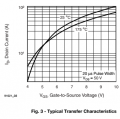
Vgs(th) is when the Mosfet is almost turned off (conducting only 25uA). You want the Vgs when the Mosfet is turned on (4.5V to 10V). The graphs show "typical" that you cannot buy.
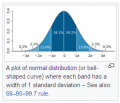
Bear in mind that distribution curve for MOSFETs, and most/all devices, is bell shaped and the min/max specs are for outliers; so most devices aren't going to be at the extremes.
I design circuits so that any passing part works, not just parts with typical or better spec's.
Semiconductor companies sell their products directly to factories and to distributors. It is likely that a factory can order parts with typical or better spec's but a distributor does not and gets all the leftover lower spec parts.
Frequently a distributor sells out on a part then maybe most or all of the next production of the part has lower than typical spec's.
Not every company does that. When one company I worked for needed parts with a particular specification, they did their own testing on 100% of the parts to select the ones that had the particular specs they wanted. Instead of putting the "rejected" parts aside to be used for less critical applications, they discarded them. I got tubes of them to donate to my school. I suspect they discarded them because they had manufacturers labeling parts with house numbers and it was less bother to discard the "rejects" than to try to remark them or use them by mistake in the critical applications.
When manufacturers make parts, they have particular specs in mind. This is where they intend for most parts to be binned. There will be parts that are outside of whatever sigma range they target (typically 3 sigma). Parts that are outside of that range are discarded or put into different bins.
From Wikipedia:
I know that when a certain company makes microprocessors, they don't try to make slow ones. They bin by speed and power (and other parameters like the number of functioning cores or functioning cache memory). Sometimes the lower speed bins don't have enough parts, so they down bin faster parts and mark them as slower. That's why some overclockers can't always overclock as much as the other guy. Some of the slow parts are actually faster parts that have been down binned and marked as being slower, while others are actually limited by the marked speed.
Semiconductor manufacturers might sell more parts if they reject the parts with spec's less than typical and list spec's only for the good parts with spec's of typical or better. But they sell the parts with poor spec's because the wide range of spec's incudes them.
I could not find a detailed datasheet for the HC-SR501 PIR. They say "3.3V TTL" but TTL high is nowhere near a current as high as 20mA.
The datasheet for a TIP120 shows a maximum output saturation voltage of 4V when its input current is 20mA and its output current is 5A so then its heating is 20W! The max base-emitter ON voltage is 2.5V when it conducts only 3A and is higher with 5A so the resistor from the 3.3V PIR must be about 25 ohms but we no not know if the PIR can do it.
So replace the TIP120 with the Mosfet shown.
EDIT: Simulators use "typical" spec's. Where can you buy a TIP120 that has typical spec's? You get whatever they have which might have minimum spec's.
Semiconductor manufacturers might sell more parts if they reject the parts with spec's less than typical and list spec's only for the good parts with spec's of typical or better. But they sell the parts with poor spec's because the wide range of spec's incudes them.
A world class manufacturer doesn't have much rejected material. Yields in the 95+% range aren't uncommon. There's even an occasional wafer with 100% yield. World class manufacturers have very good control over process parameters.
As I said, a certain microprocessor manufacturer I'm familiar with doesn't set out to make slow parts. In a lot, they'll get slow parts, fast parts, high leakage, low leakage, all good cores, some bad cores, all good cache, some bad cache. They bin them by characteristics. They put the high speed, all good core, all good cache, low power parts in a premium bin because they command a higher price. Parts that have defective cores are sold as parts with fewer cores; those products can also have bad cache that's also not used. And so on.
I agree that the IRFxxx -is not a good solution. One thing I have learned is that if one wants a logic level MOSFET that is similar, they should look for an IRLxxx. But even there, most of those are expecting a 5V logic, not 3.3V.
FYI -- I want to thank everyone for their help. This is the first time I have used All About Circuits, and am very impressed with everyone's help. I did order a few IRLB8721PbF MOSFETs, which should arrive in the next few days, and I will try one in my circuit. Hopefully that will work, and I will post results. I have to admit that I am also intrigued by the TC4420 and may end up getting some of those just to continue playing around (I mean educating myself).

 Facebook
 Google
 GitHub
 Linkedin