What capacitor to use for 1940's project?

Thread Starter

xtal_01

Joined May 1, 2016
227
I would l look for a modern JFET based circuit. It would be similar, but without needing 3 supply voltages.
I agree it would be better but I just wanted to try a tube set .... everything was solid state by the time I grew up.
 

MrChips

Joined Oct 2, 2009
34,889
Ham radio ... say 10 - 160 meters .... Voice of America ... Radio Moscow ... BBC .... Ecuador ... Germany ... I remember as a kid getting all these things on my dad's old tube set ..... hoping there is still something out there to listen to.
Get a current copy of WRTH - World Radio TV Handbook.

1744994062499.png
 

nsaspook

Joined Aug 27, 2009
16,353
Ham radio ... say 10 - 160 meters .... Voice of America ... Radio Moscow ... BBC .... Ecuador ... Germany ... I remember as a kid getting all these things on my dad's old tube set ..... hoping there is still something out there to listen to.
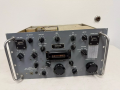
If you have money to invest this is likely the best tube set you can buy. I used these and repaired them in the Military.
https://www.ebay.com/itm/365515449612?_skw=r+390+receiver&itmmeta=01JS4VYXXFJDQDCAM36Z8GSZ5R&hash=item551a6b250c:g:muwAAOSwWONn0zQ1&itmprp=enc:AQAKAAAA0MHg7L1Zz0LA5DYYmRTS30lSqz2b8DIej1x73JFizstwH/CASLdJDn6cnEViWo5+Thv0aI68KtNj6QOBng1kD0fH1WQRPcOnT+ECouUpZc0+CxenLlGHtScPXv22o2VovdFbqz2GtCk8H1uHtWhWyeAXoS4RRaWpfHXAo4QfJmW2Gzop0OpmrXAeXNgdOWaj3n4GRmTz6QDI7Ib2a+AxtRmiKsRaPN7w4c606QTxcfrtQTXyBdfH3ohmXUFe8hhjtgJlKKVHdbEKjOOsHKa1mYI=|tkp:Bk9SR_De-5vJZQ

1744994040110.png

The R-390A is a general coverage radio receiver capable of receiving amplitude modulated, code, and frequency shift keying signals. Its tuning range is from 500 kHz to 32 MHz, in thirty-two 1 MHz bands. The circuit is the superheterodyne type, double conversion above 8 MHz, below which triple conversion is used. It employs 23 vacuum tubes, a larger than normal count for most general-coverage receivers.
https://en.wikipedia.org/wiki/R-390A
 

Thread Starter

xtal_01

Joined May 1, 2016
227
It's an old, one tube, regen type receiver. You will be lucky to get a few 1MHz with that design.

A much better design with a 3A4 low voltage surface charge tube: https://www.tubesandmore.com/products/vacuum-tube-3a4-pentode-power-amplifier
https://w5dxs.tripod.com/receiver.htm


For anyone that enjoys old time radio as I do, this is a must do project. This receiver is a simple one tube regenerative type using minimum parts count and low voltages. Although very simple in design it is an excellent performer. The information for this receiver came from the September 1995 issue of CQ, pg. 48, "Red Hot Radio Returns". I made a few changes to the original circuit that really enhanced performance.
Cost of the project was $ 6.00 and a little scrounging in the junk box.

Receiver Circuit Diagram

My receiver is built in a 4 x 8 inch aluminum chassis. The front panel is 4 inches high. A vernier drive is required for tuning. This is because moving the capacitor a thousandth of an inch will change the frequency. It is very sensitive and must be tuned slowly. The tuning capacitor should have a value of between 90-100 pf. I used the smaller section of a dual gang capacitor from a 5 tube broadcast set having 9 plates. The pot for regeneration adjustment should be 1,000 ohm.
Coil construction is very important as it greatly affects receiver performance. I used a 1 inch o.d. pill bottle for the form and #22 enamel covered wire. This wire is about .016 of an inch in diameter. Both coils are close wound and wound in the same direction. L2 is 7 turns and I made L1 is 22 turns. Coils should have 1/4 inch spacing between them. L1 will affect frequency coverage. Using 22 turns and the tuning capacitor I used gives me a frequency coverage of 3500 kc to 8200 kc. It is important to keep the coil leads under two inches. Using less turns on L1 would raise the frequency. I am happy with my combination because it covers 80 & 40M ham bands as well as much of the popular shortwave broadcast bands. Copying code with this receiver is easy.
Awesome! Thanks so very much for the design !!! It is even simpler than the one I looked at. I did find a vernier drive ($10). Funny you mention code .... I am trying to learn it .... super hard at my age (62) but I am tyring. Thanks !!!!!!
 

nsaspook

Joined Aug 27, 2009
16,353
Awesome! Thanks so very much for the design !!! It is even simpler than the one I looked at. I did find a vernier drive ($10). Funny you mention code .... I am trying to learn it .... super hard at my age (62) but I am tyring. Thanks !!!!!!
Code is easy to learn and easy to forget (the deep mental memory is still there, so you can relearn quickly) if you don't use it.
 

Thread Starter

xtal_01

Joined May 1, 2016
227
If you have money to invest this is likely the best tube set you can buy. I used these and repaired them in the Military.
https://www.ebay.com/itm/365515449612?_skw=r+390+receiver&itmmeta=01JS4VYXXFJDQDCAM36Z8GSZ5R&hash=item551a6b250c:g:muwAAOSwWONn0zQ1&itmprp=enc:AQAKAAAA0MHg7L1Zz0LA5DYYmRTS30lSqz2b8DIej1x73JFizstwH/CASLdJDn6cnEViWo5+Thv0aI68KtNj6QOBng1kD0fH1WQRPcOnT+ECouUpZc0+CxenLlGHtScPXv22o2VovdFbqz2GtCk8H1uHtWhWyeAXoS4RRaWpfHXAo4QfJmW2Gzop0OpmrXAeXNgdOWaj3n4GRmTz6QDI7Ib2a+AxtRmiKsRaPN7w4c606QTxcfrtQTXyBdfH3ohmXUFe8hhjtgJlKKVHdbEKjOOsHKa1mYI=|tkp:Bk9SR_De-5vJZQ

View attachment 347415

The R-390A is a general coverage radio receiver capable of receiving amplitude modulated, code, and frequency shift keying signals. Its tuning range is from 500 kHz to 32 MHz, in thirty-two 1 MHz bands. The circuit is the superheterodyne type, double conversion above 8 MHz, below which triple conversion is used. It employs 23 vacuum tubes, a larger than normal count for most general-coverage receivers.
https://en.wikipedia.org/wiki/R-390A
I actually have that exact radio in storage! It needs a good going over ... I got it from Fair Radio about 40 years ago. When I pull it out of storage, I need to find someone who can go through it. I remember thinks like tuning slugs coming loose. i glued them back (we are talking 30 plus years ago when I knew even less about radio) but I am sure they are not in the right spot. It did work when I put it away but not like it did when I got it. It has been in storage for 20 years. I even have the meters like that one.
 

nsaspook

Joined Aug 27, 2009
16,353
I actually have that exact radio in storage! It needs a good going over ... I got it from Fair Radio about 40 years ago. When I pull it out of storage, I need to find someone who can go through it. I remember thinks like tuning slugs coming loose. i glued them back (we are talking 30 plus years ago when I knew even less about radio) but I am sure they are not in the right spot. It did work when I put it away but not like it did when I got it. It has been in storage for 20 years. I even have the meters like that one.
If you don't want it, sell it, because there are people like me who could fix the issues, tune up the slugs (I've re-tuned one after a BOZO idiot screw it up while high on dope).
 

MrChips

Joined Oct 2, 2009
34,889
Awesome! Thanks so very much for the design !!! It is even simpler than the one I looked at. I did find a vernier drive ($10). Funny you mention code .... I am trying to learn it .... super hard at my age (62) but I am tyring. Thanks !!!!!!
I needed to pass code tests in order to get my Ham license.

Search for code practice sites. Before the advent of the internet, I recorded my own code practice sessions on cassette tapes.
Start with random code at slow speed and increase the speed as you get it.
Start with random codes with increasing lengths in this order, including the set you have mastered:
E, T
I, A, N, M
S, U, R, W
D, K, G, O
H, V, F
L, P, J
B, X, C, Y
Z, Q, CH

When you have mastered these, move on to real text at your top speed.
You will be amazed at how quickly you will be able to recognized whole words such as AND, THE, WE, THEY, ARE, WERE, etc.
 

nsaspook

Joined Aug 27, 2009
16,353
Easier for some than others!
Mine were 'human to human' and each person has an 'Accent' , you could always recognize who was keying out on the other end.
Somethings your are just born with, others you learn because you have no alternative.
1744994980373.png
You can be taught to multi-task your brain.
 
Last edited:

MisterBill2

Joined Jan 23, 2018
27,683
You can still get mica RF capacitors and the other C5 is a old style electrolytic you can still find online.
Self-winding the frontend tuning coils would likely be the best option. Finding old stuff is hit and miss
https://www.rfparts.com/coils-and-c...0jsUnwgbX0uuWWHq3T3ielKkimNtjx-YomhpD4VIUZSMg

1.8MHz to 30 MHz is far too ambitious for this type of receiver.
Certainly a lot of responses here. This is about the original topic:: That capacitor, 0.5 mFd, was a paper capacitor, no way an electrolytic cap!! The other components would not be a problem except for the tube and the coils. The TS can wind their own coils "fairly easily", a similar material that could be the right diameter, about 1 1/4 inches.
 

Thread Starter

xtal_01

Joined May 1, 2016
227
Certainly a lot of responses here. This is about the original topic:: That capacitor, 0.5 mFd, was a paper capacitor, no way an electrolytic cap!! The other components would not be a problem except for the tube and the coils. The TS can wind their own coils "fairly easily", a similar material that could be the right diameter, about 1 1/4 inches.
OK ... so one person said the .5 was electrolytic and you say it is not. The drawing does not indicate electrolytic but I see in the picture, the cap has a stripe at one end. How can I tell if it is or is not?

Thanks for answering the question. I already know I want to build a SW tube set ... I know I want it to operate on batteries. I figured this was a simple design to play with ... thanks.
 
Top