What behavior to expect with a MOV at the end of a transmission line ?

Thread Starter

Externet

Joined Nov 29, 2005
2,624
Hi.

RF transmitter ===================coaxial====================MOV

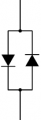
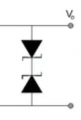
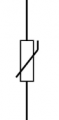
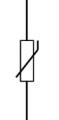
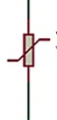
The varistor rated for a couple of volts RF, if such low value exist for them. Or, instead, counterparalleled / counter serial diodes in the place of MOV.
1762994675635.png 1762994087343.png 1762994288070.png

What to expect when there is >2 Volts RF transmitted, and when no RF ?.
 

Attachments

panic mode

Joined Oct 10, 2011
4,864
Varistors are used to react in response to voltage. When connected voltage increases, varistor resistance decreases. this allows suppressing spikes. if the energy of spike is too large, variator will of course get damaged. They are normally designed to fail safe in such situations (permanent short), forcing overcurrent protection to trip. similar can be accomplished with anti-series zeners. Both of which are common suppressor for industrial relays and contactors. This makes them more universal since not polarity sensitive. for low voltage clamping one can also use anti-parallel diodes, or strings of them...
 

crutschow

Joined Mar 14, 2008
38,316
The MOV should not significantly affect the transmission line characteristics and the transmitted waveform until it starts conducting to limit the peak voltages, at which point there may be some reflection of the clipped waveform.

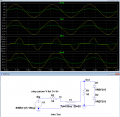
Below is the LTspice sim of a 50Ω transmission line with a 100ns electrical length carrying a 1MHz sinewave signal, with two back-to-back Zeners giving a 3.5V peak clip voltage:
The sim shows a voltage not clipped (green trace) , and clipped (yellow trace).

Note the clipped signal generates a reflection that distorts the transmission line input voltage, V(in)

1763060472916.png
 
Top