I thought I wanted just 5V, but now you turned me on to the *world of many voltages"You can use trimmer pot since you are building just 5V regulator if you wanted more voltage i'd lose pot.
What kind of led works on 10V? Are you are powering led strips?I thought I wanted just 5V, but now you turned me on to the *world of many voltages"might come in handy to change to a value closer to 10V. most LEDs at yebo are 10V, so there's atleast one reason to go for the pot solution!
![]()
Nope, why what do you think it should be? (Oh, its upto 10V)What kind of led works on 10V? Are you are powering led strips?
Why do people keep saying that the CMOS voltage range is +3V to +15V?That will not do for TTL logic circuitry.
You need the +5 volts to be as exact as you can make it.
TTL is more sensitive to overvoltage. 5.1 is within range but too close to the TTL range of 4.75V - 5.25V supply.
Further the 5V provides the reference level for the logic pulses.
By contrast the CMOS voltage range is +3V to +15V
This is a good opportunity to practise your series and parallel skils to get your resistors closer in combination, though most practical people would use a trimpot and set the final value to give correct output with a voltmeter.
This is nonsense. I use cellphone chargers that I buy for $1 at flea markets for microprocessor projects. Every one of they put out rock solid 5V DC. I was surprised at how good they looked on a scope.Cellphone (and other) chargers are not usually suitable without modification as they are not true DC.
Have you tried downloading my attachment and viewing it full size? The underlying pic is quite large and easier to see that way.
Phew! I didn't buy the chargers for nothing! I was very worried there for a moment! Thx Bob!This is nonsense. I use cellphone chargers that I buy for $1 at flea markets for microprocessor projects. Every one of they put out rock solid 5V DC. I was surprised at how good they looked on a scope.
Bob
Bob, if you say microprocessor projects, how much current would I need for standard messing about with digital electronics, or are there no easy answer?This is nonsense. I use cellphone chargers that I buy for $1 at flea markets for microprocessor projects. Every one of they put out rock solid 5V DC. I was surprised at how good they looked on a scope.
Bob
And with this 1A limit, how easy is it to add another psu, like use one psu for 5v and a 12V psu for the rest, ok so it's a project that requires two wall sockets, but hey, I'm a student, not a fabricatorThere is no easy answer, but 1A should last you a long time.
The things that you are likely to use that would consume more than that are things like motors or high power LEDs.
I should correct that, microprocessor -> microcontroller.
The microcontrollers themselves use only a few milliamps. The highest powered one I use uses 60mA at top speed.
Bob
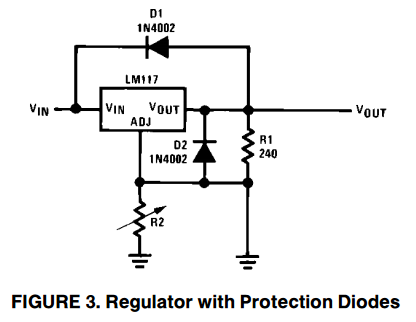
ofcoursePin 2 of trimmer needs to be connected to ground.You will need a 2200uf capacitor before lm350.Protection diode should be placed above the regulator.
| Thread starter | Similar threads | Forum | Replies | Date |
|---|---|---|---|---|
| B | LEDs, voltage and wattage | General Electronics Chat | 18 | |
| D | Snubber component's wattage and voltage | Power Electronics | 6 | |
| A | Calculating complex wattage, voltage and amperage. | Homework Help | 8 | |
|
|
Low Voltage Low Wattage Incandescent bulb needed. | General Electronics Chat | 19 | |
|
|
Voltage, Wattage | General Electronics Chat | 32 |