Thoughts about uC shortage

Ya’akov

Joined Jan 27, 2019
10,240
The chinese already took my job, the factory closed gone to Asia; forced me to retire.:mad:
The Chinese didn’t take your job—the owners/stockholders of the company that employed you did. Narrow-minded, short term bottom line has a much higher priority than Forward-thinking, long term sustainability.

What was your job was just part of the portfolio of the people driving the decisions.
 

MisterBill2

Joined Jan 23, 2018
27,563
My post, #156, was exclusively aimed at SOFTWARE houses, not the IC makers. They also had a wave of layoffs. And probably all of the least competent went to work at MS, producing the next release full of bugs.
The problem with the IC s is the constant changes, which are not really needed at all.
CHANGE, mostly for the sake of change, is not the same as progress. IT is the constant CHANGE that demands the huge spending on new machinery. Civilization will do very well with the processors that were released three years ago, and fewer items will go to the landfill if the constant abandonment of last month's products is delayed.
 

nsaspook

Joined Aug 27, 2009
16,330
My post, #156, was exclusively aimed at SOFTWARE houses, not the IC makers. They also had a wave of layoffs. And probably all of the least competent went to work at MS, producing the next release full of bugs.
The problem with the IC s is the constant changes, which are not really needed at all.
CHANGE, mostly for the sake of change, is not the same as progress. IT is the constant CHANGE that demands the huge spending on new machinery. Civilization will do very well with the processors that were released three years ago, and fewer items will go to the landfill if the constant abandonment of last month's products is delayed.
Here we go again, it's not that simple. It's not change for the sake of change in the IC industry. Shrinks of existing die and product improvements are the only way to stay in the business and are also good for the end-users that demand functionality for X application at a good price.
https://en.wikipedia.org/wiki/Die_shrink

EV's with advanced motor controls need chips functions designed to handle algorithms like FoC that have real-time complex (floating point or integer with something like DIVAS) math requirements, high resolution PWM modules for precision waveform generation to save energy, internal error checking to safety, etc.... The controllers that could handle that were expensive years ago but today, because of change to meet demand, they are much less expensive and can save the product producer and product user money with a design using that chip.

Example:
https://www.microchip.com/en-us/sol...crocontrollers-for-motor-control-applications

https://www.microchip.com/en-us/sol...ollers-for-motor-control-applications/pic32mk

1740595920634.png
Double Precision Floating Point Unit (FPU) and DSP Extension Support for the needed software.
https://forum.allaboutcircuits.com/threads/pic32mk-mc-qei-example.150351/post-1538575
 
Last edited:

BobaMosfet

Joined Jul 1, 2009
2,211
I, like many of you, have experienced the shortage in microcontroller chips. I am using a pic24 in 44-pin TSOP. I chose (before the shortage) the most capable member of the chosen family, just because I like to leave room for expansion.

So, which one becomes unavailable? You guessed it, the one I chose. Ones with smaller memory are still available, which is okay for me because I can fit in the smaller memory. But for a commercial product that needed the max memory it would be a disaster.

So why would Micrichip produce the less capable chips and not the more capable one that can replace all of the smaller ones? It makes no sense to me. They would even benefit from the higher selling price if they sold only the larger one to customers who didn’t need it. And fewer customers would be stuck with no chip they could use.

Bob
Please give me the exact part number for the PIC24 you are using. Something like

PIC24FJ256GA704

thx
 

nsaspook

Joined Aug 27, 2009
16,330
Please give me the exact part number for the PIC24 you are using. Something like

PIC24FJ256GA704

thx
I don't think there is currently a shortage of uC parts variations for the vast majority of controller families from just about any supplier. The OP was correct in June 2022 about that part being in short supply but IMO uniformed about the reasons one part was out of stock where others were in inventory.
 

MisterBill2

Joined Jan 23, 2018
27,563
Quite a few of the automotive production delays were because of a parts lack for those assorted modules that were not for part of the drive system. And at that time none of the delayed vehicles were electric drive models.
CERTAINLY EV drive control is a complex case, and probably getting more complex as time goes by.
AND CERTAINLY that is not the software I was commenting about.
AND all of those expensive to replace, impossible to repair, little modules that we got by very well for many years were the other parts suffering from shortages.
 

nsaspook

Joined Aug 27, 2009
16,330
The motor control IC was just an example of why improvements/changes are good in the semiconductor industry in general, not a specific shortage reason.

There are specific auto quality IC and component (including mundane things like wire harnesses) requirements like ISO/TS16949, AEC-Q100 and ISO 26262 that were and are limiting factors in what could be used for auto applications even if other chips were available for commercial use.

The last chip shortage is long over and now we are dealing with a chip glut that will likely also last for a while. Supply and demand is again out of balance, the other way. Lot's of insiders are thinking 30-40% total global workforce reduction in lagging edge semiconductors by the end of this year.

https://www.reuters.com/technology/smic-q3-profit-jumps-58-misses-estimates-2024-11-07/
SMIC sees prolonged chip glut, signals cautious expansion outlook
BEIJING, Nov 8 (Reuters) - Semiconductor rManufacturing International Corp (0981.HK), opens new tab , China's largest chipmaker, warned on Friday that overcapacity in mature node chips will persist through 2025 and that it was turning cautious on building new capacity.
The global semiconductor industry has struggled to recover since late 2022, when pandemic-driven shortages turned into oversupply, with many end users, including automakers, still working through excess inventory.
...
Zhao indicated that current oversupply conditions would lead SMIC to take a more cautious approach toward capacity expansion.
"We have not announced any new projects, and we are not currently discussing any new ones," Zhao said, marking a potential shift in strategy for China's largest contract chipmaker.
Nothing has changed, conditions are only getting worse.
 
Last edited by a moderator:

MisterBill2

Joined Jan 23, 2018
27,563
The "chip glut" is similar to any other feedback system with a response delay. It starts with an increase in demand, which exceeds the supply, creating an error signal due to less supply than demand. Unfortunately the system is not at all linear, but rather very much moving in large steps. So it operates like the classic "Bang -Bang" servo, switching from full off to full on. So more equipment is ordered, and after a long delay it arrives, and after another delay production increases by a large amount, while the demand has only increased by a smaller amount.
 

nsaspook

Joined Aug 27, 2009
16,330
The "chip glut" is similar to any other feedback system with a response delay. It starts with an increase in demand, which exceeds the supply, creating an error signal due to less supply than demand. Unfortunately the system is not at all linear, but rather very much moving in large steps. So it operates like the classic "Bang -Bang" servo, switching from full off to full on. So more equipment is ordered, and after a long delay it arrives, and after another delay production increases by a large amount, while the demand has only increased by a smaller amount.
So true but you would think after decades of the same thing happening, the suits that make the massive spending decisions over and over would be able see what the simple rubes in engineering can see with their eyes closed.
I'm about to bail out of the rat race soon, won't miss it but I would like to see some of the suits that think they are the exception to the rule 'Frog Marched' to the curb first with the rest of those losing jobs.


https://www.embedded.com/semiconductor-bust-boom-cycles/
Semiconductor Bust-Boom Cycles
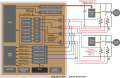
If you are in the semiconductor industry, you have been part of many semiconductor bust and boom cycles. Each semiconductor bust-boom cycle has a unique peak and valley, which influence its duration. Refer to Figure 1 showing the historical growth rate of the semiconductor industry. Proactively managing these cycles is crucial for corporate value creation. Usually, these semiconductor bust-boom cycles are triggered by various macroeconomic and technological inflections, but they all result in higher inventory in the entire supply chain and recovery depends on the peak and duration of the demand cycle. Besides over-inventory in the supply chain, additional capacity comes online due to higher capital investments during the peak demand cycle making financial recovery elusive.
1740633061483.png
 
Last edited by a moderator:

WBahn

Joined Mar 31, 2012
32,874
So true but you would think after decades of the same thing happening, the suits that make the massive spending decisions over and over would be able see what the simple rubes in engineering can see with their eyes closed.
Unfortunately, the suits all-too-often simply live in a completely different world than engineers and others that actually know and understand the real world aspects of the business. They have MBA and other fancy credentials that are all grounded in a bunch of idealized book-based theory and they have been taught essentially rote approaches to making business decisions with little, if any, attention to considering any factor that can't have a number easily applied to it.

This happens in companies big and small. When the owner of the company my dad worked for (for 29 years, he was the second employee hired) retired and turned the business over to his two kids, the came in with their MBA mindset and did so many stupid things that, on the surface sounded good in an ideal world, that it destroyed the company in just three or four years. The one that stuck with me the most was they analyzed the inventory and identified a lot of parts that the company kept in stock that they typically only sold a few a year or even one every few years. Well, they had learned in school that maximum profitability occurs when you have an in-stock rate of something like 70% (I forget the actual value, but it was something in that vicinity) while the company was operating with an in-stock rate of over 95%. So, too much money was tied up in inventory and they made a bunch of items non-stock, despite my dad and others telling them that the reason they had so many loyal customers, including some really big ones (like Denver Public Schools) was because they knew that when they needed a part of one of their units, that the odds were very high that the company would have one in stock. They tried to point out that there were a lot of customers that called their company first, even for parts that everyone stocks, because it's better use of their time to find the part fast, even if it's a bit more expensive, and the company had a well-established reputation across the entire western United States for having even obscure parts -- gee, sounds a lot like DigiKey, doesn't it?

Well, you can't put a dollar figure on intangible things like that (at least, it's hard to do, especially up front). So that advice was completely ignored. It didn't take long for them to lose most of their big customers and for their reputation to be trashed.
 

nsaspook

Joined Aug 27, 2009
16,330
https://www.tomshardware.com/tech-i...-companies-express-concern-for-their-survival

China's mature chips to make up 28% of world production, creating oversupply — Western companies express concern for their survival
"Just two years ago, a mainstream 6-inch SiC [silicon carbide] wafer from global leader Wolfspeed was $1,500," an anonymous sales director for a German chipmaker shared with Nikkei Asia. Today, the same 6-inch wafer is sold for only $500 by Guangzhou Summit Crystal Semiconductor, where dozens of other little-known Chinese fabs price their wafers at similarly impossible undercuts.
It's not sustainable, all sides will losr in this rush to the bottom. Restock parts now while things are cheaper, it's going to get bumpy.
 

MisterBill2

Joined Jan 23, 2018
27,563
Part of the problem, like I implied in an earlier post that was shot down, is the constant changing to designs that need even more expensive machines to produce. Always chasing the state of the art. For most of the stuff, current technology and slightly bigger dies will work very well.
Of course there are those who always demand the very bleeding edge technology for all products.
One reason that none of my products were delayed is designing in multiple sourced parts. And it was always the design that was new, not the parts.
 

nsaspook

Joined Aug 27, 2009
16,330
Part of the problem, like I implied in an earlier post that was shot down, is the constant changing to designs that need even more expensive machines to produce. Always chasing the state of the art. For most of the stuff, current technology and slightly bigger dies will work very well.
Of course there are those who always demand the very bleeding edge technology for all products.
One reason that none of my products were delayed is designing in multiple sourced parts. And it was always the design that was new, not the parts.
Guy, it should have been shot down because you are misinformed about the reality of the industry.
This is lagging edge technology for the most part. Many generations behind state of the art, running on equipment that was obsolete two decade ago, with no vendor support for a decade and kept running by engineering dept. with soon to be retired old guys with three to four decades in the industry. The older fabs are being forced by total obsolescence to upgrade equipment. The root problem is, this cycle, is that they went overboard with sales expectations for those upgrades and spent way too much, why too fast IMO. Hopefully in a few years things will even out.
1740690442061.png
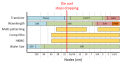
Lots of the lagging edge technology made today is still in the hundreds+ nm node running 200mm (8 inch wafers or less)
1740690583958.png
1740691573296.png
 

MisterBill2

Joined Jan 23, 2018
27,563
If that equipment REALLY was obsolete 20+years ago, a reasonable approach would have been a staged upgrade, not a a panic driven upgrade. THAT could have worked.
 

nsaspook

Joined Aug 27, 2009
16,330
If that equipment REALLY was obsolete 20+years ago, a reasonable approach would have been a staged upgrade, not a a panic driven upgrade. THAT could have worked.
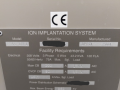
Yes, it is really that old. Here are a few typical plates on equipment, running today, making lagging technology products. This is in one of the newer fabs for these old process nodes.

1740699154377.png
1740699181267.png
1740699240113.png
 
Last edited:

MisterBill2

Joined Jan 23, 2018
27,563
Certainly lasting this long is a testimony to a durable design. Although it was mentioned that engineers kept the machines running. Have those machines been upgraded? Or were they designed to easily be adapted as the process evolved??
 

nsaspook

Joined Aug 27, 2009
16,330
Certainly lasting this long is a testimony to a durable design. Although it was mentioned that engineers kept the machines running. Have those machines been upgraded? Or were they designed to easily be adapted as the process evolved??
Industrial quality parts and machines are why fabs cost billions today. The high cost is for machines with 24/7 productivity expectations measured in decades. Engineers design and build the systems that keep them running while technicians usually do the actual production work past first testing prototypes. Several years ago (almost 20) I began a life extension project (one of many for other tool sub-systems) to replace all fab CRT human interface terminals with LCD equivalents. Most had touch screen interfaces originally designed for CRTs the were no longer made. I designed and made emulators that could translate the touch codes from the new LCD screens in the sometime bizarre and proprietary codes of the originals that needed to be reversed engineered first.
https://forum.allaboutcircuits.com/threads/video-rebuilding-crts.158801/post-1381201
1740714981688.png
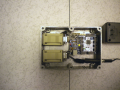
Some old CRT emulation prototypes.
1740715117957.png
Now the original replacement LCDs are obsolete so a new set of universal emulators were built for the new screens.
Replacement LCD screen emulator with camera video (wafer handler view) switching capability.

https://forum.allaboutcircuits.com/...-manufacturing-in-the-usa.185238/post-1735038
PXL_20220524_005346079.jpg
PXL_20220524_004803048.MP.jpg
https://forum.allaboutcircuits.com/threads/siglent-scope-with-sla1016.189860/post-1773227

So, all of the above for upgrades. The basic material science, physics based capabilities and limitations remain the same in most cases. Obviously new computers and process material systems have been upgraded but the basic physics of the process capabilities of the tools have not changed. These old tools will never be able to be pushed to the next process nodes. For that new tools that can overlap old and new nodes are usually purchased for compatibility with experiments to shrink and push older product lines into more modern work flows. Once that happens then the older tools can be decommissioned and/or sold.
 
Last edited:

nsaspook

Joined Aug 27, 2009
16,330
https://www.oregonlive.com/silicon-...ns-layoffs-monday-in-oregon-and-colorado.html

Microchip Technology plans layoffs Monday in Oregon and Colorado

Microchip Vice President Dan Malinaric wrote to Gresham employees Thursday to warn of the layoffs but said the job cuts won’t be as steep as initially anticipated. He said the company had thought it would lay off more than a third of its Oregon workers but Malinaric has decided to cut fewer jobs and instead add two weeks of additional furloughs.
 
Last edited by a moderator:

nsaspook

Joined Aug 27, 2009
16,330
https://www.oregonlive.com/silicon-...ses-falling-sales-and-political-setbacks.html

Coming out of the pandemic, chip shortages snarled supply chains around the world. The result was shortages of everything from PCs to washing machines.
...
One problem is that semiconductor manufacturing is notoriously cyclical, and product shortages can rapidly turn into surpluses. That led to months of intermittent furloughs for Microchip Technology factory workers and a fresh round of layoffs at Onsemi, both of which have plants in Gresham. Microchip ratcheted back its local expansion plans, shelved its application for CHIPS Act funding and plans layoffs in Oregon on Monday.
 
Top