Facebook
 Google
 GitHub
 Linkedin

Excelent answer. Somewhat my thought was the same but not quite. Yours is better, im not in shame to say. :]First off I don't see how Q1 could get hot unless "S" is shorted or very low resistance.
And this is the HOW that I'm looking for. Excelent again! Thank you. Though I know this also, I alwais get weird results that are not coinciding with the real behaviour. In reality, I use these formulas very rarely, only in extreme cases when I cant think on anything else to do. I thought I am doing it wrong.Start with R2. Measure voltage across R2 to find current: Ohm's Law says I = V/R where I = current, R = resistance, V = voltage.
Power or wattage is equal to current x voltage.
Well, the general current for the entire circuit, read from my PSU, was somewhere like 150mA. When is in real short, + with -, it jumps way high, to 1A or around it. I think 1A is limited by my current knob that I set it to 1A as a general precaution. It goes to 30V and 5A my PSU that I have.Can't figure Q1, don't know what load "S" is.
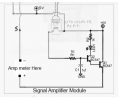
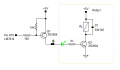
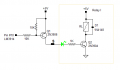
Ok so take this 150mA as a reference and add
this :
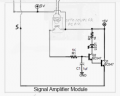 with this:
 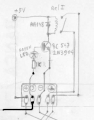 for the full circuit.
What is the fault in it? I dont know. Im not sure if it is a fault because I just built the other circuits and those worked fine. Most probably some sort of low resistance, as you put it. But I want to be able to calculate it by myself. My way of learning is to see other examples. So your example will be super fine.
If you can not take the 150mA as a reference, then take it as a short and calculate it from that perspective or/and as a low resistance as you mentioned. I really like the low resistance, i never thought of it. I was suspecting some weird kind of short as well, not full short but partial, being on cardboard and so many wires dangling around... but not like you put it, like a component(s) low resistance, if im getting you right.
Last edited: