Facebook
 Google
 GitHub
 Linkedin
I'm building a TDR pulse generator using a single GaN FET (TP65H300G4LSGB) in high-side configuration, driven by NCP51820. The drain is at 40 V, and the source goes through a 50 Ω resistor to GND. Output is taken from the FET source. My Final target is upto 200v.
Pulse specs: ~40 V amplitude, 135 ns width. Test cable: 200 m general wire (not coax), open at the far end. I expected full reflection (Γ = +1), but I only get ~3–5 V reflected.
Scope probing is at the FET source with a 10× probe. The incident pulse is clean (Square), but the reflection is very weak.
Need help with:
1)Why is reflection so weak?
2)Better probing point or output method?
3)Tips for improving reflection visibility?
I think something is wrong while genrating pulse using mosfet that why me getting less Reflection
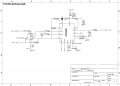
i have attaced Circuit just check it.
and Thanks
Pulse specs: ~40 V amplitude, 135 ns width. Test cable: 200 m general wire (not coax), open at the far end. I expected full reflection (Γ = +1), but I only get ~3–5 V reflected.
Scope probing is at the FET source with a 10× probe. The incident pulse is clean (Square), but the reflection is very weak.
Need help with:
1)Why is reflection so weak?
2)Better probing point or output method?
3)Tips for improving reflection visibility?
I think something is wrong while genrating pulse using mosfet that why me getting less Reflection
i have attaced Circuit just check it.
and Thanks