Sensing Current and Voltage of DC BUS three-phase inverter

Thread Starter

andrew74

Joined Jul 25, 2022
204
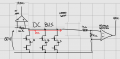
Hello everyone, I am wondering what is a good way to sense both the current and voltage of a three-phase inverter DC bus.
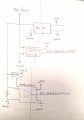
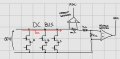
I have come up with a diagram like this, but I would like to hear your opinion.

I am afraid that resistances much greater than a few mΩ on the DC bus will affect the current flowing and/or the voltage... am I wrong?
Current sensing is fairly standard, while voltage sensing (in the picture) involves a classic resistive divider with an amplifier.
SmartSelect_20260208_135530_Samsung Notes (1).jpg
 

ronsimpson

Joined Oct 7, 2019
4,645
What current value?
Current sensor on wrong side of load. ???
1770562131763.png
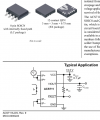
AllegroMicro Here is a link to a class of current sensors that do not use resistance to measure current. It measures the field caused by the current.
1770562283239.png
Digikey.com Here is a link showing 1000s of parts like this. Inside the IC there is about 1mOhm of resistance, so some loss.
When choosing a part some can measure current in both directions and some only in one direction.
Most of these parts can handle 1000s of volts between the current and the output. (isolation)
 

MrAl

Joined Jun 17, 2014
13,667
Hello everyone, I am wondering what is a good way to sense both the current and voltage of a three-phase inverter DC bus.
I have come up with a diagram like this, but I would like to hear your opinion.

I am afraid that resistances much greater than a few mΩ on the DC bus will affect the current flowing and/or the voltage... am I wrong?
Current sensing is fairly standard, while voltage sensing (in the picture) involves a classic resistive divider with an amplifier.

View attachment 363227
Hi,

Usually with inverters/converters the DC buss current can be very high. Sense resistors usually do not work too well so the typical solution is to use a Hall Effect current sensor. This also usually provides isolation from the ADC as well.
There is some tolerance to deal with but usually the accuracy does not have to be super perfect.

Sensing voltage is easier, just with a voltage divider unless you need isolation from the ADC and then it's a little more complicated.
The voltage divider can be quite accurate, but if you add some sort of isolation you have to consider the error there too.

Of course as with any power application you have to pay close attention to grounding of the various elements. That just means be aware of the current flows and the voltage drops in wires and other stuff like that. You want to make sure the voltage sensing is not affected too much by an unintended ground voltage modulation and that it is being sensed in the right place.
 

Thread Starter

andrew74

Joined Jul 25, 2022
204
Hi,

Usually with inverters/converters the DC buss current can be very high. Sense resistors usually do not work too well so the typical solution is to use a Hall Effect current sensor. This also usually provides isolation from the ADC as well.
There is some tolerance to deal with but usually the accuracy does not have to be super perfect.

Sensing voltage is easier, just with a voltage divider unless you need isolation from the ADC and then it's a little more complicated.
The voltage divider can be quite accurate, but if you add some sort of isolation you have to consider the error there too.

Of course as with any power application you have to pay close attention to grounding of the various elements. That just means be aware of the current flows and the voltage drops in wires and other stuff like that. You want to make sure the voltage sensing is not affected too much by an unintended ground voltage modulation and that it is being sensed in the right place.
Thanks for the reply.

At what currents do you typically start using Hall sensors for sensing rather than sense resistors?

For example, in the case of inverters with DC bus currents of 6-7A, is that enough to prefer a Hall sensor?
 

Thread Starter

andrew74

Joined Jul 25, 2022
204
If the bus is a copper bar, then one of these might be useful:
https://www.micro-transformer.com/ZMB20R10DIE-Series-Hall-Current-Sensor-pd41490056.html
But definitely a job for a Hall-effect device or a solid manganin 60mV shunt.
https://uk.rs-online.com/web/p/shunts/2872418
What current value?
Current sensor on wrong side of load. ???
View attachment 363228
AllegroMicro Here is a link to a class of current sensors that do not use resistance to measure current. It measures the field caused by the current.
View attachment 363231
Digikey.com Here is a link showing 1000s of parts like this. Inside the IC there is about 1mOhm of resistance, so some loss.
When choosing a part some can measure current in both directions and some only in one direction.
Most of these parts can handle 1000s of volts between the current and the output. (isolation)
Thanks for the reply.

At what currents do you typically start using Hall sensors for sensing rather than sense resistors?

For example, in the case of inverters with DC bus currents of 6-7A, is that enough to prefer a Hall sensor?
 

Ian0

Joined Aug 7, 2020
13,097
Thanks for the reply.

At what currents do you typically start using Hall sensors for sensing rather than sense resistors?

For example, in the case of inverters with DC bus currents of 6-7A, is that enough to prefer a Hall sensor?
It depends on how accurately you need to know the answer!
A hall effect sensor tends to be noisier (but if you don't need an answer in a hurry you can filter it)
and have more DC offset than a shunt amplifier.
If the bus always runs at currents around that sort of value, a Hall effect would be good, but if you need to resolve down to <0.1A, it might not, depending on what the upper limit was.
 

MrAl

Joined Jun 17, 2014
13,667
Thanks for the reply.

At what currents do you typically start using Hall sensors for sensing rather than sense resistors?

For example, in the case of inverters with DC bus currents of 6-7A, is that enough to prefer a Hall sensor?
Hi,

Sure, 1 amp to 1000 amps or more probably.
You can get them down to 100ma maybe lower.

There are different types though.
The open loop kind are the most common and are the cheapest.
The closed loop flux nulling type are more expensive but can be very accurate.
It depends how accurate you want it to be.
If you are just looking for overcurrent tripping and not interested in that much accuracy, an open loop type could be ok.
If you want precise measurements, then you probably want to go with the closed loop flux nulling type.
From what I understand LEM makes good ones but to date I've never used theirs. You can look up their parts and see what you would like to use.
You should read all the specs though not just current and accuracy.
 

Reloadron

Joined Jan 15, 2015
7,850
Personally I would be using a hall effect sensor. You mention numbers like 6 ~ 7 amps so I would consider, as mentioned above an ACS 711 series. I suggest you read the data sheet. Note the different ranges for the ACS711 series. The ACS711ELCTR-12AB-T will give you a range of -12,5 amps to +12.5 amps and an output of 100mV/Amp. So your6 ~ 7 amps becomes .6 to .7 volts Vout. Another good possibility is the ACS723 series where an ACS723KMATR-10AB-T offers you a 10 amp range. Fear not because these sensors are available pre mounted on module boards. Easy and economical solutions. I have used them in the past many times.

Ron
 

Thread Starter

andrew74

Joined Jul 25, 2022
204
Personally I would be using a hall effect sensor. You mention numbers like 6 ~ 7 amps so I would consider, as mentioned above an ACS 711 series. I suggest you read the data sheet. Note the different ranges for the ACS711 series. The ACS711ELCTR-12AB-T will give you a range of -12,5 amps to +12.5 amps and an output of 100mV/Amp. So your6 ~ 7 amps becomes .6 to .7 volts Vout. Another good possibility is the ACS723 series where an ACS723KMATR-10AB-T offers you a 10 amp range. Fear not because these sensors are available pre mounted on module boards. Easy and economical solutions. I have used them in the past many times.

Ron
Hi,

Sure, 1 amp to 1000 amps or more probably.
You can get them down to 100ma maybe lower.

There are different types though.
The open loop kind are the most common and are the cheapest.
The closed loop flux nulling type are more expensive but can be very accurate.
It depends how accurate you want it to be.
If you are just looking for overcurrent tripping and not interested in that much accuracy, an open loop type could be ok.
If you want precise measurements, then you probably want to go with the closed loop flux nulling type.
From what I understand LEM makes good ones but to date I've never used theirs. You can look up their parts and see what you would like to use.
You should read all the specs though not just current and accuracy.
It depends on how accurately you need to know the answer!
A hall effect sensor tends to be noisier (but if you don't need an answer in a hurry you can filter it)
and have more DC offset than a shunt amplifier.
If the bus always runs at currents around that sort of value, a Hall effect would be good, but if you need to resolve down to <0.1A, it might not, depending on what the upper limit was.
1) Can I use a Hall effect sensor to measure both the current on the DC bus and the current on the three phases of the motor?
Obviously, I mean two separate Hall effect sensors.

From the datasheet, it seems to me that it can read both AC and DC, or am I mistaken?

2) I also wonder if a Hall sensor is accurate enough to read the current of a phase of a BLDC motor, which will be used in the field-oriented control algorithm, etc.
 
Last edited:

ronsimpson

Joined Oct 7, 2019
4,645
1) Can I use a Hall effect sensor to measure both
yes
it seems to me that it can read both AC and DC,
DC = yes. DC with ripple = yes Every part is different, but many can respond to 100khz ripple or AC. Check the data sheet.
AC = yes. Check the data sheet. Many kinds have two options. a) 0 to 10A for an output of 0.5V to 4.5V. and b) -10A to+10A for an output of 0.5V to 4.5V. (Just to be clear for zero amps (a) option will read 0.5V and (b) will read 2.5V or 1/2 the supply.
 

MrAl

Joined Jun 17, 2014
13,667
1) Can I use a Hall effect sensor to measure both the current on the DC bus and the current on the three phases of the motor?
Obviously, I mean two separate Hall effect sensors.

From the datasheet, it seems to me that it can read both AC and DC, or am I mistaken?

2) I also wonder if a Hall sensor is accurate enough to read the current of a phase of a BLDC motor, which will be used in the field-oriented control algorithm, etc.
Hi,

Most of these are galvanically isolated so you can read any current I think, and not have to worry too much about the connections of all the grounds. Of course you have to read up on the devices you intend to use to make sure that they can support the highest voltage your system ever sees from one of the reading points to the ADC board and possibly other point to point spans.

I don't think I know of a HES that cannot detect line frequency AC currents. That would be 50Hz or 60Hz, and for aircraft 400Hz.
 

Thread Starter

andrew74

Joined Jul 25, 2022
204
Hi,

Most of these are galvanically isolated so you can read any current I think, and not have to worry too much about the connections of all the grounds. Of course you have to read up on the devices you intend to use to make sure that they can support the highest voltage your system ever sees from one of the reading points to the ADC board and possibly other point to point spans.

I don't think I know of a HES that cannot detect line frequency AC currents. That would be 50Hz or 60Hz, and for aircraft 400Hz.
yes

DC = yes. DC with ripple = yes Every part is different, but many can respond to 100khz ripple or AC. Check the data sheet.
AC = yes. Check the data sheet. Many kinds have two options. a) 0 to 10A for an output of 0.5V to 4.5V. and b) -10A to+10A for an output of 0.5V to 4.5V. (Just to be clear for zero amps (a) option will read 0.5V and (b) will read 2.5V or 1/2 the supply.
Personally I would be using a hall effect sensor. You mention numbers like 6 ~ 7 amps so I would consider, as mentioned above an ACS 711 series. I suggest you read the data sheet. Note the different ranges for the ACS711 series. The ACS711ELCTR-12AB-T will give you a range of -12,5 amps to +12.5 amps and an output of 100mV/Amp. So your6 ~ 7 amps becomes .6 to .7 volts Vout. Another good possibility is the ACS723 series where an ACS723KMATR-10AB-T offers you a 10 amp range. Fear not because these sensors are available pre mounted on module boards. Easy and economical solutions. I have used them in the past many times.

Ron
It depends on how accurately you need to know the answer!
A hall effect sensor tends to be noisier (but if you don't need an answer in a hurry you can filter it)
and have more DC offset than a shunt amplifier.
If the bus always runs at currents around that sort of value, a Hall effect would be good, but if you need to resolve down to <0.1A, it might not, depending on what the upper limit was.
Hello everyone, I’ve had another thought regarding current measurement using the Hall effect, as you suggested in your replies.
...if you don’t remember, we were talking about measuring the current (max 4–5 A) on the 50 V DC bus of a three-phase inverter for BLDC control

As my three-phase inverter PCB is mounted close to the electric motor (I can provide any specifications you require), I’m worried that its magnetic field might interfere with the Hall sensor’s current reading… is this a valid concern?
Can I determine this from the motor’s datasheet and the Hall sensor’s datasheet?
 

MrAl

Joined Jun 17, 2014
13,667
Hello everyone, I’ve had another thought regarding current measurement using the Hall effect, as you suggested in your replies.
...if you don’t remember, we were talking about measuring the current (max 4–5 A) on the 50 V DC bus of a three-phase inverter for BLDC control

As my three-phase inverter PCB is mounted close to the electric motor (I can provide any specifications you require), I’m worried that its magnetic field might interfere with the Hall sensor’s current reading… is this a valid concern?
Can I determine this from the motor’s datasheet and the Hall sensor’s datasheet?
Hi,

Magnetic fields from the Earth can interfere with some current sensing using Hall devices. It depends though on how sensitive the Hall device is, what type it is, how far from the motor.

You'd want to look for a differential hall effect current sensor. That can reject stray fields.

What power is the motor and how far from the motor is the sensor?
 

Thread Starter

andrew74

Joined Jul 25, 2022
204
Hi,

Magnetic fields from the Earth can interfere with some current sensing using Hall devices. It depends though on how sensitive the Hall device is, what type it is, how far from the motor.

You'd want to look for a differential hall effect current sensor. That can reject stray fields.

What power is the motor and how far from the motor is the sensor?
The circuit board should be less than 10 cm from the motor (obviously, the motor is enclosed within its metal casing)

During the test, on the three phases the maximum current drawn was 3–4 A at 250 rpm with a 48 Vdc bus.
The motor's datasheet does not showthe power output, but it tells other data such as:
- Kt = 1.54 N*m
- Km = 1.63 Nm/sqrt(W)
- backEMF = 83.3Vrms/kRPM
- Continuous Stall Torque
- Continuous Current
- Line inductance = 2.2mH
- ... etc ...

What information should I provide?
 

schmitt trigger

Joined Jul 12, 2010
2,027
In extreme cases you may require to fabricate a small mu-metal magnetic shield.

Mu-metal is relatively soft material, and any tinsmith shop could easily fabricate it.
But unless you actually test it first….. nobody knows with absolute certainty.

EDIT: Be aware that for the same reason that this is a relatively soft material, there are complaints in the usual e-commerce websites that the sheet arrives all wrinkled up, making it unusable.
 

Thread Starter

andrew74

Joined Jul 25, 2022
204
In extreme cases you may require to fabricate a small mu-metal magnetic shield.

Mu-metal is relatively soft material, and any tinsmith shop could easily fabricate it.
But unless you actually test it first….. nobody knows with absolute certainty.

EDIT: Be aware that for the same reason that this is a relatively soft material, there are complaints in the usual e-commerce websites that the sheet arrives all wrinkled up, making it unusable.
Hi,

Magnetic fields from the Earth can interfere with some current sensing using Hall devices. It depends though on how sensitive the Hall device is, what type it is, how far from the motor.

You'd want to look for a differential hall effect current sensor. That can reject stray fields.

What power is the motor and how far from the motor is the sensor?
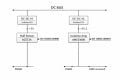
The thing is, I’d like to isolate my PCB between the power side (DC bus) and the low-voltage side (microcontroller, etc.).
I need to measure the current on the DC bus, and there are two ways to do this:
- Hall sensor (isolated) --> red solution
- Amplifier (isolated), but this requires an additional Vcc --> blue solution

blocchi.jpg

You will notice that the red solution may suffer from interference from the motor’s magnetic field,
while the blue one requires an additional DC-DC stage to generate +5V_2

What would you recommend?

Mod: lightened your image.
 
Last edited by a moderator:

MrAl

Joined Jun 17, 2014
13,667
The thing is, I’d like to isolate my PCB between the power side (DC bus) and the low-voltage side (microcontroller, etc.).
I need to measure the current on the DC bus, and there are two ways to do this:
- Hall sensor (isolated) --> red solution
- Amplifier (isolated), but this requires an additional Vcc --> blue solution

View attachment 365159

You will notice that the red solution may suffer from interference from the motor’s magnetic field,
while the blue one requires an additional DC-DC stage to generate +5V_2

What would you recommend?

Mod: lightened your image.

Hello again,

The Hall device is easier to use, op amp can be very precise if done right.
It partly depends how low you want to read the current, and what error you can tolerate.
With the Hall device you could keep it 9cm from the motor, and experiment with the rotation relative to the motor shaft to get the best angle.

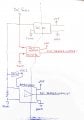
Here is another cleaned up drawing, and a block diagram. See if the block diagram depicts your circuit well enough. I was in the mood to play around with the drawing :)
 

Attachments

Thread Starter

andrew74

Joined Jul 25, 2022
204
Hello again,

The Hall device is easier to use, op amp can be very precise if done right.
It partly depends how low you want to read the current, and what error you can tolerate.
With the Hall device you could keep it 9cm from the motor, and experiment with the rotation relative to the motor shaft to get the best angle.

Here is another cleaned up drawing, and a block diagram. See if the block diagram depicts your circuit well enough. I was in the mood to play around with the drawing :)
You agree with me that with a differential amplifier, you need an additional DC-DC to power it, right?

So perhaps a Hall sensor is simple

Or an optocoupler (?).
 

MrAl

Joined Jun 17, 2014
13,667
You agree with me that with a differential amplifier, you need an additional DC-DC to power it, right?

So perhaps a Hall sensor is simple

Or an optocoupler (?).
Hi again,

From what it looks like, you are using a DC to DC converter to power some load, and you want to measure the input current to the main DC to DC converter right?
If the main DC to DC is isolated and you are using that to power the measurement circuit, then you might need isolation. It despends on how the grounds are connected.

In order for the main DC to DC to be isolated, it would have to be using some kind of transformer.

Also, how fast does the measurement have to be? If it does not have to be superfast there are some really good op amps available for that. I did not check the specs on the one you mentioned yet though does that have low input offset specs?
 
Top