Schematic design critique

Thread Starter

Skyland

Joined Jul 1, 2014
28
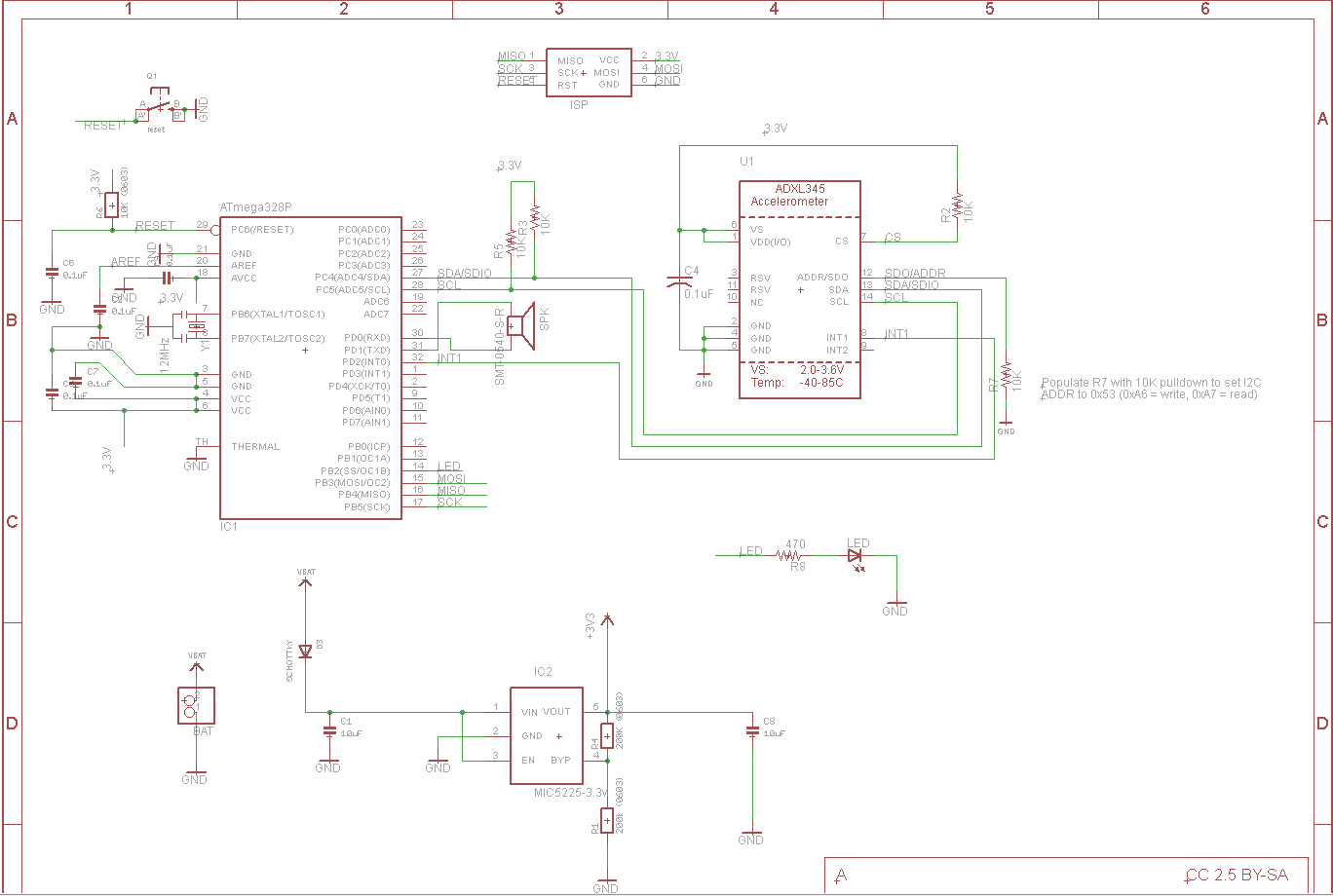
I designed a schematic for my project and I'd be thankful if you could give me any feedback on it.

I'm specially looking for anything wrong or inefficient with my circuit.

The purpose of this project is to read data from the accelerometer, perform signal processing and output an alarm sound if a certain behaviour is detected.
 

GopherT

Joined Nov 23, 2012
8,009
@Skyland
I would add a capacitor between Microcontroller and one terminal of the speaker (if it is a speaker). If it is a self contained buzzer to tone generator, then leave it as you have it.
 

jpanhalt

Joined Jan 18, 2008
11,087
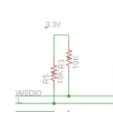
On your pull-up resistors, e.g.,
upload_2015-3-14_7-49-19.png


it is customary to show a source, such as:

upload_2015-3-14_7-49-55.png

Otherwise, it is quite easy to forget to label the net such that it will be properly routed.

John
 

Thread Starter

Skyland

Joined Jul 1, 2014
28
@Skyland
I would add a capacitor between Microcontroller and one terminal of the speaker (if it is a speaker). If it is a self contained buzzer to tone generator, then leave it as you have it.
Why would you add the capacitor?
I was actually wondering if the Atmega was able to drive the buzzer, it requires 285mA.
 

GopherT

Joined Nov 23, 2012
8,009
Why would you add the capacitor?
I was actually wondering if the Atmega was able to drive the buzzer, it requires 285mA.
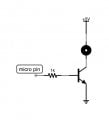
I wouldn't add a capacitor if it is a buzzer. They need DC. And you will need a transistor to switch anything more than 25 mA. Use the schematic below for guidance. Note, you only need one I/O pin to drive it.

If it is a speaker, the voice coil should not see any DC current and a capacitor stops the DC and prevents any programming errors from damaging the speaker if you would, for example, get an interupt while the output to the speaker is high. No worries at this time since you have a buzzer. Add the transistor to that buzzer.

image.jpg
 

GopherT

Joined Nov 23, 2012
8,009
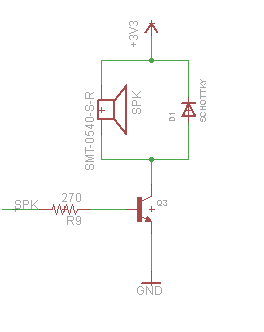
My error. Looks like it uses 100 mA and you are using 3.3 V supply. Then you need a base current of 10 mA for the transistor switch. That means the 10k ohm base resistor in my previous schematic is much too small. To get 10 mA, use a 270 ohm resistor (220 to 330 range is fine). Make sure your transistor has enough current carrying gusto. 2N4401 or a BC337 should work (rated at 600 to 800 mA).
 

Roderick Young

Joined Feb 22, 2015
408
I don't know the ATmega328, but it appears to have a serial port (Rx and Tx)? You might want to reserve that for telemetry, and put the speaker elsewhere. During debugging, it might be very helpful to have your program print out occasionally what it thinks is going on, for example, is the sensor putting out what you think at a given time.
 

GopherT

Joined Nov 23, 2012
8,009
Just look for an smd that can handle 200 mA or more. Digikey and most other sites let you search by parameters. Most any NPN will be ok if current is sufficient and h is 100 or more.
 

Thread Starter

Skyland

Joined Jul 1, 2014
28
Last edited:

RichardO

Joined May 4, 2013
2,270
Because the transducer is a coil, you need a diode in parallel with it. The cathode of the diode goes to the power supply. Be warned that the transducer will draw a huge peak current. Since your regulator is only able to supply 150 ma. you must supply that current with large bypass capacitors. I doubt that your 10 uF is enough. In addition, if your battery is small it may not be able to supply the power required for long periods of beeping. One final comment. the transducer is most efficient at its resonant frequency. Assigning the speaker output pin to a counter, if one is available on this controller, would be a good way of generating the desired frequency.
 

Thread Starter

Skyland

Joined Jul 1, 2014
28
Because the transducer is a coil, you need a diode in parallel with it. The cathode of the diode goes to the power supply. Be warned that the transducer will draw a huge peak current. Since your regulator is only able to supply 150 ma. you must supply that current with large bypass capacitors. I doubt that your 10 uF is enough. In addition, if your battery is small it may not be able to supply the power required for long periods of beeping. One final comment. the transducer is most efficient at its resonant frequency. Assigning the speaker output pin to a counter, if one is available on this controller, would be a good way of generating the desired frequency.
added the diode


Are you suggesting I should change the bypass capacitor value at the input of the voltage regulator?
The battery: 3.7V 500mAh LiPo


ATMEL is using the following configuration for the regulator with the same buzzer

 
Last edited:
Top