Reverse Hysterisis?

Thread Starter

johnyradio

Joined Oct 26, 2012
615
Is there a way to achieve reverse hysterisis?

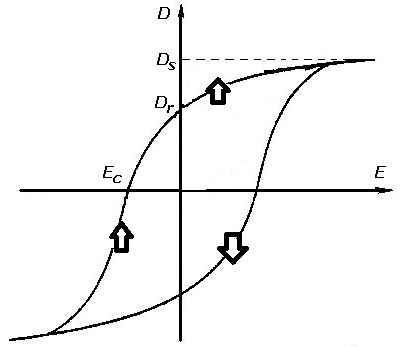
Normally, schmitt hysterisis up-threshold is higher than its down threshold .
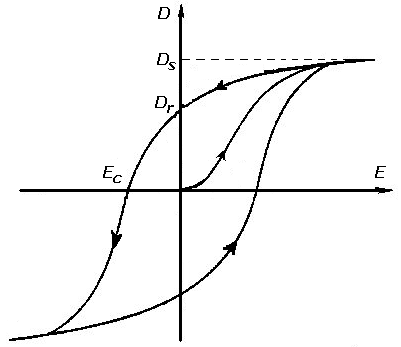
I want the reverse-- going up trip at a lower V . And Going down trip at a higher V .

To state it another way: If we think of a Schmitt as being "less sensitive" than a normal gate, I want a gate that's more sensitive .

First guess, a window comparator

Seems that would work as I described .

Wondering if my need could be achieved by tweaking 1 or more Schmitts.
 
Last edited:

AlbertHall

Joined Jun 4, 2014
12,625
I want the reverse-- going up trip at a lower V . And Going down trip at a higher V .

To state it another way: If we think of a Schmitt as being "less sensitive" than a normal gate, I want a gate that's more sensitive
I suspect the result of this would be an oscillator.

Suppose we have a slowly increasing input to this new gate. As the input crosses the low voltage trip point the output goes high then as the input continues to rise and crosses the high trip point the output goes low. But now the input is above the low trip and so the output gos high, but the input is above the high trip point so the output goes low. Repeat ad infinitum.
 

AlbertHall

Joined Jun 4, 2014
12,625
That wouldn't happen in the circuit I desire.

I think it wouldn't happen with the window comparator above .

Can you share the circuit you described?
The window comparator circuit is the standard circuit - no reverse hysteresis there.
The circuit I described doesn't exist, but is the nearest I can get to your description.

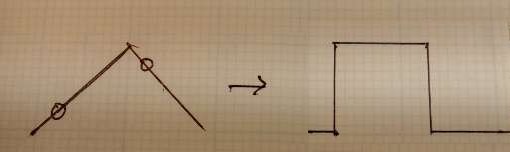
What would be the output from your reverse hysteresis circuit as the input slowly rises and falls?
 

Thread Starter

johnyradio

Joined Oct 26, 2012
615
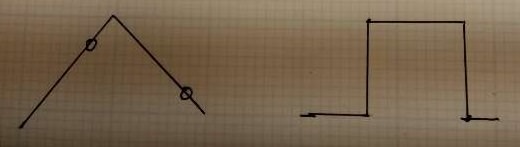
normal schmitt output. Trip-points circled:


my desired output:


my desired behavior (opposite of normal hysteresis):
 

OBW0549

Joined Mar 2, 2015
3,566
What would you want the output to do if the input starts out at zero like you showed, then proceeds to increase past the first threshold (whereupon the output goes high, as you showed), but then goes back down without having first exceeded the upper threshold? Graphically, follows the path shown in red below?

Screen Shot.png
According to your verbal description of the circuit, the output would go high and simply stay there. Surely that can't be what you want...
 

Thread Starter

johnyradio

Joined Oct 26, 2012
615
What would you want the output to do if the input starts out at zero like you showed, then proceeds to increase past the first threshold (whereupon the output goes high, as you showed), but then goes back down without having first exceeded the upper threshold?
i wouldn't do that. My input will always go from 0 to full-scale and then back to 0. So i don't care what it does in the scenario you described.

Thx
 

Thread Starter

johnyradio

Joined Oct 26, 2012
615
How do you know that's what the input will always do? Where is it coming from?
i have total control over the input. Assume it's a full-scale triangle wave, of fixed frequency, amplitude, and phase. I have control over all parameters. It will never change.
 

OBW0549

Joined Mar 2, 2015
3,566
i have total control over the input. Assume it's a full-scale triangle wave, of fixed frequency, amplitude, and phase. I have control over all parameters. It will never change.
Ah. So you're generating this triangle wave and have total control over it? If that's the case, why bother with this imaginary "reverse hysteresis" circuit to derive the square wave from it? Just generate the square wave directly.
 

Thread Starter

johnyradio

Joined Oct 26, 2012
615
Ah. So you're generating this triangle wave and have total control over it? If that's the case, why bother with this imaginary "reverse hysteresis" circuit to derive the square wave from it? Just generate the square wave directly.
Generate the square how? i'm generating the triangle with a schmitt oscillator. I would like a square which is shifted from the triangle. Reverse hysteresis is one theoretical way.

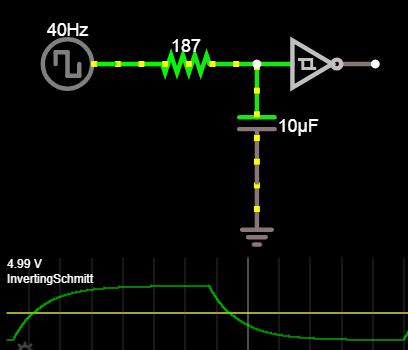
i solved this another way, as shown here. Instead of driving the 2nd schmitt off the 1st schmitt's triangle, i'm instead taking the square from the 1st schmitt, shifting it with an RC, and then driving the 2nd schmitt with that filtered wave:

https://tinyurl.com/y9cv6mqh

Works as expected in LTspice by @crutschow (since my falstad seems to have a bug in the schmitt thresholds):
https://forum.allaboutcircuits.com/threads/time-shifted-square-using-schmitt.152749/#post-1311348

There is little practical application for such a function.
and you know all possible applications in the universe? :D
 
Last edited:
Top