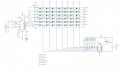
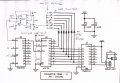
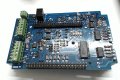
Thankyou moderator: I was on the bus when i posted it and didnt have access to my pc based photo editing softwareBetter image
View attachment 125987
Moderator's Note:
The images has been rotated twice to normal direction and reduced to 1024x768.
Thankyou moderator: I was on the bus when i posted it and didnt have access to my pc based photo editing softwareBetter image
View attachment 125987
Moderator's Note:
The images has been rotated twice to normal direction and reduced to 1024x768.

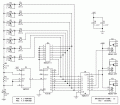
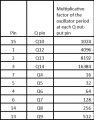
hello AK,With R2 centered, the output period will be approximately 5 minutes. You can change R1 and R2 to get different adjustment ranges. The equation is in the 4060 datasheet.
ak
View attachment 124831

It is not near the oscillator sample schematics where one might expect, but later; Page 7, RC Oscillator Noteshello AK,
The last sentence of yours above: I have the TI datasheet for the 4060 (attached) but I cannot see the section to which you refer. Can you help pls?
thanks!It is not near the oscillator sample schematics where one might expect, but later; Page 7, RC Oscillator Notes
ak
thanks Dendad. have printed the two circuits and i will study them and build one. i will give you feedback asapAnother way to do this is to use a 555 to produce the clock signal, not the RC osc on the 4060.
Then with a diode from each output of the 4017 (cathode to 4017 o/p) and a series resistor or pot, feed the 555 oscillator.
See this blog..
http://www.learningaboutelectronics...d-oscillator-VCO-circuit-with-a-555-timer.php
View attachment 126046
I unashamedly borrowed the circuit you are using to show you a way to mod it.
I didn't get around to drawing it properly.
Now you can adjust the time of each output.
The 555 values are just a guess, and I have not built this but I think this should work.
Have fun![]()
With a CMOS 555 you probably can eliminate the CD4060. Also, I don't think the control input will have the desired adjustment range.Another way to do this is to use a 555 to produce the clock signal,
That's a good idea AnalogKid. Trying a CMOS 555!With a CMOS 555 you probably can eliminate the CD4060. Also, I don't think the control input will have the desired adjustment range.
MK - in a system with individually adjustable times for each zone, what are the overall minimum and maximum on times?
ak


With R2 centered, the output period will be approximately 5 minutes. You can change R1 and R2 to get different adjustment ranges. The equation is in the 4060 datasheet.
I will respond to all of this, but I'll have to dip in and out throughout the day. Easy parts first:This begs the question: “5 minutes measured from which Q pin” and whether this target pin is the same as that applying to the formula for f above. So we first have to establish which pin the five minute estimate is meant to be measured from.
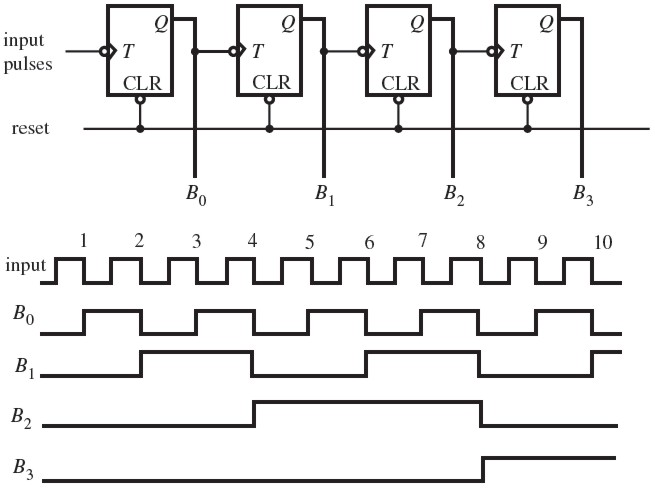
It is not exactly clear what you mean, so maybe no. The 4060 is not like the 4017. The outputs of a 4017 look more like a shift register than a counter. Only one output is high at any time, and the high output appears to travel along the output pins, moving one step with each input clock pulse. All high output pulses are the same width.Calculating the period of the oscillation:
Each successive pin goes high for and at the same time period after the last as the pulse generated by the oscillator moves from each output pin to the next. Each escalating pin in this sequence represents the binary count digit moving sequentially to the left from its neighbour to its right.
The forward voltage drop across a TRIAC is not a problem at 120 Vac, but is a significant percentage at 12 Vac and might affect the ability of the solenoids to pull in.Being that the relay load is 12V AC, I would be tempted to use triacks direcly using an Optp-Isolator.