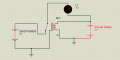
Can I directly do this type of switching in my inverter circuit?

Thread Starter

prats_18

Joined Jul 20, 2024
3
relay basic circuit.PNGrelay basic circuit.PNG
So our project is based upon using a solar panel as the main source, but in case it fails, we need the circuit to automatically switch to the government supply which we'll be converting into 12V DC. Can this be achieved directly and simply by a relay circuit like the one in the image? Or we need a sensor and a micro-controller like Arduino for the job? Also, are there any changes that I need to make in the circuit?
 

boostbuck

Joined Oct 5, 2017
1,032
In your circuit, one side of your lamp is always connected to the solar panel, and the other to ground OR to grid. I think you mean it to be: one side of your lamp is always connected to ground, and the other side to 12V EITHER solar or grid via the relay.

You idea will work in general terms, but I have found in practice that marginal power from the panel due to weak insolation at start and end of day means a risk of relay chatter in that time.

I solved it in practical terms by using a DPDT relay with the extra pole used to load the panel with a dummy load similar in size to (in your case) the lamp. Only when the panel delivers enough power to drive the dummy load AND the relay will the relay operate to switch from the dummy load to the lamp.

A microprocessor with solar sensor will also work, but seems unnecessarily complicated.
 

Thread Starter

prats_18

Joined Jul 20, 2024
3
In your circuit, one side of your lamp is always connected to the solar panel, and the other to ground OR to grid. I think you mean it to be: one side of your lamp is always connected to ground, and the other side to 12V EITHER solar or grid via the relay.

You idea will work in general terms, but I have found in practice that marginal power from the panel due to weak insolation at start and end of day means a risk of relay chatter in that time.

I solved it in practical terms by using a DPDT relay with the extra pole used to load the panel with a dummy load similar in size to (in your case) the lamp. Only when the panel delivers enough power to drive the dummy load AND the relay will the relay operate to switch from the dummy load to the lamp.

A microprocessor with solar sensor will also work, but seems unnecessarily complicated.
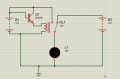
The problem is, I tried mimicking the solar panel not being able to provide sufficient electricity by adding a switch. Now during the simulation, when I open the switch, the simulation shows error, can you help?
Thank you so much for your time and effort!
 

Thread Starter

prats_18

Joined Jul 20, 2024
3
Did you understand what is wrong with your original circuit?


Can I help? Are you kidding me?? Added a switch to what? where? how? which simulator? what error?
Sorry I'm new to all this, forgot to give the details, but now it's working, the only problem was of grounding, I made the circuit from scratch again and now it's working. Thank you!relay basic circuit.PNG
 

boostbuck

Joined Oct 5, 2017
1,032
I glad you've got it working, but I think you will still have problems when the solar panel output rises (or falls) and it delivers enough power to operate the relay but not enough to power both the relay and the lamp. In that situation, the relay will switch the lamp in, but the panel voltage will then fall and the relay will drop out. Then the unloaded panel voltage will rise and the relay will operate again, repeatedly. This can occur at dawn, at dusk, and with passing cloud cover.

You haven't given any values for your components or power levels involved, but I think the transistor is unnecessary as it is connected as a diode. Can you explain to me the purpose of the transistor?
 
Top