Hello,
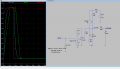
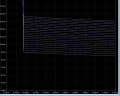
U_IC1 is present when Device is ON which turns ON Q3 momentarily, controlled by the time constant set by R2 and C1. Thus U_C_Q1 = 7.8 V- VCE_Q3-VD1.When the input signal EX_IN is applied and exceeds the base-emitter voltage (V_BE) threshold of Q1, the emitter voltage of Q1 (U_E_Q1) rises. This U_E_Q1 voltage drives Q2, which in turn influences the collector voltage U_C_Out. Changes in U_C_Out affect the feedback diagnostic signal UFB_Diag. The role of Q4 is to latch or hold the state of the UFB_Diag signal after Q3 turns OFF, effectively preserving the output state till device is on and U_IC1 is present.
Agreed.It looks to me like a circuit from the early days of transistors. Anyone designing it after about 1980 would use a comparator, a timer and a bit of logic.
IF the intention is to guard against an over-voltage in excess of 9.00 volts, and if it is acceptable to do an initial manual calibration, then a much simpler scheme will be to use a zener diode to supply a potentiometer so that it will trigger a sensitive gate SCR to pull the output connection low, with a resistor pull-up to keep the output at the higher voltage until it is triggered.
The big limitation of this scheme is that it does not have an automatic reset if the voltage drops below 9.00 volts. To provide an automated reset you will need a different device than the SCR.
As has already been said, you cannot have an analytical solution to a random physical attribute.
What you can do is use the simulation to predict results by randomly assigning values to all components within their temperature and tolerance boundaries (Monte-Carlo analysis) and, after a few thousand or more simulations, from that predict what values of the components are acceptable and then pre-select them prior to manufacture.; Its not perfect but it'll get you closer to a solution. The alternative is to 100% test all manufactured devices under failure conditions to weed out those that will have problems in the field.
Actually, iif the TS has a simulator that can vary the temperature, and if the TS can discover which voltages are changed the most by temperature and causing the problem, then it could work to follow the suggestion from IRVING and vary resistor values. This is known as trial and error.
The manufacturing solution to this is simply replace all of the above "design" with a daughter-board containing the revised parts as discussed above.
What I would love to understand is WHY? Why is this circuit subjected to such a wide temperature range without any mechanical support? Where is this used? As a junior radio engineer in the late-1970s I was designing radio gear for fighter jets where the radio bay had been inconsiderately squeezed on top of the engine bay +140C when on a desert air strip engines idling, -45C on a wind-swept artic strip with engines off. We made it work, but it wasn't easy and we found many novel solutions to ensure the electronics were not compromised.
The start of progress will come from learning which parts are temperature sensitive. That would be gain and leakage of transistors, , forward drop of diodes, and leakage current in capacitors..
An effective but much less theoretical scheme will be to heat the system to the temperature that produces the problem, and then while monitoring the output, use "Zero Mist" to cool the hot parts, one at a time, to see which ones are the problem. This is a 1950's TV service technique. Not an original idea. But in this application it might possibly be useful, and certainly not very expensive to implement.

 Facebook
 Google
 GitHub
 Linkedin