Protect Central Locking System from Back E.M.F

Tonyr1084

Joined Sep 24, 2015
9,744
The suggestion of a two-terminal polarity sensitive was made in post #33. It was questioning if reversing the coil polarity would reverse the relay logic. THAT is what I was responding about. It was then discussed in a few following posts.

Especially in a control circuit operating an automotive power solenoid, a latching relay would be a way to cause fires, or at least solenoid burn outs. THAT seems unlikely to be a good design feature. So thinking about the relay use, why would a latching type of relay even be even considered???
AND, I suggest, for education, opening one of those relays and observing how it functions.
@DC_Kid referred to a latching type relay, I believe by misunderstanding. I can say that I've never encountered a latching relay that latches or unlatches by reversing polarity, though I could see such animal existing. Though discussed, it was determined that the TS is using a standard automotive type relay, the kind you get when you add an accessory such as fog lights or additional horns - or whatever else one might add to a vehicle.

I must agree with you, a latching relay in an automotive application is at best unreasonable. The chances exist the relay could be latched then the auto shut off, leaving the (for instance) fog lights remaining on and draining the battery. So at this point it seems clear that a latching relay is not what the TS has or wants.

Look! I respect anyone and everyone who has a different opinion. If I'm wrong then I respect when I'm corrected. If someone disagrees with me or I with them - I still show them respect. It's an American Constitutional guarantee that a person has the right to believe as they see fit. I, as an American, extend that right to all who visit this website. I believe it's a part of the Community Guidelines, though it's been a very long time since I looked at it. That means you have the right and responsibility to point out when I'm in error. You also have the right to disagree with me. What I object to is negative or hostile language. We all are adults of varying ages and experiences. We should act like that's the case - being an adult.

I'm done with this public diatribe. In fact it appears the TS has also gone so far as to likely have found a solution to their problem, whether it's something I suggested or someone else has. To be a part of that is all I want.
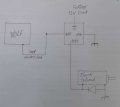
That's wonderful, Thank You .. in my diagram I just took the relay wiring from Nilight Relay on Amazon .. There's a diagram called "Normally OFF Relay with a Ground Trigger" so, since the Gray wire is momentary ground I just complete the diagram as you saw. but I'm very confused about connect the 12V to 30, 85 and 86 with Gray wire, Is it really safe?
Yes.

Unwatched. And will likely remain un-responded to.
 

DC_Kid

Joined Feb 25, 2008
1,242
Consider the unexpected results if a polarity sensitive latching type relay in a momentary relay package was accidentally used in a typical circuit. And certainly with the same standard connection designations that could happen. THAT was my point.
I guess it could happen, likely a rare event.

The suggestion of a two-terminal polarity sensitive was made in post #33. It was questioning if reversing the coil polarity would reverse the relay logic. THAT is what I was responding about. It was then discussed in a few following posts.


Especially in a control circuit operating an automotive power solenoid, a latching relay would be a way to cause fires, or at least solenoid burn outs. THAT seems unlikely to be a good design feature. So thinking about the relay use, why would a latching type of relay even be even considered???

AND, I suggest, for education, opening one of those relays and observing how it functions.
The two diagrams posted showed relay coil wired opposite from each other. Polarity sensitive would need to be checked.


But you could use just 1-half of a 3 terminal coil (usually it's a center tapped coil) and then swap polarity to move the throw the other way. In essence, even though it's a 3 terminal coil , the relay could still function using just 2, perhaps saving traces on a ckt board. Very easy to signal such setup using two IO pins of an MC. Many ways to skin that cat, but certainly an "odd" configuration.

Anyways, I think the OP should have enough info to get things going. That batt fuse is important.
 
Last edited:

MisterBill2

Joined Jan 23, 2018
27,555
The polarity sensitive relays that I have seen had a two terminal coil and were truly polarity sensitive. A three terminal coil arrangement will probably NOT be polarity sensitive, because it uses separate coil segments for magnetic reversal. In addition, having opened a number of the standard "cube"relays to examine the contacts, their construction can not provide polarity sensing.
 

du00000001

Joined Nov 10, 2020
189
As I'm perusing 5 pin relays I'm finding pins 85 and 86 wired to battery and ground. Some show pin 86 to ground, some show pin 85 to ground. If you find this confusing, so do I. In the end, an electrical current through the relay will produce the magnetic force needed to change the state of the armature in the relay from not active to active (off to on, depending on which pins you use). In a standard automotive relay it doesn't matter which pin (85 or 86) gets power and which gets ground. When the relay is powered the NO contact will become active and conduct current from pin 30.
Unless you have one of the newer relays with an integrated (flyback) diode, it does not matter whether you connect Term85 or Term86 to Plus (and the opposite one to Minus).
But the standard says Term86 towards Plus, Term85 towards Minus.
Want more information about all these fancy contact (terminal) numbers? -> https://en.wikipedia.org/wiki/DIN_72552
 

MisterBill2

Joined Jan 23, 2018
27,555
Unless you have one of the newer relays with an integrated (flyback) diode, it does not matter whether you connect Term85 or Term86 to Plus (and the opposite one to Minus).
But the standard says Term86 towards Plus, Term85 towards Minus.
Want more information about all these fancy contact (terminal) numbers? -> https://en.wikipedia.org/wiki/DIN_72552
WHAT STANDARD??? And why would a standard specify something that makes no difference? In addition, iif a diode were hidden inside the relay, hopefully the numbers would all be different.
Waiting for an explanation as to WHAT STANDARD??
 
Last edited:

du00000001

Joined Nov 10, 2020
189
WHAT STANDARD??? And why would a standard specify something that makes no difference? In addition, iif a diode were hidden inside the relay, hopefully the numbers would all be different.
Waiting for an explanation as to WHAT STANDARD??
As given: DIN 72552.
And don't attempt to argue that this is a German standard that does not apply to your region: it's a world-wide (mainly) automotive standard that comes under differing designations (EN, IEC, SAE, whatever) in other regions.
 

Ya’akov

Joined Jan 27, 2019
10,239
WHAT STANDARD??? And why would a standard specify something that makes no difference? In addition, iif a diode were hidden inside the relay, hopefully the numbers would all be different.
Waiting for an explanation as to WHAT STANDARD??
Either I am experiencing déjà vu, or a conversation very much like this one has happened in the past. The reason for such a provision in a standard is because it makes a difference. The authors of the standard, exercising foresight and concerned with consistency included polarity as a feature recognizing that polarity could matter even if it didn’t at the time it was written. The cost of complying with this provision at a time is didn‘t matter was zero and the benefit could prove substantial if/when it did matter—as with an integrated free-wheeling diode.
 

MisterBill2

Joined Jan 23, 2018
27,555
Very interesting indeed!
I certainly hope that the same standard ALSO DEMANDS that any device with a diode hidden inside be clearly identified.
Many of those cube relays that I have used include a schematic representation of the internal circuit printed on the outside, and none have ever shown any indication of a polarity requirement, such as a "+" sign.
In addition, that is certainly an adequate reason to avoid ever using DC in a control circuit that includes relays. I can hear the howls of rage already.
But I choose to not set traps for those following me.
 

du00000001

Joined Nov 10, 2020
189
Very interesting indeed!
I certainly hope that the same standard ALSO DEMANDS that any device with a diode hidden inside be clearly identified.
Many of those cube relays that I have used include a schematic representation of the internal circuit printed on the outside, and none have ever shown any indication of a polarity requirement, such as a "+" sign.
In addition, that is certainly an adequate reason to avoid ever using DC in a control circuit that includes relays. I can hear the howls of rage already.
But I choose to not set traps for those following me.
There's no real need to print a + (or minus) sign if it's clear that a relay complies to some standard. (A minimum of knowledge is always necessary to use standard components. Would you dare to install water plumbing without knowing about pressure ratings, fittings and alike?) I have at least seen a diode symbol on the body of one of these relays.
And DC control is clearly superior to AC control: starts with ease of implementation, possibility to implement economizer circuits, . . .
 

Tonyr1084

Joined Sep 24, 2015
9,744
I HAVE seen relays with internal flyback diodes. But only after I've blown them out by reversing the polarity then busting them open to see what's inside. I was not aware of a standard, but a standard makes sense. Thanks for the enlightenment.
 

MisterBill2

Joined Jan 23, 2018
27,555
Consider "T"s response.
EXACTLY what my thinking is. Many of us are not familiar with all of the German standards for automotive electrical wiring.
And there is no question but that putting a diode into a device without adding an indicator mark IS INTENTIONALLY SETTING UP A TRAP for one who is not expecting it. I am quite aware that some do that, and those folks pay a much greater price for any service that they get, as a direct result.
 

du00000001

Joined Nov 10, 2020
189
Consider "T"s response.
EXACTLY what my thinking is. Many of us are not familiar with all of the German standards for automotive electrical wiring.
And there is no question but that putting a diode into a device without adding an indicator mark IS INTENTIONALLY SETTING UP A TRAP for one who is not expecting it. I am quite aware that some do that, and those folks pay a much greater price for any service that they get, as a direct result.
I'm now 35+ years in E/E R&D (including about 20 years in automotive - which gives me an unfait advantage on this topic). One for sure: I do not use a component more complicated than a standard resistor or ceramics capacitor without having at least a glimpse into the operational parameters and/or the datasheet. "RTFM" really pays out, and I can recall more than one issue resulting from not digging deep enough into the documentation.

BTW: while the reference was to some DIN standard, these standards are basically world standards. So it's not about ignoring "German standards" but ignoring the state of the art
What I can recommend as well: when adding something to an existing application, get the wiring schematics and simply implement the additions similar to what already exists.
 

MisterBill2

Joined Jan 23, 2018
27,555
One thing is rather obvious about automotive applications is the very long life of contacts that switch inductive loads that have no diode attached at all. Perhaps it is simply that a whole lot of switches are designed adequately to not suffer from whatever spikes may be generated. Could it be that some designers are more concerned about something besides removing enough quality so that a product will only last a few days beyond the warranty??
Consider the switches that control the relays and valves for our heating and cooling systems. Not a diode or snubber to be seen. And think about that little relay in your car that controls the starter solenoid. My old van wore out after 23 years but that little relay still performed perfectly, switching that solenoid that drew a few amps.With no protection diode at all.
 

du00000001

Joined Nov 10, 2020
189
One thing is rather obvious about automotive applications is the very long life of contacts that switch inductive loads that have no diode attached at all. Perhaps it is simply that a whole lot of switches are designed adequately to not suffer from whatever spikes may be generated. Could it be that some designers are more concerned about something besides removing enough quality so that a product will only last a few days beyond the warranty??
Consider the switches that control the relays and valves for our heating and cooling systems. Not a diode or snubber to be seen. And think about that little relay in your car that controls the starter solenoid. My old van wore out after 23 years but that little relay still performed perfectly, switching that solenoid that drew a few amps.With no protection diode at all.
Switches and rely contacts are not very susceptible to the voltage spikes from switching off inductive loads (appropriate contact materials presumed). In addition the wire harness often adds enough (parasitic) capacitance to further lower these spikes. And the starter relay of your van might have seen not too many cycles - even in 23 years

Re "... removing quality ...": it's usually not the designers but the (well-hated) controllers (aka "pea-counters") that attempt to reduce quality to hardly more than what's necessary to reach the end of warranty unimpeded If you ask the designers . . .
On the bright side (designers' view): if something goes wrong with these "optimizations", it might cost the manufacturer way more than what was "saved" due to the optimization. Sh.t can happen
(I designed more than a single system that easily reached 20+ years of operation without systematic issues. (Damage from misuse, overvoltages etc. may have occured but was repairable at low cost.)
 

Tonyr1084

Joined Sep 24, 2015
9,744
Re "... removing quality ...": it's usually not the designers but the (well-hated) controllers (aka "pea-counters") that attempt to reduce quality to hardly more than what's necessary to reach the end of warranty unimpeded If you ask the designers . . .
Here here!

My MIL had a washing machine fail just one month beyond the warranty. It was a mode shift coil that failed. ALL the coil did was move a clutch in and out to change from agitation to spin. I could buy the ENTIRE MECHANICALS for $135.00 or pay a mechanic $300 to $400 for the repair. Turned out the MSC (Mode Shift Coil) was easily detached with a single bolt. Could have been changed extremely easy. But the Mfr. would not sell just the MSC. So I pulled it off and drilled out the rivets holding it together. The thing was pristine. The ONLY failure was the Fusible Link (FL). After running the numbers it was determined that the FL was rated for 106% of normal operation. No wonder it failed. So I went to Radio Shack and for $1.98 plus tax I bought a FL that was rated for approximately 146% of normal operation and installed that. So, ignoring tax, I fixed it for less than $2.00.

I'd not characterize this as an "engineering failure" or "design failure" but much more a "Planned Obsolescence". Designed to fail. Then of course you could not just get the MSC, you had to buy and replace the entire mechanism. Practically a new machine after that. Mom was going to trash it and buy new. But I stepped in and fixed it, as I said 'for less than $2.00'. That was 15 years ago. And to date there have been no more MSC failures AND there have been no fires either.

Commercial design is best planned for 133% of normal operation whereas military, mission or life critical (as is probably automotive) design calls for 150% of normal operation. At least that's what I've always heard in the circles I've roamed about in. And I'm not an engineer. But I've worked with enough of them to know some of the disciplines.
 

du00000001

Joined Nov 10, 2020
189
I have similar stories:
  1. A coffee machine that failed from first switch-on (would have been covered by warranty): (over-) temperature fuse blown I happened to have a thermal fuse from another machine (failed due to age) that was rated 10 °C less than the blown one. After replacing the fuse the machine ran "forever". Early failure, still annoying if you want to have a quick coffee
  2. The handle/lock assembly of our dish washer failed (after some years). Turned out the 2-part metal cast cage (welded?) came apart from the constant pressure of a really strong spring. Solution: drill 2 holes through the 2 halves, re-assemble/-join them using screws & nuts (the tricky part was to hold the halves together against the spring's pressure until screwed together). Issue: somewhat silly design. Outcome: when we moved on (years later), our successors in this house "inherited" a still functional dish washer

I'm sure there are more similar stories buried somewhere in my memory - these 2 were the ones that surfaced.
 

MisterBill2

Joined Jan 23, 2018
27,555
Similar but a bigger and heavier, and even happier tale! And totally true.
I was GIVEN a double door commercial cooler because it would not keep the contents cool. I had no use for it, BUT a local food pantry operation a block away really needed a cooler. Fortunately this one had good castors. So we got it out the door before the replacement arrived, and I rolled it across two streets and then I rolled it a block to the food pantry. Then I got help and we got it inside.
Here the diagnostics get interesting. The cooler requires fan circulation to pass air over the evaporator coils and into the compartment with the food to be cooled is located. But those fans were not running, ever. So nothing would be cooled. Exactly what the complaint was. Time to examine the circuit schematic! The fans would run when the compressor ran, IF The doors were closed. An SPDT switch would switch off the fans and switch on the lights, when either door was opened. BUT the one side of the switch had failed, so the fans never ran. So I cut the fan wire from the switch and spliced it to the switch common feed. Now the fans run and the cooler cools very well. The total parts cost was one medium size wire nut. And a half hour inspection to locate the failure.
The design flaw was in not selecting a switch with adequate ratings for the application for a critical part.
 

Thread Starter

HadyShaltout

Joined Oct 14, 2024
30
OK, if you want a relay in the circuit - this is how I'd do it:
{UNDER EDIT}. OK, this is now correct.
View attachment 333769
Good Day pal,
I asked ChatGPT how to install a solenoid for the trunk and use the Central locking momentary ground wire to be able to open the trunk through the remote button, and this is the answer, I added one of your diodes but need to ask you about the wiring, and another question, I'm wondering, do I need two actuators for the trunk? One connected to open the lock itself and the other one to open the trunk's latch?

ChatGPT Answer:


Use a standard automotive 4-pin relay(pins 85, 86, 87, and 30):
  • Pin 85: Connect to ground (chassis).
  • Pin 86: Connect to the grey wire from the Wolf system (the momentary ground wire).
  • Pin 87: Connect to the positive wire of the solenoid.
  • Pin 30: Connect to a fused 12V power source (e.g., directly from the car battery or another suitable 12V circuit in the trunk).

WhatsApp Image 2024-10-27 at 17.20.17_097f012a (1).jpg
 

Tonyr1084

Joined Sep 24, 2015
9,744
I'm wondering, do I need two actuators for the trunk? One connected to open the lock itself and the other one to open the trunk's latch?
As for whether you need two actuators or not - I don't know. That would depend on your vehicle's trunk latching mechanism.
Good Day pal,
I asked ChatGPT how to install a solenoid for the trunk and use the Central locking momentary ground wire to be able to open the trunk through the remote button, and this is the answer, I added one of your diodes
There has been some question about the WOLF. Does the "Momentary Ground" provide power when it's not grounded? My guess is that it probably doesn't. Even if it did it's not likely going to be enough current to actuate the actuator. Since it provides a momentary ground, assumably only during the time you want the trunk to pop open, I would assume that it is necessary that the relay has a constant source of voltage. The drawing you posted shows one side of the coil connected to ground. When the WOLF goes to ground you now have your relay thoroughly grounded on both inputs. In that instant of time the relay will do nothing. And if your WOLF DOES provide power at all other times, your relay would be active at all times except for when you want to pop the trunk. The relay will warm, and eventually may get hot enough to burn something. So I'd say your diagram is wrong. On pin 85 you should have 12V continuous source, not ground. When the WOLF commands the actuator to pop the trunk it will give you a momentary ground and the relay will then trigger the actuator. THAT is when you want the trunk to pop open; when the WOLF provides the momentary ground. To depend on a continuous source of current (not voltage) to hold the trunk closed and locked, when that current fails the trunk will pop open at will. Not at a time you wish.
 
Top