I got no comments on post #134. I'm surprised @nsaspook didn't take the bait.
Anyway, to follow up, here are the two IIR RC filters written in .asm against my floating point library, one single (32 bit) precision, the other double (56 bit precision):
Code:
;single precision (32 bit IEEE) verion

        pushfl  x       ;Get new (float) sample x
        pushfl  y       ;Get previous (float) filter output y
        call    subf    ;get difference (float)
        pushfl  alpha   ;get (float) alpha
        call    mulf    ;multiply (float)
        pushfl  y       ;Get previous (float) filter output
        call    addf    ;add difference (float)
        popfl   y       ;save new (float) y

;double precision  (56 bit IEEE) version

        pushfd  x       ;cast new float sample x as a double and push on stack
        pushd   dy      ;Push high precision previous filter output y
        call    subd    ;get difference (double precision subtraction)
        pushfd  alpha   ;cast alpha as a double and push on stack
        call    muld    ;multiply (double precision multiplication)
        pushd   dy      ;Push high precision previous filter output y
        call    addd    ;add difference (double precision addition)
        peekd   dy      ;capture high precision (double) new filter output
        call    convdf  ;cast double as float for float output
        popfl   y       ;save new (float) output y
Mainly, things are done a certain way because that is the way they've always been done.
One of my rules: when working on new tech, never look at what has been done before. This merely locks one's mind into a box, trying to make incremental improvements on existing tech, usually adding cost for marginal improvements.
Instead, I divorce myself from the "state-of-the-art" and try to approach the problem from fundamentals, while applying my knowledge of modern materials, devices, and data processing methods. This often results in novel, high-performance, low-cost solutions.
I take big risks. But the return is significant if the ideas are successful.
Using this approach, I've developed many technologies that have been orders of magnitude better than existing offerings -- and usually at a much lower cost.
I've said it before: I try to do at least one impossible thing every day. Some days, I do three.
Soooo, the advancement is not so much a new technology coming along (which is rare!) as a novel approach and clever selection of tools, including code, to solve the problem? Anyone could have done it, but didn't? That's a very cool way to snatch a success.
Soooo, the advancement is not so much a new technology coming along (which is rare!) as a novel approach and clever selection of tools, including code, to solve the problem? Anyone could have done it, but didn't? That's a very cool way to snatch a success.
If anyone could do it, they would. I've had other engineers refuse to work with/for me because they thought my ideas were impossible to implement -- even after I explained to them how to do it. That's another reason why I went off on my own many years ago.
Everything I do today is a solitary effort. In fact, 99% of the technical discussions I have these days occur right here on AAC.
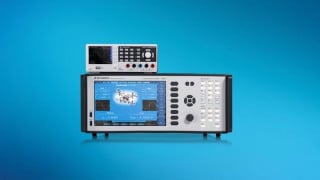
Another data point from the customer's independent testing (and he called me tonight to tell me):
Oh dear, I do hope you mean after you write down the brilliant idea. Having a brilliant idea pass through my head used to be enough. These days I know I'd better make a note.
Are you saying that, given a thumbnail outline of what you did, they still couldn't do it? That's cooler still. A natural monopoly beats the hell out of one based on patents and IP.
Maybe I am talking with the wrong people, or perhaps my communication skills are lacking, but the usual responses to my explanations are glazed-over eyes and head-shaking disbelief (disbelief that I'd actually talk such nonsense).
Oh dear, I do hope you mean after you write down the brilliant idea. Having a brilliant idea pass through my head used to be enough. These days I know I'd better make a note.
I rarely write anything down (unless I'm writing a patent application). Sometimes, I even have to reinterpret some of my former work on projects I haven't revisited in a while.
I rarely write anything down (unless I'm writing a patent application). Sometimes, I even have to reinterpret some of my former work on projects I haven't revisited in a while.
I write it down and still have to reinterpret my work. It's that process, of revisiting projects years and even decades later, that taught me the value of clear documentation. It's hard when you're in the middle of something to write a note to your future self, the one that has long forgotten what you are writing about.
I write it down and still have to reinterpret my work. It's that process, of revisiting projects years and even decades later, that taught me the value of clear documentation. It's hard when you're in the middle of something to write a note to your future self, the one that has long forgotten what you are writing about.
To be more specific: I don't keep a notebook with concise moment-by-moment notes of ideas that occur to me as they happen (as some I know do.)
OTOH, I've got notepads going back over 30 years -- most of the pages filled with scratchpad calculations -- and I archive all of my spreadsheet "simulations". And I've never discarded an email -- no matter how insignificant -- and they are categorized by project.
Since my end goal is always manufacturing, each project is highly documented with formal, revision controlled documentation. I use third party vendors for fabrication of much of the material, and mistakes are expensive. It's beneficial to have a comprehensive document control system (mine I developed myself in PHP).
All my projects involve code. This is where the real "idea documentation" happens. Algorithms -- how and why -- are explained at length and in detail in the comments. I use Git for version control. Git is nice because it maintains an annotated history as a project evolves. If I ever need to know why (or when) I made a change, I only need to review the history and the reason becomes self-evident.
In the end, I rely on my memory -- which for the most part is still an elephant's.

 Facebook
 Google
 GitHub
 Linkedin

 ... creative ... destructive ... what's the difference?