Facebook
 Google
 GitHub
 Linkedin
Almost everybody knows about the simple MOSFET/ZENER-Diode/Resistor circuit that prevents that power will flow into your
circuit when you connect the battery with reverse polarity.
That is well and good, I use it all the time on my boards, but it will not block reverse current like it can happen when you connect a power supply to a battery.
As it happened, I wanted to charge a large battery with my power supply and stupidly reversed the cables. The so-called protection diode across the outputs blew, but it did not prevent damage to the circuit.
Ever since I am looking for a better way to protect my (repaired) power supply from "everything", although it is being said, that there is always a clever idiot that beats idiot-proof designs".
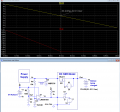
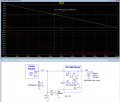
An example would be the NCV68061 (datasheet attached, I don't own onsemi stocks).
The first thing I don't understand in the shown circuits are the battery and the "protected" battery. What kind of situation is that?
A solar-charged house battery and your electric vehicle? And why should both not be protected?
Figure1 in the datasheet (ideal diode) seems to be just an improvement of the mentioned MOSFET circuit in that it has a charge pump and will start at 3.2V.
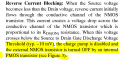
It will also protect form back-flow, I guess and it WILL also protect from reverse polarity... or not?
So why is there a second suggestion for the reverse polarity option?
What I want is something that I connect to the output of my lab supply and then I can connect anything - a low or higher voltage battery, reverse or not - to that output without fear of damage. No smoke... magic or otherwise.
Do I have to chain an ideal diode plus a reverse polarity circuit?
circuit when you connect the battery with reverse polarity.
That is well and good, I use it all the time on my boards, but it will not block reverse current like it can happen when you connect a power supply to a battery.
As it happened, I wanted to charge a large battery with my power supply and stupidly reversed the cables. The so-called protection diode across the outputs blew, but it did not prevent damage to the circuit.
Ever since I am looking for a better way to protect my (repaired) power supply from "everything", although it is being said, that there is always a clever idiot that beats idiot-proof designs".
An example would be the NCV68061 (datasheet attached, I don't own onsemi stocks).
The first thing I don't understand in the shown circuits are the battery and the "protected" battery. What kind of situation is that?
A solar-charged house battery and your electric vehicle? And why should both not be protected?
Figure1 in the datasheet (ideal diode) seems to be just an improvement of the mentioned MOSFET circuit in that it has a charge pump and will start at 3.2V.
It will also protect form back-flow, I guess and it WILL also protect from reverse polarity... or not?
So why is there a second suggestion for the reverse polarity option?
What I want is something that I connect to the output of my lab supply and then I can connect anything - a low or higher voltage battery, reverse or not - to that output without fear of damage. No smoke... magic or otherwise.
Do I have to chain an ideal diode plus a reverse polarity circuit?
Attachments
-
329.5 KB Views: 15