Facebook
 Google
 GitHub
 Linkedin

Hi,
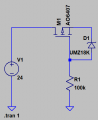
I am working on a PMOS-based reverse polarity protection circuit for a lithium thionyl chloride cell, and I have a few doubts about the necessity and sizing of certain components — specifically, a TVS diode and a resistor (R1) in the gate drive path.
From my LTspice simulations, the circuit seems to function correctly even without R1 and the TVS diode. However, I have seen designs include them, and I want to understand their purpose better.
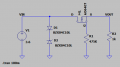
Here are my specific questions:
1. Will the circuit function properly without R1 and the TVS diode?
2. If R1 is required, how should its value be calculated?
3. What is the purpose of the TVS diode, and how should its breakdown voltage be chosen?
Any guidance on best practices and design considerations for these components in such a circuit would be highly appreciated.
Thank you!
I am working on a PMOS-based reverse polarity protection circuit for a lithium thionyl chloride cell, and I have a few doubts about the necessity and sizing of certain components — specifically, a TVS diode and a resistor (R1) in the gate drive path.
From my LTspice simulations, the circuit seems to function correctly even without R1 and the TVS diode. However, I have seen designs include them, and I want to understand their purpose better.
Here are my specific questions:
1. Will the circuit function properly without R1 and the TVS diode?
- In simulation, the PMOS reverse polarity protection circuit works fine without them. Are these components necessary for real-world reliability or protection?
2. If R1 is required, how should its value be calculated?
- The resistor is often seen in series with the PMOS gate. Is it used for limiting inrush current, protecting against gate-source ESD, or something else?
3. What is the purpose of the TVS diode, and how should its breakdown voltage be chosen?
- My assumption is that the TVS diode clamps the gate-source voltage in case of an overvoltage or reverse polarity scenario.
- If we're protecting against accidental insertion of a higher voltage battery (e.g., above 3.6 V), should the TVS breakdown voltage be around 3.6 V? However in this circuit the TVS breakdown voltage is 10V.
- How should I go about selecting the appropriate TVS diode specifications (standoff voltage, clamping voltage, power rating)?
Any guidance on best practices and design considerations for these components in such a circuit would be highly appreciated.
Thank you!