Purpose and calculation of C1 and R2 between gate and source in PMOS timing circuit

Thread Starter

ddc

Joined May 7, 2025
9
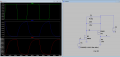
I am working with a PMOS-based switching circuit where the PMOS turns on for 20 ms with a total period of 40 ms (i.e., a 50% duty cycle). In the schematic, there is a capacitor C1 and resistor R2 placed between the gate and source terminals of the PMOS.
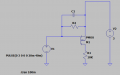
1749308879432.png

I'm trying to understand the following:

  1. What is the purpose of C1 and R2 between the gate and source of the PMOS?
  2. Will the circuit still function correctly without these components?
  3. If they are necessary, how should I calculate appropriate values for C1 and R2 based on the 20 ms ON time and 40 ms period?

Any insight or calculation approach would be greatly appreciated.

Thankyou
 

Ian0

Joined Aug 7, 2020
13,112
C1 is there to make it more likely to fail.
R2 is there to make sure it is OFF if your input gets disconnected.
Suggested values:
C1=0pF
R2 <1MΩ
[Edit] Mistyped R1 instead of R2 at first attempt
 
Last edited:

panic mode

Joined Oct 10, 2011
4,933
I'm trying to understand the following:

  1. What is the purpose of C1 and R2 between the gate and source of the PMOS?

that is your simulation problem. you really need to understand ideal sources...
once you do, you will note that values of C1 and R2 are irrelevant.

so first you need to add some values to those components.
then you need to add something to separate gate from V1... for example a switch, controlled by V1.
and THEN you can see effects of C1 and R2 values.

my guess is that someone tried (and failed) to make a delay circuit to create certain duty cycle.

  1. Will the circuit still function correctly without these components?
Sure as long as you can find an ideal voltage source. which does not exist...

  1. If they are necessary, how should I calculate appropriate values for C1 and R2 based on the 20 ms ON time and 40 ms period?
Simulator is one way to do that - as long as you understand what ideal components are. then you can model a real circuit.

for example, note that adding another transistor as a switch makes simulation realistic and effects of capacitor become visible. 1749416374992.png
 
Top