circuit below what is purpose of r5?

Thread Starter

hhsting

Joined Apr 25, 2024
395
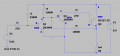
The circuit below is used as an on/off switch to turn 60 ohms led on when v2 is below around 0.6V or below and to turn led 60 ohms off when v2 is above 0.6V. I have been analyzing the circuit for four months or so but cannot understand the purpose of r5 resistor. Can someone please explain to me not in English verbiage form that is but in actual circuit analysis and in equations what is the purpose of r5? Also, if r5 were to be removed what would happen the circuit would turn on/off at 0.6V or not?
1736109237558.png
 

WBahn

Joined Mar 31, 2012
32,702
What is the purpose of anything else in that schematic?

What is the purpose of the schematic, period?

At first blush, the impression is that it is probably a constant current driver for the LED. Is that even close? Or does everyone have to guess what the circuit is trying to achieve?

It would also help if the schematic was drawn more cleanly.

What have you done to analyze the circuit? What are your results? What assumptions are you making?

What happens if you remove R5? Does the circuit still function (but perhaps not as well)?
 

Thread Starter

hhsting

Joined Apr 25, 2024
395
What is the purpose of anything else in that schematic?

What is the purpose of the schematic, period?

At first blush, the impression is that it is probably a constant current driver for the LED. Is that even close? Or does everyone have to guess what the circuit is trying to achieve?

It would also help if the schematic was drawn more cleanly.

What have you done to analyze the circuit? What are your results? What assumptions are you making?

What happens if you remove R5? Does the circuit still function (but perhaps not as well)?
I do state the circuit's purpose in post #1. It's drawn in LT Spice. That's the thing I don't see the difference between r5 removed and r5 being there. You say the circuit is not performing well without r5. If the circuit is not performing well without r5 then how? I don't see it.
 
Last edited:

ronsimpson

Joined Oct 7, 2019
4,645
It should add positive feedback. Schmitt trigger.
With out R5, it is possible to find a spot where the input is almost on and the output Q3 is halfway on. The transistor will get hot.
-----------------------------
To test make V2 a triangle wave, going from 0 to 1V and then back down. (1khz) The going up and going down trip point will be different with R5.
Post your CAD file.
 

WBahn

Joined Mar 31, 2012
32,702
I do state the purpose in post #1. Its drawn in LT Spice. Thats the thing I don't see difference between r5 removed and r5 being their. You say the circuit not performing well without r5. If the circuit is not performing well without r5 then how? I don't see it.
Ah. Don't know how I missed that. My apologies.

I wasn't saying that the circuit won't work (or work well) without R5, I was just suggesting that as something to look at in your analysis.

You are modelling the LED as a 60 Ω resistor. Based on what? LEDs are highly nonlinear devices. What is the actual LED that you are using in this circuit? Do you have a datasheet for it? If not, what color is it? Do you know anything about it's nominal forward current and voltage?

My initial suspicion is that R5 provides feedback to either stabilize the current in the LED or to stabilize the switching voltage for your control signal.
 

Thread Starter

hhsting

Joined Apr 25, 2024
395
It should add positive feedback. Schmitt trigger.
With out R5, it is possible to find a spot where the input is almost on and the output Q3 is halfway on. The transistor will get hot.
I don't follow. Can you show which spot is in terms of voltage, current, input voltage, and the actual equations? What transistor gets hot and how?
 
R5 involves a hysteresis so example when V2 rises to 0.65V the Led becomes Off but to turn On the Led again the V2 needs to go below 0.55V.
So the R3 creates some inactive zone to V2 changes that doesn’t affect the Led state.

Also R5 makes a positive feedback in Q2-Q3 coupling that speed up the transistor’s flipping (in time manner).
 

WBahn

Joined Mar 31, 2012
32,702
It should add positive feedback. Schmitt trigger.
With out R5, it is possible to find a spot where the input is almost on and the output Q3 is halfway on. The transistor will get hot.
That would make sense. The effect should be discernable as hysteresis in the switch on/off points.

I don't know, off hand, what impact the fixed 60 Ω resistor instead of a decent LED model will have on the behavior.
 

ronsimpson

Joined Oct 7, 2019
4,645
I don't know, off hand, what impact the fixed 60 Ω resistor instead of a decent LED model will have on the behavior.
With 60 ohms as a load, R5 pulls down on Q2-Base.
With a LED as a load, R5 will not pull down well. You might want to put a 1K resistor across the LEDs.
 

Thread Starter

hhsting

Joined Apr 25, 2024
395
R5 involves a hysteresis so example when V2 rises to 0.65V the Led becomes Off but to turn On the Led again the V2 needs to go below 0.55V.
So the R3 creates some inactive zone to V2 changes that doesn’t affect the Led state.

Also R5 makes a positive feedback in Q2-Q3 coupling that speed up the transistor’s flipping (in time manner).
How does it create more speed transistor flipping? Can you describe each circuit point with examples?
 

Thread Starter

hhsting

Joined Apr 25, 2024
395
That would make sense. The effect should be discernable as hysteresis in the switch on/off points.

I don't know, off hand, what impact the fixed 60 Ω resistor instead of a decent LED model will have on the behavior.
Its landscape light led thats its resistance
 

Thread Starter

hhsting

Joined Apr 25, 2024
395
How do you know that? Is there a resistor with the LED? LEDs do not act like a resistor, more like a Zener diode.
No acts like resistor led specs mention as 60 phms. Look lets take it as 60ohms i know it does please not deviate from the original questions.

thanks
 

MrChips

Joined Oct 2, 2009
34,627
R5 introduces positive feedback and hence hysteresis. Hence there is no chatter in the transition zone (the area of uncertainty), i.e. less susceptible to noise.
 

Thread Starter

hhsting

Joined Apr 25, 2024
395
R5 involves a hysteresis so example when V2 rises to 0.65V the Led becomes Off but to turn On the Led again the V2 needs to go below 0.55V.
So the R3 creates some inactive zone to V2 changes that doesn’t affect the Led state.

Also R5 makes a positive feedback in Q2-Q3 coupling that speed up the transistor’s flipping (in time manner).
How much hysteris? Also can you please show each point on circuit and describe analysis voltage changes etc?
 
Top