Bypass capacitor purpose?

Thread Starter

Homebrew1964

Joined Nov 22, 2024
104
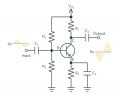
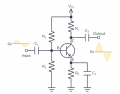
Can someone please tell me what function C2 plays in my circuit ?

All i can see is that it gives additional gain, is there any other reason for it being there?
Screenshot 2026-04-25 171107.png
 

WBahn

Joined Mar 31, 2012
32,702
Can someone please tell me what function C2 plays in my circuit ?

All i can see is that it gives additional gain, is there any other reason for it being there?
Without C2, what is the gain of the circuit?

How does making the value of RE smaller affect that gain?

What happens to the impedance of the RE. C2 combination when they are in parallel as C2 is made reasonably large?
 

Thread Starter

Homebrew1964

Joined Nov 22, 2024
104
I should stress i havn't actually built the circuit so i have no idea what the gain is...i was just curious about what that C2 actually does, i see lots of common emitter amplifiers using it.
 

crutschow

Joined Mar 14, 2008
38,314
So do you know how the emitter impedance value affects the circuit gain, i.e. how is the gain value of that circuit is calculated?
Once you understand that, you can answer your own question.
 

nsaspook

Joined Aug 27, 2009
16,249

Thread Starter

Homebrew1964

Joined Nov 22, 2024
104
So do you know how the emitter impedance value affects the circuit gain, i.e. how is the gain value of that circuit is calculated?
Once you understand that, you can answer your own question.
I have no idea, i am doing the suck it and see approach (put some values in and see what happens) i really don't have much math knowledge other than ohms law.
 

WBahn

Joined Mar 31, 2012
32,702
I have no idea, i am doing the suck it and see approach (put some values in and see what happens) i really don't have much math knowledge other than ohms law.
For that particular amplifier configuration, the gain is basically the ratio of Zc/Ze where Zc is the impedance between the collector and its supply and Ze is the reactance between the emitter and its supply.

You are limited by how much DC gain you can tolerate, otherwise the amplifier will saturate even with no input signal due to the bias network. That limit is often a lot less than the gain we want at the signal frequencies of interest. So we design the emitter impedance such that it starts of at a fairly large value at DC (chose to put the quiescent operating point where we want it, which is usually somewhere near the middle of the rails) but that it's starts getting smaller as the frequency increases.

That's what the bypass capacitor does. At DC, it looks like an open circuit, so the emitter impedance is just the resistor. But at high frequencies, the capacitor looks very close to a short, which still looks like a short when you put it in parallel with the resistor. The RC time constant determines the frequency at which this transition happens and to choose it to be somewhere between DC and the bottom of your signal frequency range.
 

LvW

Joined Jun 13, 2013
1,993
Can someone please tell me what function C2 plays in my circuit ?

All i can see is that it gives additional gain, is there any other reason for it being there?
I am "afraid" that - if somebody really wants to understand the role of RE and C2 - he has to learn the basics of negative feedback (and how negative feedback determines the gain)
 

MisterBill2

Joined Jan 23, 2018
27,159
I am "afraid" that - if somebody really wants to understand the role of RE and C2 - he has to learn the basics of negative feedback (and how negative feedback determines the gain)
Really, it is basic circuit theory! During the negative slope of the output waveform, the emitter resistor is in series with the load. The "increase in gain" is because of the effective reduction of the emitter series impedance by the capacitor C2
 

LvW

Joined Jun 13, 2013
1,993
For that particular amplifier configuration, the gain is basically the ratio of Zc/Ze where Zc is the impedance between the collector and its supply and Ze is the reactance between the emitter and its supply.
Because no parts values are given for the circuit under discussion, I think it is helpful (and necessary) to add that the mentioned approximate gain expression (Zc/Ze) is valid for |Zc|>>25mV/Ic only.
For C2=0, this condition simplyfies to Re>>25mV/Ic.
 

MrChips

Joined Oct 2, 2009
34,625
For starters, the drawing of the input and output voltage waveforms are drawn incorrectly.

AAC_NPN.jpg

The common emitter amplifier is an inverting amplifier. Hence the output waveform needs to be inverted as shown above.
 

MrChips

Joined Oct 2, 2009
34,625
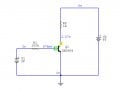
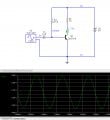
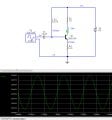
In order to have a deeper understanding of how transistor circuits behave, start with a basic common emitter configuration and learn how the base bias voltage affects the DC operating point of the transistor. You can do this with real components or with a circuit simulator.

From this, you can determine the current gain of the circuit.

NPN_1.jpg
 
Top