U.S. perspective[edit]
Sulfuryl fluoride is marketed in the U.S. by three manufacturers, under four different brand names. Vikane (Dow) (EPA Reg. No. 62719- 4-ZA) has been commercially available since the early 1960s, with Zythor (marketed by competitor Ensystex of North Carolina) (EPA Reg. No. 81824- 1-AA) being more recently introduced gradually as its use is approved by individual states (in Florida circa 2004, but not in California until October 2006, for example). Sulfuryl fluoride has been marketed as a post-harvest fumigant for dry fruits, nuts, and grains under the trade name ProFume (U.S. EPA Reg. No. 62719- 376-AA).[13] Most recently Drexel Chemical Company has registered Master Fume (EPA Reg. No. 19713-596-AA) for the structural market, competing against Vikane and Zythor.[14]
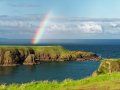
Yes, I took it earlier this month. Dunnotar Castle near Aberdeen, Scotland. It was a bit of a blue bird situation. My wife and I were driving north along the coast and the sun was setting. The castle wasn't on our list but she saw and said, let's go. So we did. There was a rain squall off shore a little bit and as it came in the rainbow proceeded it. Here's another shot to the left and about 5 minutes earlier.
Yes, I took it earlier this month. Dunnotar Castle near Aberdeen, Scotland. It was a bit of a blue bird situation. My wife and I were driving north along the coast and the sun was setting. The castle wasn't on our list but she saw and said, let's go. So we did. There was a rain squall off shore a little bit and as it came in the rainbow proceeded it. Here's another shot to the left and about 5 minutes earlier. View attachment 137913
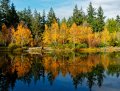
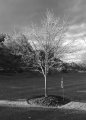
Thanks! No HDR. They were all a single exposure, shot in raw and a little post processing (contrast up, highlights down, saturation up). It helps to find good lighting - I'm partial to the golden hour but sunrise can be pretty good too. All three I posted were taken within an hour of sunset. Also, I'm really happy with my Olympus Mirrorless camera. It allows me to take fairly long exposure handheld shots so I don't have haul around a tripod.
Thanks! No HDR. They were all a single exposure, shot in raw and a little post processing (contrast up, highlights down, saturation up). It helps to find good lighting - I'm partial to the golden hour but sunrise can be pretty good too. All three I posted were taken within an hour of sunset. Also, I'm really happy with my Olympus Mirrorless camera. It allows me to take fairly long exposure handheld shots so I don't have haul around a tripod.
Well, very nice job. I have to start thinking about a new camera and some Autumn scenes (and your posts) may be the initiative I need. I have had a Kodak (my first ever and 1 M) then an Olympus (4 M) and over the last many years, a Canon Powershot A640 point and shoot, and a Canon 400D Digital Rebel DSLR, both 10 M. Maybe I will look beyond Canon this time.
BTW: for anyone interested HDR (High Dynamic Range) is basically a method where you take the same scene shot at different exposure levels and combine the photos into one. Any one photo washes out when the dynamic range is hit - but the place where it washes out will depend on the exposure level. Combining several photographs is a method that preserves (or extends, depending on your point of view) the captured range. The results can be pretty impressive but I have only tinkered and tat was long ago.
My daughter's camera, which I think is awesome as I've posted about here earlier, shoots in RAW and I think this is necessary if you want to get to the next level. On the other hand, iPhones are going to multiple lenses so that you can focus to any depth of field in post-processing. That just blows my mind.
My daughter's camera, which I think is awesome as I've posted about here earlier, shoots in RAW and I think this is necessary if you want to get to the next level. On the other hand, iPhones are going to multiple lenses so that you can focus to any depth of field in post-processing. That just blows my mind.
The next step is called Computational Photography (CP). It uses computer power to automatically do all sorts of interesting things. Like HDR, focus stacking, etc. We are seeing the first glimpses of it now. For example the Google Pixel has a sorta-kinda HDR process - they combine multiple exposures into one for every photo. Also, when you open the camera app, they are taking pictures all the time. Pressing the shutter button just commits the more recent one to memory. My camera (EM-I mark II) does the same thing. It has a buffer that can hold up to, iirc, 16 shots. If you half-press the shutter to focus, it starts filling the buffer and when you press the shutter all the way down it stores all the buffered shots. So, you don't miss a shot if you are a second late on the trigger. Google is doing a huge amount of research in that area and have some cool demos - like taking a photo through a chain link fence and automatically removing the chain link.
Your photos are just as gorgeous as a professional, tell me whether to use these (promotional link removed by moderator - advertising is not permitted in the forums)
Unfortunately, I do not have much experience, I would like to hear your advice. Thanks in advance!
Your photos are just as gorgeous as a professional, tell me whether to use these <snip- spam link removed>
Unfortunately, I do not have much experience, I would like to hear your advice. Thanks in advance!
Thanks, I'm just a dedicated amateur. There are huge number of ways to go about post processing. Take 100 serious photographers and you will get 150 ways of doing it. I don't use presets and especially don't use lightroom because it's an adobe product and I absolutely hate their business model. I use DxO and do simple stuff contrast, exposure, saturation. Presets are a short-cut that sort of works but, in my opinion, there is no substitute for understanding the basic manipulations. The best "post processing" happens when you start with good light when shooting. Sunrise and sunset are the best times to shoot. And, good "post" can't fix bad light.
Thanks, I'm just a dedicated amateur. There are huge number of ways to go about post processing. Take 100 serious photographers and you will get 150 ways of doing it. I don't use presets and especially don't use lightroom because it's an adobe product and I absolutely hate their business model. I use DxO and do simple stuff contrast, exposure, saturation. Presets are a short-cut that sort of works but, in my opinion, there is no substitute for understanding the basic manipulations. The best "post processing" happens when you start with good light when shooting. Sunrise and sunset are the best times to shoot. And, good "post" can't fix bad light.
Google for DxO optics pro. The current version (11, iirc) isn't free but there is a down-rev version that is free though you have to apply a little google-jitsu to find it. The free version doesn't support newer cameras but works pretty well. Some features require the elite version which isn't free.

 Facebook
 Google
 GitHub
 Linkedin