You have a diode blocking the current into the gate. (Put a diode between base and emitter, anode to emitter, cathode to base, because transistors don't like their emitter-base junctions reverse biassed.
You have a diode blocking the current into the gate. (Put a diode between base and emitter, anode to emitter, cathode to base, because transistors don't like their emitter-base junctions reverse biassed.
Then you need a PNP transistor, with its emitter connected to +3.3V.
Alternatively, stick with the NPN transistor and put a resistor between base and 3.3V to turn it on most of the time, then the negative pulse turns it off. You get a positive going pulse at the collector corresponding with the negative pulse from the ignition.
Then you need a PNP transistor, with its emitter connected to +3.3V.
Alternatively, stick with the NPN transistor and put a resistor between base and 3.3V to turn it on most of the time, then the negative pulse turns it off. You get a positive going pulse at the collector corresponding with the negative pulse from the ignition.
buck converter fed by LA battery, have had it running off that setup without issue - yet! Although i am a little concerned when the charge coil reaches 17/18 volt but i think that is down to a low state of charge.
So I've tried out all the circuits suggested an here's what I think.
The optocoupler looked promising and with a lot of tweaking with resistors I did manage to get some decent results but this is at the disadvantage to NOT knowing how much current is really being supplied to the opto. If the Signal was a steady voltage then I would have definitely gone the opto route but I can not be certain of the possible degradation in the opto.
Both NPN and PNP circuits worked as intended and I see no reason In not using them other than they will constantly draw power - albeit small - may not be suitable for battery operations.
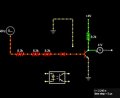
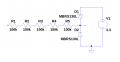
The circuit I have decided to go with is:
Reason being is that its simple, doesn't use power when off and its not influenced by the size of the resistors (5-200K tested).

 Facebook
 Google
 GitHub
 Linkedin