Thread Starter

Dr_Dankalicious

Joined Nov 4, 2025
6
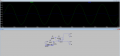
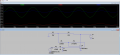
How can I provide a DC bias to my low pass op-amp filter? I would like the input signal to be centred around 1.65V. My first idea was to use a 3.3V supply, use a voltage divider and then tap off from the centre of the divider and then connect it to the node where C1 enters the non inverting terminal. But for some reason it doesnt work and I don't know why. Could someone guide me on this process ?
 

Attachments

MisterBill2

Joined Jan 23, 2018
27,362
Instead of connecting the end of R2 in your circuit to the center of the supply (common), tie it to a small negative voltage that will add the desired positive offset to the output. The input voltage will be amplified by the gain, so it ill be a quite small voltage.
 

Thread Starter

Dr_Dankalicious

Joined Nov 4, 2025
6
Instead of connecting the end of R2 in your circuit to the center of the supply (common), tie it to a small negative voltage that will add the desired positive offset to the output. The input voltage will be amplified by the gain, so it ill be a quite small voltage.
Hi MisterBill2
Please ignore the +10V and -10V supplies, that was just something i was doing to play around with the circuit. In reality all i have is a 3.3 V to ground supply, and with that I need to provide an offset as well as run the op amp. Would your solution work in that case too ?
 

crutschow

Joined Mar 14, 2008
38,423
Connect the (decoupled) 1.65V resistive divider voltage to R2 instead of ground.
Connect a large (1µF) capacitor in series with R1.

Your circuit is a single-pole, passive-low pass with gain.
If you configure the op amp as a Sallen-Key type filter, you can get a 2 or 3 pole with much faster rolloff.

But obviously you didn't look at the data sheet for that op amp.
As BobTPH noted, it will not work properly with a 3.3V supply.
You need a rail-rail op amp that can operate with that voltage.
 

Thread Starter

Dr_Dankalicious

Joined Nov 4, 2025
6
Connect the (decoupled) 1.65V resistive divider voltage to R2 instead of ground.
Connect a large (1µF) capacitor in series with R1.

Your circuit is a single-pole, passive-low pass with gain.
If you configure the op amp as a Sallen-Key type filter, you can get a 2 or 3 pole with much faster rolloff.

But obviously you didn't look at the data sheet for that op amp.
As BobTPH noted, it will not work properly with a 3.3V supply.
You need a rail-rail op amp that can operate with that voltage.
Hi Crutschow,
Thanks for responding. I made the changes and it seems to work. I'm using a MAX74821 (works on a single supply), and I added a capacitor after the input, and the voltage divider which taps off.

I have a couple of questions and I'd be grateful if you could help me find out the answer.

1. Why the high value C in series with the input ? The initial RC network I had made was supposed to have a cutoff frequency at around 150Hz. What does this capacitor do ? Would it not affect my corner frequency ?

2.Would the same biasing technique be possible with a low pass Sallen Key type network ?

Thank you so much for helping out.
 

Attachments

crutschow

Joined Mar 14, 2008
38,423
1. Why the high value C in series with the input ?
I just made it large enough to not affect the filter's response below its rolloff
After doing a sim of the circuit, I found it should actually be at least 10µF for negligible effect.
2.Would the same biasing technique be possible with a low pass Sallen Key type network ?
Yes.
It's a standard approach for any circuit with a single supply that needs to carry AC signals.

Here's a website for designing 3-pole Sallen-Key filters, if interested.
 
Last edited:

MrAl

Joined Jun 17, 2014
13,686
How can I provide a DC bias to my low pass op-amp filter? I would like the input signal to be centred around 1.65V. My first idea was to use a 3.3V supply, use a voltage divider and then tap off from the centre of the divider and then connect it to the node where C1 enters the non inverting terminal. But for some reason it doesnt work and I don't know why. Could someone guide me on this process ?
Hi,

Do you need DC coupling or is AC coupling good enough?
DC coupling means you can still read DC inputs as well as AC inputs, AC coupling means you can't read DC inputs only AC inputs.
 
Top