Yet if you listen to the rhetoric coming out of some of those fusion startups, you’re led to believe that it will be much cheaper to build, maintain, run, and decommission super-high-tech fusion plants than an equivalent coal plant. That is, it’s easier to set up a nuclear magnetic bottle and mimic the inner workings of the sun than it is to throw a rock into a raging fire. That, my friends, is bat-guano insane. As the Theranos trial is making clear, it’s not so easy to tell the difference between puffery and outright fraud. In my opinion, anyone telling investors that they’re going to produce energy at a third of the price of coal should brush up on the George Costanza defense: “It’s not a lie if you believe it.”
One of the strangest distortions about the whole fusion-energy-sector brouhaha is the way funders and business journalists treat all these fusion companies as startups. Some of them, such as Commonwealth Fusion Systems (founded 2018), aren’t too far off the mark. But others like Tokamak Energy (2009), General Fusion (2002), and TAE—the company formerly known as Tri Alpha Energy (1998)—are startups in the same sense that Cher is fresh new talent. After five, or 10, or 20 years of riding on potential, it’s time to admit that the potential wasn’t really there in the first place—at the very least, not in the way that the “startup” envisioned.
Yes i have been reading about some talking points of the 'startup' companies too recently and it bothers me.
It seems that there are some that would be fraudulent or at the very least close to that and should be called that. I was referred to the Theranos case and trial.
I read now there are claims of fusion online by 2030, 2025, and 2024 so pick a year and that's when it will happen
What bothered me the most was i read one headline that said that fusion had reached the grater than 1.0 energy input/output ratio but reading the article is wasnt true.
All we can do it wait and hope it works out at some point. I dont see any viable way to step in and monitor the progress independently although if i were an investor i sure would find a way.
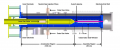
Seattle-based Zap Energy’s FuZE-Q reactor, scheduled to be completed in mid-2022, bypasses the need for costly and complex magnetic coils. Instead, the machine sends pulses of electric current along a column of highly conductive plasma, creating a magnetic field that simultaneously confines, compresses, and heats the ionized gas. This Z-pinch approach—so named because the current pinches the plasma along the third, or Z, axis of a three-dimensional grid—could potentially produce energy in a device that’s simpler, smaller, and cheaper than the massive tokamaks or laser-fusion machines under development today.
The real world has often made a mockery of the most confident simulation-based predictions—especially in plasma physics, where unexpected instabilities tend to pop up with the slightest change in conditions. And even if the new FuZE-Q machine achieves scientific breakeven, it will be left to a future machine to produce the even higher currents necessary to surpass engineering breakeven, where the electric power at the output exceeds what’s needed to produce the fusion reaction. Zap hopes to reach that milestone in 2026.
yes, it needs independent confirmation, not jut state report.
however if it is really able to run for as long as they claim, this would be note worthy.
yes, it needs independent confirmation, not jut state report.
however if it is really able to run for as long as they claim, this would be note worthy.
Not really, it will always be a specific test facility for this sort of fusion research. https://english.cas.cn/newsroom/archive/news_archive/nu2018/201811/t20181113_201191.shtml
They've had long duration plasma runs for a few years and much higher temperatures as starting points for the ITER reactor. You need the fusion product or triple product all together for anything to be really noteworthy.
Plasma physicists combine three parameters – temperature, density and time – by multiplying them together to form what is known as the fusion product or triple product. At a certain value of the fusion product, called ignition, the reaction becomes self-sustaining: the heat generated by the reaction is enough to keep the plasma hot and so the external heating systems can be turned off. For deuterium-tritium fusion this value is about: nτT ≥ 5×10²¹ m-3 s KeV. JET has reached values of nτT of over 1021 m-3 s KeV.
Ive been seeing advancements in this area maybe once a month. The advancements are kind of small. For one example, one experiment had a high temperature continuous burn for 5 billionths of a second and they called that progress. However, the reason that constitutes progress is because the theory behind all this is slowly being found to be correct and these experiments are following the predictions so they are deemed important even though there is little actual progress from time to time.
A short and skimpy example would be using Ohm's Law. If we didnt know about this 'law' but had the formula:
V=I*R and P=I^2*R
and we measured 12v and 12 Ohms and 1 amp and 12 watts, then later measured 24v and 12 Ohms and 2 amps and 48 watts, we would tend to believe the formula was correct in predicting the different outcomes.
So since the experiments are proving the theory to be correct it is strongly believed that the technology will one day work the way we want it to work.
Ive been seeing advancements in this area maybe once a month. The advancements are kind of small. For one example, one experiment had a high temperature continuous burn for 5 billionths of a second and they called that progress. However, the reason that constitutes progress is because the theory behind all this is slowly being found to be correct and these experiments are following the predictions so they are deemed important even though there is little actual progress from time to time.
A short and skimpy example would be using Ohm's Law. If we didnt know about this 'law' but had the formula:
V=I*R and P=I^2*R
and we measured 12v and 12 Ohms and 1 amp and 12 watts, then later measured 24v and 12 Ohms and 2 amps and 48 watts, we would tend to believe the formula was correct in predicting the different outcomes.
So since the experiments are proving the theory to be correct it is strongly believed that the technology will one day work the way we want it to work.
What we've both been seeing are fund-raising announcements for additional engineering research on the scientific feasibility (is considered to be capable of being done or carried out) of controlled fusion. We known the theory to be correct for many decades. The plasma conditions are inherently unstable, lossy and very non-linear even for things like electrical resistance (moving from positive to negative resistance) I/V curves with changes in plasma and current density during changes in electric and magnetic fields.
Yeah it's nuts but the main problem is control. Tjey have to control something that is very hard to control with something else that is also very hard to control. Last i read was that at least one group was using artificial intelligence to control the burn.
And yeah, every little advance comes out like a major breakthrough but success is still decades off, unfortunately, unless some miracle is discovered.
it looks impressive and near but there has to be a better way...
this is not just way too complex and finicky but also way too expensive and taking far too long. it will be more than a decade to fire it up and possibly several more to get there. it would be nice if someone comes up with a different approach and gets there quicker for much less, maybe with help of some new discovery or technology that is just around the corner.
it looks impressive and near but there has to be a better way...
this is not just way too complex and finicky but also way too expensive and taking far too long. it will be more than a decade to fire it up and possibly several more to get there. it would be nice if someone comes up with a different approach and gets there quicker for much less, maybe with help of some new discovery or technology that is just around the corner.
Yes it's a strange endeavor for sure, but the key point is that the benefits are so immense that at least an attempt to make it work is probably gogint to be extremely worthwhile. Who knows if we will ever actually get there though, that remains to be seen.
it looks impressive and near but there has to be a better way...
this is not just way too complex and finicky but also way too expensive and taking far too long. it will be more than a decade to fire it up and possibly several more to get there. it would be nice if someone comes up with a different approach and gets there quicker for much less, maybe with help of some new discovery or technology that is just around the corner.
A large part of the problem with plasma containment are boundary fringe effects propagating into the main plasma density. It's a problem for any possible type of fusion reactor but magnetic containment is where we have the best theory and practical experience. Complex and finicky is where the fun is when you need to design a machine that won't be destroyed with each power glitch.

 Facebook
 Google
 GitHub
 Linkedin