Facebook
 Google
 GitHub
 Linkedin

You may be right there but I dont believe they were planning it for to go on a higher voltage as this is a project book experiment (4x 1.5V dc batteries). Usually resisters with capacitors in this formation are used to limit the rate of charge of the capacitors arent they? In this particular decision-making circuit with on off switch, You may be right that it limits the charging voltage.The extra resistors R3 and R4 might be there to prevent the caps from charging up too much. Note the 6v power supply (battery), but they may have been planning for an even higher voltage power source like 12v.
Your correct according to the 2N2222. The transister used in this experiment was a "BC548" which I do not have but it seems to allow Veb 6V no problem.If the caps charge too high in voltage, when a transistor turns on it could bang the other transistor base emitter with a reverse voltage of more than -5 volts, which could damage the base emitter diode. Most of these transistors have a -5v limit on that.
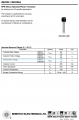
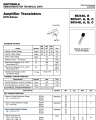
I definitely will do this when I learn to operate one of the sim software like LTSpiceYou could do a simulation and see if the caps ever charge up to more than 5v with different power supply voltages.
For this exact design, it doesn't seem to be a problem because the LED's will drop some of that 6v as well as the base emitter diodes of the transistors, but they may have been planning for a higher voltage. A simulation would tell us for sure.
Does this circuit you attached oscillate between the following states? (assuming Q1 switched on first)This circuit is a multi-multivibrator, with three distinct states rather than just two like a regular multivibrator (It looks like three anyway).
Notice it is set up the same way just with an extra transistor, and as mentioned the power supply is limited to 5v or lower.
Q1 ON Q2 OFF Q3 OFF
Q1 OFF Q2 ON Q3 OFF
Q1 OFF Q2 OFF Q3 ON
Q1 ON Q2 OFF Q3 OFF