Not sure what I need actually - Welder controls

Thread Starter

Theo_ZA

Joined Dec 20, 2024
14
Hello,

My name is Theo and I live in South Africa.

I am looking to make something, but have no idea where to start. I need to use a pressure sensor as a On/Off button, but also, to control amperage on a welding machine. The harder you press it, the higher the AMPS must ramp up. You get foot pedals that works with Rotating potentiometers to do this function.

I know these exists, but number 1. It is out of my price range. Number 2. It is fun to build your own stuff.

I have pretty much no knowledge of electronics. I was wondering if the output of a pressure sensor can be used in conjunction with an Arduino board to "read a complicated signal" from the pressure sensor and "translate it to a simple signal" to give to the welding machine?

Does anyone have an idea and time to help with such a project?

I thank you in advance.

Regards,
Theo
 

metermannd

Joined Oct 25, 2020
472
Just off the top of my head -

Do you know if / how external controls connect to your welding machine?

If I understand correctly, weight sensors are just a set of 'strain gauge' elements that produce a varying resistance, so the 'complicated signal' may be as simple as a varying resistance...
 

Thread Starter

Theo_ZA

Joined Dec 20, 2024
14
Just off the top of my head -

Do you know if / how external controls connect to your welding machine?

If I understand correctly, weight sensors are just a set of 'strain gauge' elements that produce a varying resistance, so the 'complicated signal' may be as simple as a varying resistance...
Thank you for taking the time to reply.

I will get hold of my pedal soon and take a photo or two? Maybe that can help?

Thanks agaim
 

MisterBill2

Joined Jan 23, 2018
27,316
OK, an interesting question. I see two different controls requirements: First, switch the welder on and off, and second, adjust the current setting of your welding machine.
I am making a guess that you already have a welding machine of some kind, and that it already has an ON/OFF switch, and an adjustment of some kind to control the current setting.
So now I have questions, because there are many different types of welders that use several different schemes to control the power on/off and the weld current setting. Foot pedal ON/OFF can be simple to control.
BUT what sort of current setting scheme does your welder use?? Some have switches, some have an electronic controller that uses a knob operated small variable resistor,and some have a knob or a lever to mechanically adjust either the transformer or the core of a series inductor, sometimes called a reactor. Without knowing that any suggestions will simply be a wild guess. So we need a description of how your welder adjusts.

And as for the foot pedal for control, an actual pressure sensor scheme is the most complicated and most expensive way to do it.
A much simpler scheme is to use a variable resistor (potentiometer) arrangement like is used in the foot pedal boxes that guitar players use. That is a simple mechanical scheme that adjusts a variable resistor , instead of turning a knob to adjust it. That is simple, easy, and cheap.
 

Externet

Joined Nov 29, 2005
2,628
If you can rethink your ..."The harder you press"... into 'the longer you press' ; it can be a simpler control to ramp up the welder current. Or even decrease it if there is a second button to lower the current.
 

liaifat85

Joined Sep 12, 2023
200
Hello,

My name is Theo and I live in South Africa.

I am looking to make something, but have no idea where to start. I need to use a pressure sensor as a On/Off button, but also, to control amperage on a welding machine. The harder you press it, the higher the AMPS must ramp up. You get foot pedals that works with Rotating potentiometers to do this function.

I know these exists, but number 1. It is out of my price range. Number 2. It is fun to build your own stuff.

I have pretty much no knowledge of electronics. I was wondering if the output of a pressure sensor can be used in conjunction with an Arduino board to "read a complicated signal" from the pressure sensor and "translate it to a simple signal" to give to the welding machine?

Does anyone have an idea and time to help with such a project?

I thank you in advance.

Regards,
Theo
You can start this project with an Arduino. For the pressure sensing part you can use Force-sensitive resistors (FSRs), Piezoelectric sensors or Load cells.
 

sparky 1

Joined Nov 3, 2018
1,218
Some Tig welders have amperage control using a potentiometer located on the handpiece.
The foot pedal is pressed to a position where it stays because the (foot pressure) required is sufficient to maintain that
position. If the length of a weld is around 4 inches. During that weld time the pedal can readjust several times or more.

One question is how to design a handpiece that can do as well as a foot pedal.
Probably the filler rod hand is less occupied.
 
Last edited:

MisterBill2

Joined Jan 23, 2018
27,316
I mentioned another option in post #4. Evidently THEO either did not look at it, or did not understand it, or has lots more money to chase after the expensive scheme. And certainly none of the others seem to be interested in understanding just what kind of welder the control would be for. That is a puzzle.

In addition, no portion of the arduino realm is able to interface with the high power levels in most arc welders. We do not even know if this is a wire-feed MIG welder or a stick welder.

And then the TS mentions "Getting hold of his foot pedal soon". So does the TS have a foot pedal and want to connect it??? Or what?? If the TS has a pedal already, what does he want from us????
 

Thread Starter

Theo_ZA

Joined Dec 20, 2024
14
OK, an interesting question. I see two different controls requirements: First, switch the welder on and off, and second, adjust the current setting of your welding machine.
I am making a guess that you already have a welding machine of some kind, and that it already has an ON/OFF switch, and an adjustment of some kind to control the current setting.

So now I have questions, because there are many different types of welders that use several different schemes to control the power on/off and the weld current setting. Foot pedal ON/OFF can be simple to control.
BUT what sort of current setting scheme does your welder use?? Some have switches, some have an electronic controller that uses a knob operated small variable resistor, and some have a knob or a lever to mechanically adjust either the transformer or the core of a series inductor, sometimes called a reactor. Without knowing that any suggestions will simply be a wild guess. So we need a description of how your welder adjusts.

And as for the foot pedal for control, an actual pressure sensor scheme is the most complicated and most expensive way to do it.
A much simpler scheme is to use a variable resistor (potentiometer) arrangement like is used in the foot pedal boxes that guitar players use. That is a simple mechanical scheme that adjusts a variable resistor , instead of turning a knob to adjust it. That is simple, easy, and cheap.
Yes, I have a Pioneer TIG Welding machine. And I have a foot pedal. So today, I opened it up and had a look inside to see whats going on in there. I will attach the photos. There is a micro-switch in there that initiates the Arc. or other words, "switches the machine/arc on". Then there is a potentiometer in there (urgh, just remembered that I forgot to take a photo of it's value). When a foot pedal is used, you set the maximum desired AMPs that you would want to weld at. Let's say 180Amps. So as soon as the arc initiates, with the pedal/potentiometer, you "roll the pot" up and down it's range, and accordingly (the resistance read out?) the Amps adjusts on the welder. /for example, 50% of the pot, will equal to 50% of the max initial setting, in this case 90Amps.

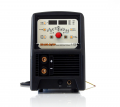
My welder is this model

1734786890378.png
You select the different settings with the two arrow buttons on either side of the knob. And then, with the know, you change the values.

So there are finger controllers available. But they are in the US. For us, with the Rand currency vs. Dollar, it becomes an expensive item. Then there is expensive shipping, and let me not even start on how expensive and corrupt our Customs are.
One of those on the market works the way I want. The harder you press, the higher the Amp value on the machine goes.

I hope this sheds some more light on my enquiry?

Thanks for your reply.
 

Thread Starter

Theo_ZA

Joined Dec 20, 2024
14
If you can rethink your ..."The harder you press"... into 'the longer you press' ; it can be a simpler control to ramp up the welder current. Or even decrease it if there is a second button to lower the current.
Hello. Thanks for your reply.

Well, that sounds even better! While I was in welding school, I had the chance to weld with a Fronius TIG welder. It had two rocker switches on the torch. Both could rock "up or down" and you could set the machine to go up or down in Amps when you rocked the switch "up or down". But I have even less of an idea how to accomplish your suggestion. Not to mention what finger rocker switch to use:(

Thank you
 

Thread Starter

Theo_ZA

Joined Dec 20, 2024
14
You can start this project with an Arduino. For the pressure sensing part you can use Force-sensitive resistors (FSRs), Piezoelectric sensors or Load cells.
Thank you for replying. Is there somewhere were I can read up more about this suggestion?

Thank you.
 

Thread Starter

Theo_ZA

Joined Dec 20, 2024
14
Some Tig welders have amperage control using a potentiometer located on the handpiece.
The foot pedal is pressed to a position where it stays because the (foot pressure) required is sufficient to maintain that
position. If the length of a weld is around 4 inches. During that weld time the pedal can readjust several times or more.

One question is how to design a handpiece that can do as well as a foot pedal.
Probably the filler rod hand is less occupied.
Yes! that is what I have in mind. I as mentioned above, I was spoiled once with a Fronius TIG Welder with finger rocket buttons that changed that Amps. And the Torch hand could stay stable while adjusting settings without dipping the tungsten into the weld pool.

So hence my quest for hand/finger control(s)

Thank you
 

Thread Starter

Theo_ZA

Joined Dec 20, 2024
14
I mentioned another option in post #4. Evidently THEO either did not look at it, or did not understand it, or has lots more money to chase after the expensive scheme. And certainly none of the others seem to be interested in understanding just what kind of welder the control would be for. That is a puzzle.

In addition, no portion of the arduino realm is able to interface with the high power levels in most arc welders. We do not even know if this is a wire-feed MIG welder or a stick welder.

And then the TS mentions "Getting hold of his foot pedal soon". So does the TS have a foot pedal and want to connect it??? Or what?? If the TS has a pedal already, what does he want from us????
Thank you again for taking the time to reply.

I got tied up with work, hence my late reply.

I re-read your post, and don't really understand your comment.
A much simpler scheme is to use a variable resistor (potentiometer) arrangement like is used in the foot pedal boxes that guitar players use. That is a simple mechanical scheme that adjusts a variable resistor , instead of turning a knob to adjust it. That is simple, easy, and cheap.
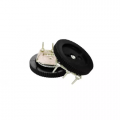
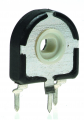
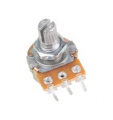
Is there somewhere I can read up on this? The only idea I have of Pots, are that they are big and bulky for a torch, and that they might be difficult to adjust "on the go"

I am willing to listen to any advice though.

Thank you.
 

MisterBill2

Joined Jan 23, 2018
27,316
OK, and now the request seems to be different, wanting a finger press on the hand control instead of the foot press on a pedal. or maybe that is not a correct understanding.
As for a thumb press control on the welding handle, certainly there are much smaller variable resistors available. Just consider the trigger speed control on an electric drill motor. Similar small variable resistors are available, but certainly less common. even some video games have them on the control sticks. In addition, small switches that could mount on a hand control are very common and even the good quality ones are not so expensive. And if the switches could be connected in parallel with the buttons on the control panel of the welder that might be just what the goal is.

So check the on-line DIGIKEY catalog for details of those very small switches. They will probably be available from a closer supplier but you will then know what you are looking for.
 

Thread Starter

Theo_ZA

Joined Dec 20, 2024
14
OK, and now the request seems to be different, wanting a finger press on the hand control instead of the foot press on a pedal. or maybe that is not a correct understanding.
As for a thumb press control on the welding handle, certainly there are much smaller variable resistors available. Just consider the trigger speed control on an electric drill motor. Similar small variable resistors are available, but certainly less common. even some video games have them on the control sticks. In addition, small switches that could mount on a hand control are very common and even the good quality ones are not so expensive. And if the switches could be connected in parallel with the buttons on the control panel of the welder that might be just what the goal is.

So check the on-line DIGIKEY catalog for details of those very small switches. They will probably be available from a closer supplier but you will then know what you are looking for.
Hi. Thanks for the reply. With the foot pedal, the Pot sends a signal to the welder. What is the output from a Pot that changes with the adjustment? Volts? The clever part is inside the machine. Whatever variable signal the welder receives, it then translates that into the required Amps needed.

As mentioned above "longer press to ramp up the Amps" sounds good.

This is what is out there. First pic is the press button. He says "The harder you press, the higher the Amps go"
Second pic is the idea that I had with Ardiuno....

Thank you
 

MisterBill2

Joined Jan 23, 2018
27,316
What I see on that video is not ever an actual view of the whole button assembly. Just lots of talk about what it can do, and very short partial views. Very little discussion of the actual product!! Based on that, my inclination is to call it a fake. DO NOT WASTE YOUR MONEY!!!
If it were an actual honest product it would be shown as "Here is what you get", not "Here is how wonderful this thing is", without ever seeing the whole product.
To put it more bluntly, I call it a fraud!!
 

Thread Starter

Theo_ZA

Joined Dec 20, 2024
14
What I see on that video is not ever an actual view of the whole button assembly. Just lots of talk about what it can do, and very short partial views. Very little discussion of the actual product!! Based on that, my inclination is to call it a fake. DO NOT WASTE YOUR MONEY!!!
If it were an actual honest product it would be shown as "Here is what you get", not "Here is how wonderful this thing is", without ever seeing the whole product.
To put it more bluntly, I call it a fraud!!
I hear what you are saying. I have searched this "TIG Button" And it seems legit.

Here is another video to the button
Finger Pressure Button

The owner of 6061.com has a big following on YouTube, and no-one has taken him apart for a fraudulent product. I'm not here to call you a liar, or to defend the seller of this product. I am the first that would suspect someone of using a pedal hidden under a table! LOL.

But this button has put me on this quest.

As to your guitar suggestion, I unfortunately did not understand what you meant sir.

Thank you
 

Thread Starter

Theo_ZA

Joined Dec 20, 2024
14
This is the Fronius TIG Torch that I referred to earlier that I had the chance to work with in welding school. The video shows various options, but the one with the two rocker buttons only, was the model I had. This is the limousine of welding torches.

Fronius TIG Torches

I saw the one with the pot wheel. But I can see that that can cause the TIG torch to move around when you roll the wheel. so my thought with the Arduino is that a pressure sensitive sensor (or as mentioned by another member a "longer press" button) could send a signal to the Arduino, and then in turn the Arduino sends a signal to the welder like a POT, to then adjust the Amps (just like a POT on the foot pedal would).

Thanks in advance
 
Top