Need Special 12v to 12v USB C Adapter

Thread Starter

MrAl

Joined Jun 17, 2014
13,677
Hello there,

I need an adapter that plugs into a standard 12 volt automobile cigar lighter outlet and provides that 12 volts straight to a USB C connector for power delivery of 12 volts through the USB C connector. There would be no conversion, no regulation, but regulation to a constant 12v output would be even better.

This would be a fairly simple cable probably with no electronics. The only catch is the wiring to the USB C connector is a little questionable. How exactly should the connector be wired to provide 12v to a device, and that would be 12v all the time with no negotiations.

I found cigar to USB C 5 volts all over the place, and even 5 volts USB to 12vdc using a cigar lighter jack like you would find in a car.
No cigar plug to USB C 12v power delivery cable found.

Any ideas where i might get one, or some details on how this would be wired up?
Thanks.
 

Jon Chandler

Joined Jun 12, 2008
1,565
Such a cable would not be in accordance with USB C PD specs. USB C PD provides power at 5 volts until/unless a higher voltage is negotiated. If such a cable, always hot with 12 volts were plugged into a non-PD device, its destruction would be immediate. It's also doubtful a USB C PD device, which is expecting 5 volts until it asks for something higher would survive either. It could be a very costly event to find out.

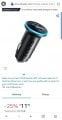
Here's an example of a USB C PD car charger. Here's the specs of the PD options that can be negotiated:

Input: 12V=5.6A 24V=3.6A

Output: USB-C:5V=3A/9V=3A/12V=2.5A/15V=2A/ 20V=1.5A (30W Max)

It may be that your device does want a non-negotiated 12 volts but that would not comply with the standard.

Screenshot_20230812_114101_Edge.jpg
 

Thread Starter

MrAl

Joined Jun 17, 2014
13,677
I don't have an answer for you, but this link may be helpful:

https://en.wikipedia.org/wiki/USB_hardware#USB_Power_Delivery

It looks like the higher voltages are supposed to be negotiated.
Hi,

I think I looked at that but I was probably tired out by then so I'll read it again. Thanks for the reminder.

BTW, the key phrase here is, "supposed to be". However, with this device, it's definitely not. Why they made it like that I have no idea, yet.
 

Thread Starter

MrAl

Joined Jun 17, 2014
13,677
Such a cable would not be in accordance with USB C PD specs. USB C PD provides power at 5 volts until/unless a higher voltage is negotiated. If such a cable, always hot with 12 volts were plugged into a non-PD device, its destruction would be immediate. It's also doubtful a USB C PD device, which is expecting 5 volts until it asks for something higher would survive either. It could be a very costly event to find out.

Here's an example of a USB C PD car charger. Here's the specs of the PD options that can be negotiated:

Input: 12V=5.6A 24V=3.6A

Output: USB-C:5V=3A/9V=3A/12V=2.5A/15V=2A/ 20V=1.5A (30W Max)

It may be that your device does want a non-negotiated 12 volts but that would not comply with the standard.

View attachment 300347
Hi,

Thanks for that however, this device demands a non-negotiated USB C carrying 12vdc and regulated.
And yes, that is correct, it does not comply with the standard maybe that is why I can't find one yet.

The original 12vdc originates from a 12vdc 3 amp wall wart. This wall adapter has a USB C male connector, and when i measure the voltage using a USB C to alligator clips cable, I get 12vdc right off the bat.
What I did not do yet because I did not think of it until now is, check to see if there is any delay in delivering that 12vdc. Does it come up right away, or does it take a second or two.
I'll check that soon.

Why they did it this way I can't understand. All I know now is I either have to find one or make one. I hesitate to make one because I want to get it right and I am not sure I understand how it has to be wired when it provides a constant voltage that is not 5vdc. Maybe I can go by that 5vdc, and just wire it to 12vdc.

The only other point is that the original wall adapter is regulated, so I may have to regulate it to make sure it does not go too much over 12v when the engine is running. The charging voltage can go 2 volts higher than that and the device is not made for that I don't think.

And as to the precautions, I am so used to using the 'barrel' type DC wall adapters and with them it's the same story. You have to be sure to match the right wall adapter to the right device, and it's always been like that. So the only difference I see here is it has a different connector, not that I like the idea though.

If I make my own adapter and it blows out the device, it's $150 USD down the drain, almost, except for the fact that I will know not to do that anymore :)
 

Thread Starter

MrAl

Joined Jun 17, 2014
13,677
Oh I just want to add a small note.
I am pretty sure this issue came up here already in the past, maybe a year ago, unless it was on another site. I don't remember what the resolution was except for the fact that nobody liked the fact that a 12vdc wall wart had a male USB C connector on it that puts out 12vdc.
 

Jon Chandler

Joined Jun 12, 2008
1,565
It's definitely a hazard to all "real" USB devices.

You could get a USB C connector breakout board or a USB C connector to pigtails for V+ and V–, wire one or the other to the power supply and use a standard USB C – USB C cable to connect it to the device.

@Ya’akov posted some time back about a 12 volt power supply with a USB C connector that destroyed an LED light expecting 5 volts.
 

Ya’akov

Joined Jan 27, 2019
10,226
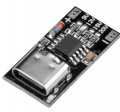
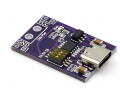
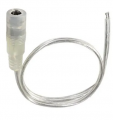
I would suggest either getting a Type-C PD "trigger" module like this one or this one, and incorporating it into the device so you can use a real PD charger;

1691921774881.png1691921834042.png
smaller vs. neater
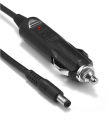
or using a cigarette lighter to 5.5x2.1mm barrel connector with center positive* and making a special pigtail that goes from barrel to Type-C male connector so there isn't a Type-C connector floating around with more than the vSafe5V the PD standard demands as the only non-negotiated output.

1691921671735.png1691922629616.png1691922993664.png
assuming, that is, that 13.8V is acceptable, otherwise a regulated version is called for

*This being the most prevalent configuration and least likely to produce a nasty surprise

The USB PD standard requires:

[QUOTE}
Operation of a Port at attach or after a Hard Reset where the DFP Source applies vSafe0V or vSafe5V on VBUS and the UFP Sink is operating at vSafe5V as defined in [USB 2.0], [USB 3.1], [USB Type-C 1.2] or [USB BC 1.2].
[/QOUTE]

There is a choice with a DFP (Downstream Facing Port, that is, an output) between having a cold socket which doesn't supply the vSafe5V output unless it detects a connection to a UFP (Upstream Facing Port), or one that supplies vSafe5V at all times. The standard requires safe operation which means that both DFP and UFP be able to tolerate the vSafe5V output if it is present from either or both.

In addition to Type-C connectors, the PD specification actually defines the standard connectors and cable assemblies that are PD compliant including USB A and B, Micro-A and B, and all of the useful pairings of these on cables. So PD isn't really a "Type-C" thing, Type-C is a connector.
 

Jon Chandler

Joined Jun 12, 2008
1,565
The use of a USB C PD trigger is an elegant solution that eliminates having a "phone killer" non-standard power supply. But, as I noted in post #4, 12 volt output is no longer part of the standard, which specifies the following outputs:

USB PD 1.0 supports four voltage types, including 5V, 9V, 15V and 20V, at power levels up to 100W

You would need to find a charger which does support 12 volt delivery like the car charger I posted above.


A tiny bit of background: a PD trigger board my be fixed (i.e., a 12 volt trigger) or settable to one of the options. When the trigger is plugged into a PD charger, the trigger negotiates for the voltage it wants.

> 12 volts please

Which gets the response

> ok, here's 12 volts

OR

> I can't provide 12 volts. 9 volts is the closest I can give you.

PD voltage is only available in the steps provided by the spec (and often 12 volts), but a charger may only support a few of them like 5 volts (chargers must support this) and 20 volts if the charger is purpose-built as a laptop charger.
 

Thread Starter

MrAl

Joined Jun 17, 2014
13,677
It's definitely a hazard to all "real" USB devices.

You could get a USB C connector breakout board or a USB C connector to pigtails for V+ and V–, wire one or the other to the power supply and use a standard USB C – USB C cable to connect it to the device.

@Ya’akov posted some time back about a 12 volt power supply with a USB C connector that destroyed an LED light expecting 5 volts.
Hi,

I realize that this is unusual and a POSSIBLE hazard to other USB devices, but I have read now that non-standard USB charging connections are possible. There is no "law" that says you can't do this. The only law I have found is that in some countries like China, where this device comes from of course, you MUST use a USB C connector for ALL charging devices. What I don't think it says is that all of those charging devices must comply with any USB standard. Check out the link Joeyd999 posted in post #2.

I do not like this either but such is the way of electronics. The same thing happened with the DC barrel connectors and nobody even attempted to make any standard for that, I don't think.
 

Thread Starter

MrAl

Joined Jun 17, 2014
13,677
I would suggest either getting a Type-C PD "trigger" module like this one or this one, and incorporating it into the device so you can use a real PD charger;

or using a cigarette lighter to 5.5x2.1mm barrel connector with center positive* and making a special pigtail that goes from barrel to Type-C male connector so there isn't a Type-C connector floating around with more than the vSafe5V the PD standard demands as the only non-negotiated output.

View attachment 300383View attachment 300386View attachment 300387
assuming, that is, that 13.8V is acceptable, otherwise a regulated version is called for

*This being the most prevalent configuration and least likely to produce a nasty surprise

The USB PD standard requires:

[QUOTE}
Operation of a Port at attach or after a Hard Reset where the DFP Source applies vSafe0V or vSafe5V on VBUS and the UFP Sink is operating at vSafe5V as defined in [USB 2.0], [USB 3.1], [USB Type-C 1.2] or [USB BC 1.2].
[/QOUTE]

There is a choice with a DFP (Downstream Facing Port, that is, an output) between having a cold socket which doesn't supply the vSafe5V output unless it detects a connection to a UFP (Upstream Facing Port), or one that supplies vSafe5V at all times. The standard requires safe operation which means that both DFP and UFP be able to tolerate the vSafe5V output if it is present from either or both.

In addition to Type-C connectors, the PD specification actually defines the standard connectors and cable assemblies that are PD compliant including USB A and B, Micro-A and B, and all of the useful pairings of these on cables. So PD isn't really a "Type-C" thing, Type-C is a connector.
Hello again,

I have read now that non-standard USB charging connections are a real possibility. They could spring up. Check out the link Joeyd999 posted in post #2.
The only law I have read about so far is that China requires all new devices that charge cell phones must use a USB C connector, and I don't think they even mention that they have to comply with any USB standard. That's a shame, but electronics is a very varied area with all kinds of different variations for parts and devices. We have to remember, and as you said also, the type C USB connector is just a connector.

I do have a 5.5mm/2.5mm barrel to USB C connector. It's a short little thing that converts any wall adapter with a 5.5mm OD and 2.5mm ID connector to a USB C male connector. I was not sure if I could use it with my device though because I don't know exactly how the 12v power to USB C connector is supposed to be wired yet. I wish I could just plug it in and try it.

I'll look into the USB trigger device and see if that can be used for this, thanks for the idea.
 

Thread Starter

MrAl

Joined Jun 17, 2014
13,677
The use of a USB C PD trigger is an elegant solution that eliminates having a "phone killer" non-standard power supply. But, as I noted in post #4, 12 volt output is no longer part of the standard, which specifies the following outputs:

USB PD 1.0 supports four voltage types, including 5V, 9V, 15V and 20V, at power levels up to 100W

You would need to find a charger which does support 12 volt delivery like the car charger I posted above.


A tiny bit of background: a PD trigger board my be fixed (i.e., a 12 volt trigger) or settable to one of the options. When the trigger is plugged into a PD charger, the trigger negotiates for the voltage it wants.

> 12 volts please

Which gets the response

> ok, here's 12 volts

OR

> I can't provide 12 volts. 9 volts is the closest I can give you.

PD voltage is only available in the steps provided by the spec (and often 12 volts), but a charger may only support a few of them like 5 volts (chargers must support this) and 20 volts if the charger is purpose-built as a laptop charger.
Hi,

I am not sure how it works yet, but I suppose I would have to tell it or have it negotiate for a 12vdc output, and then the male C connector would only be able to put out 12vdc anyway. I can never modify the device it plugs into because that's a finished product, so I can't have the device do any of the negotiations. Maybe back to square 1?
 

Jon Chandler

Joined Jun 12, 2008
1,565
YOU can do anything YOU want. No "USB Police" are going to break down your door even if you decide to wire line voltage to a USB C connector.

The risk you take is the smoke-releasing oh-shoot moment when you plug this 12 volt death-dapter into your phone to charge it. It won't POSSIBLY damage your phone – it will CERTAINLY destroy your phone. Mark the cable and power supply to try to prevent this from happening.

The cleanest way to accomplish what you're try to do is to buy an adapter like either of these, graft it onto the power supply and connect a USB C – USB C cable between it and the device.

SmartSelect_20230813_084227_Edge.jpg


If this were my device, I would have already grabbed an innocent USB C cable (USB C – USB A cable would make this easier so you only have to sort out the + and – connections from 4 wires), soldered it onto the power supply and been done with it.

Does the wiring of the USB C connector follow the normal connections? Who knows. If you have the original power supply, you can check (a breakout board would make this easier).

The choice is yours:

● an elegant solution that doesn't create risk for other devices.

● a tidy solution the looks decent.

● a hack job that works.

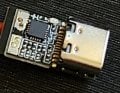
Just for sake of argument, USB C trigger boards are tiny and could probably be incorporated into your device without much trouble. The picture shows a USB C PD trigger, scarely bigger than the connector itself. This particular one has microscopic jumpers to set the voltage, but I'd suggest buying a fixed voltage one.

CM230813-090142001.jpg

I'm testing this one, set for 20 volts, with a buck converter set to 12 volts, to power my CPAP. Works great, and the charger is about a third the size and weight of the standard power supply.
 

Thread Starter

MrAl

Joined Jun 17, 2014
13,677
YOU can do anything YOU want. No "USB Police" are going to break down your door even if you decide to wire line voltage to a USB C connector.

The risk you take is the smoke-releasing oh-shoot moment when you plug this 12 volt death-dapter into your phone to charge it. It won't POSSIBLY damage your phone – it will CERTAINLY destroy your phone. Mark the cable and power supply to try to prevent this from happening.

The cleanest way to accomplish what you're try to do is to buy an adapter like either of these, graft it onto the power supply and connect a USB C – USB C cable between it and the device.

View attachment 300400


If this were my device, I would have already grabbed an innocent USB C cable (USB C – USB A cable would make this easier so you only have to sort out the + and – connections from 4 wires), soldered it onto the power supply and been done with it.

Does the wiring of the USB C connector follow the normal connections? Who knows. If you have the original power supply, you can check (a breakout board would make this easier).

The choice is yours:

● an elegant solution that doesn't create risk for other devices.

● a tidy solution the looks decent.

● a hack job that works.

Just for sake of argument, USB C trigger boards are tiny and could probably be incorporated into your device without much trouble. The picture shows a USB C PD trigger, scarely bigger than the connector itself. This particular one has microscopic jumpers to set the voltage, but I'd suggest buying a fixed voltage one.

View attachment 300401

I'm testing this one, set for 20 volts, with a buck converter set to 12 volts, to power my CPAP. Works great, and the charger is about a third the size and weight of the standard power supply.
I think you understand this issue very well, but there is one thing I don't think you realize yet.

That is, this is ALREADY an issue, I did not make it an issue. The wall adapter that came with it ALREADY does this. So it's not like I am making up some new thing, it's already been done, and the risk has been there all along.

I always mark my wall warts from day 1 so I know what they go to, and my phone chargers are all of the type that can charge any phone I don't just plug some random wall wart into my phone, why would I do that.
I also have it set up so I only use one specific wall wart with one specific phone. The cable ends are also labeled so I don't even plug a wall wart from one phone into another phone. That allows me to have one phone I use for phone service and one I just kind of play around with.

For me there would be no risk really because I would never just grab some wall wart I have no idea what it does and plug it into my expensive phone. That would just be nuts. I would probably not even use a new wall wart that did not have the proper charging protocol built in and i would check that before buying.

Remember this is no different than the barrel type connector wall warts. You always had to match the wall wart to the device, you could NEVER just grab any one you felt like and plug it in, even if it had the same connector. Some of those connectors even had the plus and minus reversed, with the negative center and barrel positive instead of the more usual plus inside and negative outside. In fact, I cannot remember a SINGLE time I ever just grabbed a wall wart of any kind and plugged it into anything without knowing what device it was and what wall wart it was.
There is even an existing issue where some of them are 12vdc and others are also 12vdc, but some of them put out 17vdc because they are unregulated. I wouldn't even use an unregulated 12vdc in a product with a12vdc regulated requirement.

The rule is you MUST match the wall wart to the device. There's no other way to know for sure if it will work. As you know, the damage that can occur is usually irreversible so it would be VERY stupid to do such a thing.
 

Jon Chandler

Joined Jun 12, 2008
1,565
You are welcome to do anything you'd like, and I've laid out some options. You can follow those or continue to search for a cable that should not exist.

I think you're being ridiculously over -cautious with products by recognized manufacturers using USB chargers. USB is a recognized standard and plugging a name-brand device into a name-brand charger will pose no issues but rare exceptions do exist as you have shown. I've only heard of two cases of this, so it's rare.

Sorry if I have appeared argumentative. I was only attempting to explain the issues and possible solutions.
 

Jon Chandler

Joined Jun 12, 2008
1,565
I truly do not know what these things do
It's pretty simple.

The first one takes 5 volts from a standard USB power supply (non-PD) and steps it up using a boost converter to a barrel connector.

Let's rephrase that since you had some issue with the "prostitution of USB chargers":

It takes power from a 5 volt regulated power supply (that happens to have a USB connector) and steps up the voltage to 12 volts using a boost converter embedded in the USB plug to a barrel connector to power a 12 volt device.

The limitation of course is that the current draw from the 5 volt supply will be greater than 2.4× the current delivered to the load.


The second device is a PD trigger, as has been discussed in this post and a number of others where you have complained about "the prostitution of USB chargers".

A USB PD power supply can output a number of (fixed) voltages in order to provide higher power levels than traditional 5 volt USB supplies. These supplies, rather than having a switch to select the voltage use a negotiation protocol between power supply and device. The power supply defaults to 5 volts until a device requests a higher voltage. If the power supply can't deliver the requested voltage, it will deliver the next available LOWER voltage.
 
Top