NE555 missing pulse detector

Thread Starter

farzad latifeh

Joined Oct 3, 2017
99
Hey there, I am not sure if I am posting it in the right place or not, so, sorry about that
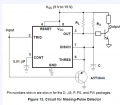
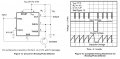
as you can see it, and also it is stated in the NE555 datasheet too, the following circuit is a missing pulse detector
but always there is a but, I want the output stay normally grounded and send a high voltage pulse in case the input pulse is missed, I mean exactly the opposite of the current approach, I would be appreciated if anyone can help, FYI, I am using BC547 instead of mentioned A5T3644 Transistor and a 1.5 kOhm resistor instead of a mentioned 1 kOhm RA, I think it works anyway.

123.jpg
 

ericgibbs

Joined Jan 29, 2010
21,439
Hi z,
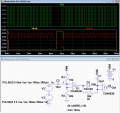
A common emitter set up on the output would give you this signal. NPN transistor
Do you have a circuit diagram showing your component values and timing periods that you could post?

E

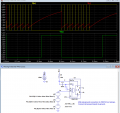
Added an option diagram.

EG57_ 2324.png

EG57_ 2325.png
 
Last edited:

Ian0

Joined Aug 7, 2020
13,131
Forget the 555. Use a 74HC123 (retriggerable monostable). It only needs a timing resistor and capacitor, and it has both positive and negative-going inputs, and both positive and negative outputs.
 

Thread Starter

farzad latifeh

Joined Oct 3, 2017
99
Hey there,
I am doing some research about how to make an external WDT for MCUs using cheap components, from this perspective, I found almost a solution for it, it seems IC NE555 timer IC has a missing pulse detector, I take an ESP32 and try to make a RMT square signal of 33kHz with 12% width, then, introduce it to the input of the following circuit, and, the concern is how to connect the output of this circuit to the EN pin of the ESP. so whenever it hangs, then the square wave is stopped and then the circuit triggers and connect the EN pin to the GND so the MCU is hard reset.
I am aware of WDT ICs like MAX6752, but I have no access to them, also the internal WDT of ESP has some issues I prefer to use an external one, anyway it is just a hobby for me, and I learn new things that is really interesting. thanks.
123.jpg
 

Attachments

seanstevens

Joined Sep 22, 2009
323
You can use the above circuit (WDT) using standard 555 with a minimum operating voltage of 4.5V, if your ESP32 is running with 3.3V, then you could use the CMOS version 7555 which runs down to 2V. You can always use a voltage divider to dimension your WDT output for your ESP32.
 

Thread Starter

farzad latifeh

Joined Oct 3, 2017
99
You can use the above circuit (WDT) using standard 555 with a minimum operating voltage of 4.5V, if your ESP32 is running with 3.3V, then you could use the CMOS version 7555 which runs down to 2V. You can always use a voltage divider to dimension your WDT output for your ESP32.
but the problem here is, the output of the 555 timer IC is always high, and the missing pulse doesn't make the IC change its output to the ground or it is too short for the MCU to take it as a reset pulse, so the EN pin doesn't resets the MCU, actually the output is high even when there is no input at all
 

Ian0

Joined Aug 7, 2020
13,131
Forget the 555. Use a 74HC123 (retriggerable monostable). It only needs a timing resistor and capacitor, and it has both positive and negative-going inputs, and both positive and negative outputs.

The output will stay low if it is not getting any WDT-reset pulses, so it will automatically produce a pulse long enough to reset the microprocessor, because whilst the microprocessor is in reset it won’t be producing any WDT-reset pulses.
 

MisterBill2

Joined Jan 23, 2018
27,508
Forget the 555. Use a 74HC123 (retriggerable monostable). It only needs a timing resistor and capacitor, and it has both positive and negative-going inputs, and both positive and negative outputs.

The output will stay low if it is not getting any WDT-reset pulses, so it will automatically produce a pulse long enough to reset the microprocessor, because whilst the microprocessor is in reset it won’t be producing any WDT-reset pulses.
I did exactly that many years ago, on a system that included data latch pulses from the host computer, for each module. I buffered the pulses with one section of a hex buffer, to reset a CMOS (retriggerable monostable) set to time out after just a bit more that one pulse spacing. The time out then drove the other five inverters in parallel to send a RESET pulse thru a diode onto the system rest line. A 555 timer needs an external transistor to operate in a resettable manner. using a retriggerable monostable such as a CD4098 is much better.
 

Ian0

Joined Aug 7, 2020
13,131
I did exactly that many years ago, on a system that included data latch pulses from the host computer, for each module. I buffered the pulses with one section of a hex buffer, to reset a CMOS (retriggerable monostable) set to time out after just a bit more that one pulse spacing. The time out then drove the other five inverters in parallel to send a RESET pulse thru a diode onto the system rest line. A 555 timer needs an external transistor to operate in a resettable manner. using a retriggerable monostable such as a CD4098 is much better.
The 74HC123 is cheaper than CMOS versions of the 555.
 

Thread Starter

farzad latifeh

Joined Oct 3, 2017
99
Forget the 555. Use a 74HC123 (retriggerable monostable). It only needs a timing resistor and capacitor, and it has both positive and negative-going inputs, and both positive and negative outputs.

The output will stay low if it is not getting any WDT-reset pulses, so it will automatically produce a pulse long enough to reset the microprocessor, because whilst the microprocessor is in reset it won’t be producing any WDT-reset pulses.
but while booting up the EN pin must stay high, so the circuit only in the missing pulse scenario shall set the output low,
 

Thread Starter

farzad latifeh

Joined Oct 3, 2017
99
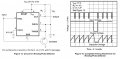
Below is a 555 missing pulse detector that goes high when the pulse is missing:

At the bottom is a detector using just one CD4093 IC package, which does the same.

Your choice.

View attachment 336231
----------------------------------
View attachment 336232
how to use it in a scenario while booting up sets high and in missing pulse detector set output low, because the EN pin of the MC U must stay high while booting up
 

ericgibbs

Joined Jan 29, 2010
21,439
Hi farzad,
If you plan to use the 555 option, it would help if you could post the timing requirement of your pulses, I could then run a LTSpice simulation to check out the circuit.
E
 

Thread Starter

farzad latifeh

Joined Oct 3, 2017
99
Hi farzad,
If you plan to use the 555 option, it would help if you could post the timing requirement of your pulses, I could then run a LTSpice simulation to check out the circuit.
E
for booting up 5 seconds is enough, so in this period the EN pin (output of the missing pulse detector circuit) must be high, then based on square wave coming from MCU to input of the circuit the EN pin shall be high for normal mode then low if the device is stopped sending square wave, this time is assumed 1 second for now but I prefer to change it with a POT for practical time, is it OK?
 
Top