NE555 timer pin5

Thread Starter

Homebrew1964

Joined Nov 22, 2024
124
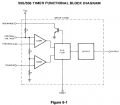
How critical is the capacitor from pin 5 to ground in the astable mode NE555? without the capacitor i get brief noise at the output (pin3) when the waveform goes high, with a 0.1uf fitted the noise goes away, will this noise affect any following circuit? i'm asking as i'm trying to keep my component count low for ease of layout.
 

dl324

Joined Mar 30, 2015
18,221
How critical is the capacitor from pin 5 to ground in the astable mode NE555?
It is strongly recommended that it be used.
without the capacitor i get brief noise at the output (pin3) when the waveform goes high, with a 0.1uf fitted the noise goes away,
What do you mean by noise? Is a decoupling cap used on the supply pins? A schematic of the circuit would be helpful so we can determine the frequency and duty cycle.
1775514092185.png
 

Thread Starter

Homebrew1964

Joined Nov 22, 2024
124
What do you mean by noise? Is a decoupling cap used on the supply pins? A schematic of the circuit would be helpful so we can determine the frequency and duty cycle.
The waveform goes mushy for about half a second then straightens out, the circuit is the standard astable mode schematic.

No i havn't used a decoupling cap, i will add one of those across the supply and add a 0.1uf from pin 5 to ground, i'll just have to lay my circuit out again.

Thanks Dennis.
 

crutschow

Joined Mar 14, 2008
38,325
Noise on the power line can cause the 555 time-out to vary slightly plus or minus from nominal, and a capacitor on pin 5 minimizes that.
If the time period is not critical, then you likely don't need to decouple pin 5.
 

AnalogKid

Joined Aug 1, 2013
12,050
No matter what you do at pin 5, the bipolar 555 output stage is notorious. Increase the power supply bypassing to a larger value ceramic cap with the shortest possible leads and located as close as possible to the power supply pins. I usually use 1.0 uF, but go up to 1.5 uF or 2.2 uF if that value is being used somewhere else in the circuit.

Also, "mushy" is not in my electronics dictionary. Since I've never really had a problem with omitting the pin 5 cap, I'm curious about this. Scope shot?

ak
 

dl324

Joined Mar 30, 2015
18,221
The waveform goes mushy for about half a second then straightens out, the circuit is the standard astable mode schematic.
What does the output waveform look like? With a >1 second period, it's not a standard (typical) astable. Does the output fluctuation affect all pulses? Or just the first?
I have found that the decoupler across the power rails failed to make any difference, however the 0.1uf from pin 5 to ground cleaned things up nicely.
That doesn't make sense. A cap on pin 5 would prevent noise from modulating the turn off/on times, but not affect the amplitude of the output.

What is the power source? What size decoupling capacitor did you use?
 

Thread Starter

Homebrew1964

Joined Nov 22, 2024
124
What does the output waveform look like? With a >1 second period, it's not a standard (typical) astable. Does the output fluctuation affect all pulses? Or just the first?
That doesn't make sense. A cap on pin 5 would prevent noise from modulating the turn off/on times, but not affect the amplitude of the output.

What is the power source? What size decoupling capacitor did you use?
My timing frequency is about 1 Hz and I used a 220uf decoupling cap, the output fluctuation affected every pulse just on the rising one, every time the output went high it jittered. Oh and my power source was a bench power supply.
 

Thread Starter

Homebrew1964

Joined Nov 22, 2024
124
Try using a 0.1uF ceramic cap, in addition to the 220uF electrolytic. Electrolytic caps aren't very good at decoupling high frequency noise.
Is the supply current limited? What is the load on the timer output?
I've taken the circuit apart now, needed the breadboard for another experiment

Thanks for the replies
 

dl324

Joined Mar 30, 2015
18,221
I've taken the circuit apart now, needed the breadboard for another experiment
I'd buy more breadboards. I probably have more than 50 (mostly full-size breadboards). 20 or so are from the 1970's, but I've been buying some from AliExpress. Haven't found any that were awful, but I did buy one triple full-size breadboard at a surplus store that use bad Chinese breadboards. Once I aligned the clamps with the holes, it was fine.
 

Jon Chandler

Joined Jun 12, 2008
1,560
When I went back to college, I was lacking a needed physics lab credit. I talked to the prof explaining that the physics class had been long ago, etc. He said he'd give me the lab credit if I did a few projects he had been putting off.

One of those was assembling a Heathkit breadboard kit. Several breadboards mounted on a metal plate with a few binding posts. No sweat. That don't take long.....

Heathkit must have paid extra for the breadboards. What a fun enrichment activity – inserting the contact strips into the breadboards! Who'd have thought you could get breadboards with loose contact strips??? It didn't take long, but it was sure tedious.
 
Top