Multivibrator circuit with vacuum tubes

MrSalts

Joined Apr 2, 2020
2,767
You likely need a plate power supply of at least 100V for the tubes to operate.
If you accidentally touch that, you will remember it for a long time.
A “long time”, I assume, means “the rest of your life” - anywhere from 90+ years to a few tenths of a second.
 

Ian0

Joined Aug 7, 2020
13,132
You seem to have a good variety of dissimilar triodes - one power triode and one small signal triode. They were for the vertical deflection output of a television and the amplifier to drive it
Most of the television "deflection output" devices will make good audio power valves, so you could make yourself a headphone amplifier or small audio amplifiers - but you would have to buy the output transformers and they're not cheap.
 

Thread Starter

popcalent

Joined Mar 17, 2018
138
You seem to have a good variety of dissimilar triodes - one power triode and one small signal triode. They were for the vertical deflection output of a television and the amplifier to drive it
Most of the television "deflection output" devices will make good audio power valves, so you could make yourself a headphone amplifier or small audio amplifiers - but you would have to buy the output transformers and they're not cheap.
I have many more tubes. I have two boxes with around 100 tubes each. I just listed the ones with triodes for the circuit I intend to build. If this works out, I might move on to other projects like the ones you mention. I'm usually more interested in digital electronics than analog (let alone vacuum tubes!), but since I already have the tubes, and this looked like a fairly simple project, I decided to give it a try. I checked the price of new tubes on hificollective, and if I didn´t have the tubes and I had to buy them I probably wouldn't.
 

Ian0

Joined Aug 7, 2020
13,132

Thread Starter

popcalent

Joined Mar 17, 2018
138
I have received the sockets, and I'm now ready to put the circuit together. I'll use either two 6FH5 triodes or two 6DZ4 triodes. This are the tubes pinouts and the circuit using two 6FH5:
multivib.png
I'm using a DC30V/400mA power adapter. RL1 and RL2 are the current limiting resistors for the LEDs. The capacitors are 4u7uF/63V and the resistors are 560K (I missed the K in the schematic). The LEDs will go on and off every ~2sec (0.69x0.0047x560,000=1816ms). My questions:

1) Are pins 3 and 4 (the heater) interchangeable? I will power the heater with two 3V coin batteries, but does polarity matter?

2) Does pin 7 of either tube go connected to anything or I just leave it floating?

3) If I want to use the 6DZ4 tubes... I think I have to swap 5 and 1 and leave everything else the same? Do I need to connect pins 6 and 7 to anywhere?

4) If I want to use bulbs instead of LEDs, do I just replace the LEDs and the current limiting resistors with the bulb? Do I need a resistor?

5) Is there anything else I'm missing?

Thanks a lot for your help!
 
Last edited:

Thread Starter

popcalent

Joined Mar 17, 2018
138
That won't last long, each 6FH5 tube draws 200 ma at 6.3 volts. The 6ZD4 draws 225 ma.
Polarity is not an issue.
Perhaps I can make a voltage divider to get 6V from 30V? The circuit is a proof of concept anyway, and it's not intended to be powered for long periods.
 

sghioto

Joined Dec 31, 2017
8,634
Perhaps I can make a voltage divider to get 6V from 30V?
You still need 400 ma to operate the heaters. I would operate the heaters from a USB 5 volt charger that is good for 1amp or more. Where did you get those values for R1 and R2? Do you realize how fast the time constant is? Did you mean 560K?
 

Thread Starter

popcalent

Joined Mar 17, 2018
138
You still need 400 ma to operate the heaters. I would operate the heaters from a USB 5 volt charger that is good for 1amp or more. Where did you get those values for R1 and R2? Do you realize how fast the time constant is? Did you mean 560K?
I did 0.69xRxC = 0.69x560x4.7 = 1800ms
 

sghioto

Joined Dec 31, 2017
8,634
OK. I misread the value for C1 and C2.
You have 4.7 Farad capacitors?
I think 560K resistors and 4.7uf caps would be more practical.
 

Thread Starter

popcalent

Joined Mar 17, 2018
138
OK. I misread the value for C1 and C2.
You have 4.7 Farad capacitors?
I think 560K resistors and 4.7uf caps would be more practical.
No, no. You were right. I messed up. I said 560 ohm and 4.7uF, which, as you said, is too fast. What I REALLY meant to say is what you said first: 560K and 4.7uF. Sorry.

0.69x0.0047x560,000=1,800ms
 
Last edited:

Ian0

Joined Aug 7, 2020
13,132
12V @ 200mA or 225mA. You'd still need a 5W resistor (90 ohms or 80 ohms) but if this is just an experiment, then it's not so important.
To get 6V @ 400mA or 450mA it would bt 10W.

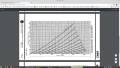
According to the datasheet, you'll get a lot more current out of the 6DZ4 than the 6FH5. The 6FH5 will give you about 3mA maximum, with the anode at 30V, but you need the anode to get lower than that to discharge the capacitors.
The value called "Plate resistance" is approximately equivalent to Rds(on) for a MOSFET, and at 5.6k it's an awful lot more than you would be used to for MOSFETs!
Screenshot at 2021-03-30 07-44-28.png
 
Last edited:

sghioto

Joined Dec 31, 2017
8,634
The 6FH5 will give you about 3mA maximum, with the anode at 30V,
That spec was with a grid voltage of 0 volts. At initial startup the grids would be almost at supply. One would think the current would be higher and the plate resistance lower.
The 5600 plate resistance number you mentioned was with a grid voltage of -1volt in a class A amp configuration.
 
Top