Mosfet open discussion

Irving

Joined Jan 30, 2016
5,128
I've just come across this interesting thread, which reiterates & repeats a number of conversations in other threads about suitability of specific components for specific applications.

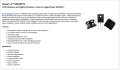
As a 'for instance', my 2400W battery discharge tester, specifically designed to discharge and calibrate ('fuel' curve, internal resistance v SoC, etc) 24v nominal 100Ah+ LFP packs at 40 - 50A uses a huge force-cooled tunnel heat-sink and 8 or 16 specifically designed IXYS Linear2 MOSFETs (see flyer). Yes you could do it with other, cheaper, devices, not specific for this purpose, but you'd need dozens if not 100s of devices to come close. But efficient they are not - dumping 2400W of heat isn't much fun in my small workshop, even in winter! My new 3000W+ LFP e-load/charger currently under development takes a different approach. Once you go high enough in frequency (>100kHz typically) batteries don't really care if the load is continuous or pulsed (or for charging it seems) so a 24v to 240v pure-sine wave AC inverter design simply feeds the energy back to the grid. Here the energy output to the grid is adjusted to maintain the required average current load on the pack under test - the opposite of what's normally done. This won't be as accurate as the linear approach, maybe +/- 3% rather than +/-0.5%, but it is a hell of a lot more efficient - and I get paid for the energy dumped as well...
1721386286991.png
 

Thread Starter

q12x

Joined Sep 25, 2015
2,227
Alright mister @dl324
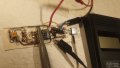
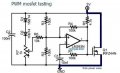
I made the test with the Mosfet (remember, until now I tested without it, to check if the cct behaves).
Now is exactly as in the picture (with no Load resistor as in your original cct)
20240710_mosfet testing v2.jpg20240722_033337.jpg
Here is the data I collected:
PSU=5V@0.45A = 2.25W
I tested IRFZ44N N-mos 94W
5min test = 85*C (no heatsink -so naked)
ambient = 30*C (because is summer and is hot) -now it back down a bit so I can make these tests
Gate DutyCyc = 15% at minimum POT travel (while is not connected, the cct delivers 10% - adding the mosfet in the cct must influence) - interesting.
and I got a 3Vpp from the same osc reading (oscP1=Mosfet Gate , oscP2=Gnd)
I didnt check other PWM %'s because tr extreme temperature (way over my 50*C limit).
Then I took another reading over Drain-Source of the mosfet: Vmax=3.62V; Vpp=650mV; DutyCycle=94% (interesting)
So using your formula, Mosfet_P = V*I*0.15= 0.65V*0.45*0.15=0.29*0.15=0.043W=43mW (at 85*C!!!!) ohohoa - hahaha
then
I moved the POT in the other side, in the hope it will reduce that dutycycle over DrainSource but it didnt change at all. It even increased to 99%.
Then, after more carefull observation I summarized that :
1-POT travel from 15% to 50% will result in a Drain-Source pulse from 93% to 99% and then jump to 0% on my osc reading.
2-POT travel from 50% to 99% will result in a Drain-Source pulse from 0% jump to 99% and then to 90% on my osc reading.
Very close to POT 99%, my PSU reading was 5V@1.2A and increasing. After this test, All the values readings changed a bit higher than I described so far. So this over power test I did, must overwelm the mosfet most probably, and is giving signs of giving up or power stress, with these new values. They are very close but a bit higher. Again, interesting !
In conclusion, driving this IRFZ44N at 10% duty cycle on its gate, gives me a 43mW power disipation at 85*C. This is a VERY WEAK mosfet ! It is 5 times weaker than a BC548.
 
Last edited:

dl324

Joined Mar 30, 2015
18,330
So using your formula, Mosfet_P = V*I*0.15= 0.65V*0.45*0.15=0.29*0.15=0.043W=43mW (at 85*C!!!!) ohohoa - hahaha
I suspect there are issues with the way you're testing.

What is the threshold voltage of the IRFZ44 you're using for testing? The datasheet says it can be 2-4V. My IRFZ44 AliExpress specials all have threshold voltages under 2V (around 1.8V max). If you're using one with a threshold voltage of 4V, you're not turning the device on very hard with a 5V supply.

I'm fairly certain that if you put a BC548 in that circuit and turned it on hard enough, it would die.
Then, after more carefull observation I summarized that :
1-POT travel from 15% to 50% will result in a Drain-Source pulse from 93% to 99% and then jump to 0% on my osc reading.
2-POT travel from 50% to 99% will result in a Drain-Source pulse from 0% jump to 99% and then to 90% on my osc reading.
Don't change duty cycle willy nilly while you're testing a device. The whole point of using a low duty cycle PWM is that you decrease the average power dissipation of the device being tested. If you change it to 99%, the MOSFET will be hurting without a heat sink.

When you're testing with a PWM, you need to use an oscilloscope to collect turn on data. You calculate power dissipation using V^2/R, where R is the on resistance of the MOSFET. I expect average power dissipation to be "low" using the PWM because that was the whole idea. Test the MOSFET at 5-6A without needing a heat sink.

Use your scope to measure the voltage on the drain of the MOSFET. If it's turning on hard, you can calculate power from P=V^2/R. Assuming on resistance is on the order of 50mΩ (about twice the datasheet spec because of junction heating), power dissipation would be on the order of 500W for 10% of the time and 0W for 90% of the time. I calculate that to be an average of 50W over the pulse width.
 
Last edited:

sparky 1

Joined Nov 3, 2018
1,218
In an Electronic's class lab, the student is given a handout and asked to construct a simple RC circuit using a mosfet. Relaxation Oscillators.
The ramp or saw tooth circuit using 2N7000 can also be built using an NPN transistor. Discussion of the IRF120. an interesting mosfet.
The student could simulate the exersize prior to lab #3, in class the teacher explained what ramps are good for, how to do an RC calculation.
If the student read those chapters in the textbook before class, practiced the example calculations, reinforced by the class lecture.
Project 10 – Sinusoidal Oscillator (vt.edu)
The student is asked to explain the difference between the calculated and measured values.
It must be advisable to measure all the parts and record the measurements check out the waveform on the scope.
 
Last edited:

dl324

Joined Mar 30, 2015
18,330
To test MOSFETs for power dissipation, you need to use a different circuit (e.g. the current sink circuit we were using to test LM317).

What the PWM circuit can be used for is to test MOSFET current capacity by operating them at "high" current with a low duty cycle. The PWM circuit can also be used to get an approximate on resistance. I say approximate because manufacturers have specific duty cycle and period requirements to avoid temperature from increasing resistance.

The initial PWM circuit showed the power supply being 5V. That didn't mean that that was the only supply voltage it could operate from. To test current capacity of MOSFETs, you need to turn them on hard. How hard depends on the MOSFET and the appropriate voltage will be in the datasheet.

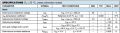
For IRFZ44, Vgs should be 10V. From the Vishay datasheet:
1721659283166.png

On resistance should also be measured with Vgs = 10V (at Id=31A - not feasible unless I use a car battery):
1721659363086.png
1721659410144.png

When I'm using the PWM circuit to take measurements, I use two power supplies. One for the PWM and one for the MOSFET. That lets me adjust the PWM output to the gate voltage I need while being able to control dissipation in the MOSFET by it having another supply. With a single supply at around 10V, you could limit power dissipation in the MOSFET by using a load resistor. If you do that, you can no longer use the supply voltage reading for power calculations. You always need to be able to measure the on voltage to be able to calculate on resistance.
 

dl324

Joined Mar 30, 2015
18,330
Did a quick test with the PWM supply at 5.0V and 14.3V (adjusted to give 10V on the gate). With the MOSFET supply at 3V.

Vpwm=5V, current reading=0.9A, Vdmin=1.25V (minimum drain voltage)
Vpwm=14.3V, current reading=1.6A, Vdmin=0.5V

Couldn't get more accurate reading for Vdmin because cheap digital scope doesn't like the input being overdriven and I didn't feel like powering on the analog scope.

EDIT: Took the on voltage measurements with an analog scope. A bit surprised the digital scope was even close. Both measurements were taken on the 5V/div range. On the analog scope, it was 0.5V/div.

I'll take measurements with a load resistor or current probe so I can do resistance calculations.
 
Last edited:

Thread Starter

q12x

Joined Sep 25, 2015
2,227
From
When I'm using the PWM circuit to take measurements, I use two power supplies. One for the PWM and one for the MOSFET.
and
Did a quick test with the PWM supply at 5.0V and 14.3V (adjusted to give 10V on the gate). With the MOSFET supply at 3V.
Vpwm=5V, current reading=0.9A, Vdmin=1.25V (minimum drain voltage)
Vpwm=14.3V, current reading=1.6A, Vdmin=0.5V
I can see your point now. I will do it the same then. I will use 2 PSU's for further tests like you propose. I was actually thinking to buy a second variable PSU like the one I have and use consistently. But I stall, because I have a couple, 2 or 3 more that are not so variable but in steps, 5,7,9,12, like that. And Im not all the time testing with 2 PSU's only with 1. Hmmm... this triggered my long buried need for a 2nd.... Do you have 2 variable ones or you're like me, the 2nd is what you catch from your room?
- I know a mosfet is a voltage driven element. And for probably a year or so I watched numerous videos from Mr Carlson's Lab
1721700593271.png on YouTube where he is comparing a mosfet to a tube and mention the similarities, especially the voltage driving part. And your 2 PSU's method is like that tube driving method, that big transformer for tube devices, that is delivering in its secondary one voltage for the tube driving, 70-90V or so, to heat up the cathode inside the tube, and then the working voltage for the rest of the circuit. So its exactly like that. This is the old way of powering stuff, from multiple voltage supplies. And I know it from young age, not now from YT. Now from YT I get a confirmation of what I know. I also learned a lot new things too, and inspiration.
- I did a search for continuous vs pulsed mosfets, some days ago, and the conclusion is this: the continuous driving, like in every transistor type, bjt or mosfet, is more power dissipating than the pulse and very easy to overheat the tr. In mosfets in particular, is used more rarely and pulsed is preffered, specifically for less power disipation and overheating alternative. Thats the only reason. And using continuous, is for very small power, 500-100mW (and less) generally, to be on the safe side, and in this way, you can use them for some logic, analog amplifiers, voltage regulator, Constant Current Source as LED driver and some Battery chargers, Analog Signal Processing as Variable Resistors and Filters & Modulators ; and the list is not that long for what they are used for in continuous drived. The list is very long for pulsed driving!
Practical Considerations for Continuous Drive
  • Heat Dissipation: When operating in the linear region or with a continuous drive, MOSFETs can generate significant heat. Adequate heat sinking or thermal management is necessary to prevent overheating.
  • Gate Voltage Control: The gate voltage needs to be precisely controlled to ensure the MOSFET operates in the desired region (linear or saturation). This often requires a well-designed biasing circuit.
  • Power Consumption: Continuous operation can lead to higher power consumption compared to switching applications, as the MOSFET is not fully on or off but in a partially conducting state.
I need to test in reality this last point, and observe in practice the details !!! ...someday
Ok...
- mister @dl324, we should parralel eachother experiments as best as possible and fill the data and compare from each side.
If I understand right, you do have my testing mosfet IRFZ44N right? You should test it from now on because its my only mosfet for test that I can permit to go crazy with.
- I would love to have the german and the poland guys making this experiment in parralel as well... hehe.
This is very slow step experimentation and every new detail is gold in progression of this test. So more brains, the better. I say.
 

dl324

Joined Mar 30, 2015
18,330
Do you have 2 variable ones or you're like me, the 2nd is what you catch from your room?
I have more variable supplies than I'll ever need. Probably a dozen or more. I also have dozens of laptop bricks, fixed voltage wall warts.
Power Consumption: Continuous operation can lead to higher power consumption compared to switching applications, as the MOSFET is not fully on or off but in a partially conducting state.
You already know this to be the case. Consider the current sink circuit we used with a power transistor, then with a MOSFET. Contrast that with the PWM. That gives you a continuous and on/off case.
If I understand right, you do have my testing mosfet IRFZ44N right?
Yes. Mine all have threshold voltages of 1.5-1.8V instead of the 2-4V specified in the datasheet.
You should test it from now on because its my only mosfet for test that I can permit to go crazy with.
You should get some low power MOSFETs. I use AO3400, AO3401, and NTA4151P. The latter was the first P channel MOSFET I had. I bought a partial reel on eBay a 15-20 years ago. Long before counterfeits became such a big problem.

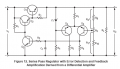
I'm going to breadboard a discrete regulator using MOSFETs. I'll be using IRFZ44, AO3400, and AO3401. It'll be derived from this Motorola circuit:
1721702946991.png
Instead of R7, I'll use a current source.
 

Thread Starter

q12x

Joined Sep 25, 2015
2,227
Check this OUT !
For the sake of a good cooperation I strongly suggest to you to fill up this table -religiously- !!! every time you make a good result experiment. You'll have to go step by step and fill it. Its a pain in the but it will pay in the long run, trust me on this.
Its excellent to compare my results with your results. So please fill it from now on, but not on every experiment you make, but the ones that are important.
Im using Microsoft Excel 2007 version. Excelent made, still using it today on my w11 OS (which I will downgrade soon back to w7).
If you dont have this specific version, I can give you the installation kit.
I believe if you will install newer version of excel, you can import this older save file in it. I never try it, bcause I stick with this one.
I dont think the torrent link is available anymore.... but I can do something for you if you really want it.
I provide the save file in this post here. Download it.
As an alternative, you can use any other text editor that you may have, and order everything as is ordered in this sheet.
Also you can add your own data points, but update me to modify my sheet too. To truly work in // !
Thank you.
1721706319002.png
 

Attachments

Last edited:

Thread Starter

q12x

Joined Sep 25, 2015
2,227
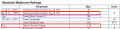
I was looking, like you earlier, and my interpretation is this:
1721708726994.png
I will never be able to maintain at 25*C and obtain that 49A in the first line.
More realistically, and with a Very big heatsink, theoretically, I could get at 100*C that 35A.
So with my default threshold of maximum 50*C, I should expect ~17A. It's very good in my book ! Also with a VERY big heatsink.
IDM probably means Current on Drain Modulated... and will have to wait until we figure out at least 1A through the DrainSource - continuous.
VGS, in my datasheet is 1721709306809.pngV. So I will respect that value and use it, if I can..... I plan to use a step voltage supply, but I dont have that high Voltage from any I have. Close enough should be good enough. Thats the plan.
Interesting is that +/- sign. So no matter of the polarity, you will open that transistor !!!! Very interesting detail.
So these are my observations. Not really helpful how to proceed next. Except the double PSU's.
 
Last edited:

Irving

Joined Jan 30, 2016
5,128
I will never be able to maintain at 25*C and obtain that 49A in the first line.
That's an infinite heatsink. The nearest you'll get in practice is a very large refrigerated heatsink.

More realistically, and with a Very big heatsink, theoretically, I could get at 100*C that 35A.
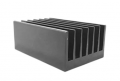
Not just theoretically, but practically too: Tj = 100*C @ 0.63*C/W @35A and Rds(on)=0.028ohm = I^2R W = 35 ^ 2 * .028 = 35W, gives Tcase as 100-0.63*35 =78*C (more typically 75*C as a JEDEC standard). Assuming a typical case-to-heatsink thermal paste of 0.02*C/W and ambient of 25*C this gives a heatsink thermal resistance of (78 - 25)/35-0.02*35 = better than 0.8*C/W eg a 0.7*C/W, 100 x 66 x 40mm like this one from RS:
1721740520712.png
 

Thread Starter

q12x

Joined Sep 25, 2015
2,227
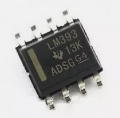
Today 24-07-2024, my new (smd) LM393 digital comparators arrived ! in record time, 2 weeks from Ebay ! 100pcs. Cool.
1721847182693.png
 

dl324

Joined Mar 30, 2015
18,330
in record time, 2 weeks from Ebay !
I received my last order from AliExpress in 7 days. It used to take 3-4 weeks. I get free shipping on most things if I spend $10 or I order 3 items from their "quick picks" which usually totals less than $10.
 

dl324

Joined Mar 30, 2015
18,330
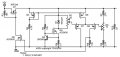
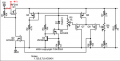
Here's the discrete MOSFET regulator. I cheated and used one BJT because I wanted a fixed current regardless of output voltage and didn't want to deal with MOSFETs.
discreteMosfetRegulatorFinal.jpg
EDIT: corrected wiring of R5 and spelling of copyright.

R7 and R9 limit the output voltage range. The pots control range.

I found that maintaining a reasonable zener current was problematic in the BJT schematic I posted, so I made a 10mA current source.

I find myself looking at the schematic and thinking there isn't sufficient information to analyze/troubleshoot because you need to know the threshold voltages of the MOSFETs. You don't have that problem with circuits using BJTs.

I thought that threshold voltage matching would be important for the differential amplifier. But it's a don't care if you don't care if the gate voltages are "exactly" the same.

Except for R2 and R4, resistor values aren't very critical. For the most part, they were what I had out on the bench.

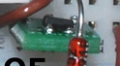
discreteMosfetRegulatorFinalAsBuilt.jpg
I moved R3 from Vin to Vout.
 
Last edited:

Thread Starter

q12x

Joined Sep 25, 2015
2,227
3 items from their "quick picks"
Im not sure Ive notice this "quick picks". Can you print screen one or 2 examples? To see if I even seen it before? thanks.
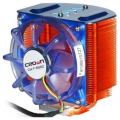
For experiments I often used this CPU cooler ($4 in local store), which can dissipate up to 120 W.
is that heatsink used primarely for CPU's ? From the flat tab it has, it looks like.
so I made a 10mA current source.
Can you explain each block of your cct ? I can see something but not sure if its what I think it is.
And I believe you are using TPADs like Im using ! Very nice ! TPAD stands for Transistor Pads that Im making manually for my SMD tr's for many years, probably before appearing on the market. Im using them very rarely, but when I need one, I always have it, or I can easily make one in 5 minutes.
Yours and mine. Very good!
1721885004482.png20240725_062547.jpg
Seriously? You dont want anyone to copy your cct? even me? 1721885369902.png Should I test or not your cct ? Do I have your permission or the Right to use it? Should I ask for every cct you make? See my point? This is what you transmit. Usually I dont give a fugk, but I do care for my close friends.
- You said you are using 2 voltages, one specifically for tr gate and another for the power variation through the tr. I dont see your second power line in your cct. I do see 2 red and 1 black probes/hooks in your breadboard picture though. This is what I think you actually powered it.
1721886731711.png
 
Last edited:

dl324

Joined Mar 30, 2015
18,330
Can you explain each block of your cct ? I can see something but not sure if its what I think it is.
Why don't you take a crack at it first. You'll learn more that way.
And I believe you are using TPADs like Im using !
I'm using commercial SOT-23 to SIP adapters I bought on AliExpress. I've posted pictures for you before.
Seriously? You dont want anyone to copy your cct? even me?
A copyright is claiming some work as yours. I've given circuits to many people, always with the provision that it is for their own personal use and that they will give appropriate attribution if they post my work in other places.
Should I test or not your cct ?
Of course you can. That's why I posted it in your thread. But read on...
Do I have your permission or the Right to use it? Should I ask for every cct you make? See my point? Usually I dont give a funk, but I do care for my close friends.
Technically, any original/derivative work we post on AAC is protected by copyright. In a nutshell, it means that you cannot profit from copyrighted work, cannot claim it to be your own work (ethically, you're required to give attribution when you use the work of others).

Anything I post on AAC is with the expectation that someone will use it in some manner for personal use. If they want to use it for monetary gain, they have to pay for my work. If they post the circuit, or significant portions of it, they need to give proper attribution. I try to do this whenever I post schematics that are the work of others.

That's even without a copyright notice.
 

dl324

Joined Mar 30, 2015
18,330
Im not sure Ive notice this "quick picks". Can you print screen one or 2 examples? To see if I even seen it before? thanks.
Here's an example:
1721879835610.png
For what I called "quick picks", you have to pick 3 items to get free shipping. This one requires a $10 purchase.

I'll take a screen shot the next time I get a quick picks offer. You can get item information without leaving the quick pick page. The screen shot above isn't quick picks.
 

dl324

Joined Mar 30, 2015
18,330
You said you are using 2 voltages, one specifically for tr gate and another for the power variation through the tr. I dont see your second power line in your cct. I do see 2 red and 1 black probes/hooks in your breadboard picture though. This is what I think you actually powered it.
I was only using one power supply (Vin). I varied it from 7-20V (pushing it a bit because the AO MOSFETs are only rated for Vgs of 12V.

The input voltage is on the drain of the IRFZ44. The red clip by the black one went to a voltmeter. Black clip was ground. The power MOSFET got warm if I dallied when I changed the input and output voltages. Ground for the meter was connected to the power supply.

The other voltage I referenced was the output voltage (Vout).

The dropout voltage for that circuit is 2-3V, so operating from a 5V supply wouldn't be very useful. With the component values I used, I could set the voltage down to about 1V. I'm using a 2.4V zener, that's why I put a pot across it. That can be more complicated with BJTs because of base current requirements. I could have used 10k or 100k pots; you couldn't do that with BJTs.

I varied input voltage to check regulation. I never got around to adding caps because I got the information I wanted. I haven't used MOSFETs in that configuration, so it was to verify that the simulator between my ears was working.
 
Last edited:

Thread Starter

q12x

Joined Sep 25, 2015
2,227
- I see your point now. For me, how I see it, is a total interdiction and extermination sign. Do not do it, or else, we cut your hands, throw you in jail for life and eat dirt without bread the rest of your life. Its how it is interpreted here in my country and I think others as well. It is a cultural thing I think. And we (the europeans) are not mature enough to properly understand it, like you americans do. You have sense in what you are saying and in the end, it boils down to ethics as you put it. But...usually you keep close those who are right to you and keep them to distance those who are crazy or idiots. Without any written warnings. Is how I see it. And what I post both graphics imagery or movies, is both for my personal pleasure and interest that I did something in this small and pitiful life, where the agony of death is around every corner, especially in our so called capitalistic country. You will never see me writing anything copyright-cutting hands on my circuits Im making, no matter how complex or worked they are. Its my principle and probably this is why I jumped on this detail. But is interesting to see your pov.
- Also thanks for the aliexpress screenshot - I still dont get it - hahahaha... I mean, if you are referring to this 1721887914081.png, that's a marketing trick that is literally everywhere on aliexpress. Aliexpress website is flooded with these so called cheaper 'deals'. Its not relevant or trusty, for me anyway. In the end they will get the price they want, not what the website is literally lying in red that you can get it cheaper. Hmm... very strange, haha. See? different mentalities.
 
Top