Facebook
 Google
 GitHub
 Linkedin
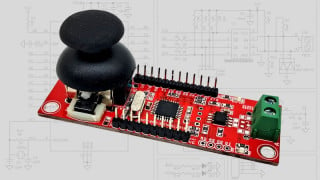
I am designing a simple, cheap, yet intended to be usably accurate free open source mosfet tester with some special features.
it will be based on cheap common arduino compatible microcontrollers, where the intend is that it can easily be ported to many boards.
as well as that support for many parts or functions can be added easily and modular, or just enabled or disabled.
current main parts:
however I have some questions.
As for the open source, it should become open source if/once it works well enough. I already know some other hobbyists also want such a device, many also making their own one rapidly, but doing so rapidly means spending some extra time for every person, as well as risking lower accuracy due to missing optimizations, and missing features, like how devices with support for basic graphs start very high in price.
it will be based on cheap common arduino compatible microcontrollers, where the intend is that it can easily be ported to many boards.
as well as that support for many parts or functions can be added easily and modular, or just enabled or disabled.
- for it's most basic function the microcontroller will either
A: read the voltage drop on the mosfet, and then either use that to calculate Rds(on) by knowing the voltage used and the resistance of the load.
B: read the voltage drop on the mosfet, and read the voltage drop on the resistor(with known value) or use a current sensor to get the current and calculate Rds(on) from that. - in both cases the mosfets will be driven by a higher voltage on the Gate to make sure they can be fully opened(ideally this will be user controllable, and also controllable by the microcontroller to either tune to the mosfet's optimal Gate-Source voltage, yet optimally to also allow plotting a graph for how the mosfet reacts to different voltages on the gate).
- the main use is for a very cheap compact device to get relatively accurate Rds(on) values, to check if parts are real and relyable.
- the price range target for this device is very low, which is why the modularity is there so optional features which are nice to have but add more to the price or requirements than they add for the neccecary functioning can be added optionally(like a screen or wifi, or bluetooth for example, or a higher quality temperature sensor)
- It still should be usable and relyable, I do have one of those cheap component testers which should also test Rds(on), however they are often far off due to a to low Gate-Source voltage, next to that they support no graphing or such, like maping Rds(on) to temperature, or to Gate-Source voltage. some of those features should be pretty easy and cheap to add with decent accuracy, Rds(on) should be quite easy to be read with quite great accuracy even. yet you only find such features on mashines which cost thousands of €, so I want to make a hobby grade version which for cheap can do the basics accurate and so perhaps also make sure that shops selling to consumers/hobbyists become less likely to fake parts and instead just show honnest values.
- It is intended so that people can easily add things and features but that they are not required for it to work, ofcource, this also means making it easy for people to add it to other open source component testers, this device will be primirily only meant for testing mosfets however, and for making those fake mosfets usable by getting some actual information out of them.
- it should be able to also make graphs for example exporting data to be used in your favorite calcsheet software such as libreoffice calc. or perhaps even generating a graph from it directly.
current main parts:
- current chips I start the design around: rp2040(pi pico) or esp32-C3, both of those are common, easily and cheaply available, and have a high resolution ADC, currently primarily working on the pi pico, but the esp32-C3 might soon be cheaper and also has wifi and bluetooth, so might be usable for very cheap small modules which might be made by random companies and then accesed through a web terminal or web interface or such.(like bellow €2 for a complete device). generally all arduino compatible microcontrollers should be able to be put in their place as long as they have one or more ADC, ofcource what else they can have depends on the board).
- PowerResistor for load, might also be something else, but for simplicity just assume a resistor with a known resistance.
- the mosfet to be tested.
- voltage step down or low voltage source for going through the resistor and mosfet.
- voltage step up or higher voltage source for going to the gate.
- optionally a thermal resistor, and something to controll the gate voltage more accurately, as well as something to increase the temperatures in the mosfet, etc.
however I have some questions.
- any advice or things I should think about or avoid. I know I have no visual design yet as it is all in my head, but I guess this design is so simple that it doesn't really need any design as most of the less simple stuff is invisible. I should be making it soon, however as it is winter didn't yet solder anything.
- when for example putting only 1V on the resistor and going through the mosfet, will that work well?
I would assume it would as Rds(on) suggests it would, and practical use also shows a low to almost no voltage drop across many mosfets, however are there odd cases/exceptions to this rule I should be aware of, or for example things like a mosfet needing a voltage on drain-source above a certain point for a very short pulse before it's Rds(on) can fully turn on even if the Gate-Source voltage is perfect for the best Rds(on). I didn't find anything reffering to it online, however logic indicates that based on the field effect it should be possible, the main question would be does murpheys lay play enough of a role for this to actually be something one might encounter(on normal/general mosfets(which a hobbyist would use)(as it is actually there on some super high voltage FETs, as in 10thousands of volts ones.)
note that this question might be me thinking to deep and far about things, and asking a question which even for big high tech companies like cern and asml or companies making lab testing equipment, might just or not yet be important/concidered. but open source always has to be better. - for testing a mosfets voltage(in normal foreward use), is it safe to slowly put a increasing voltage on the mosfet, a voltage with very low current capability, but increasing until the mosfet breaks down/lets it through? or would this be something which would break or damage a mosfet permanently? or are there safe ways to test if a mosfet can handle the rated voltage?
As for the open source, it should become open source if/once it works well enough. I already know some other hobbyists also want such a device, many also making their own one rapidly, but doing so rapidly means spending some extra time for every person, as well as risking lower accuracy due to missing optimizations, and missing features, like how devices with support for basic graphs start very high in price.
Last edited: