Microphone circuit chart

MisterBill2

Joined Jan 23, 2018
27,524
That DI box will protect against any problem with the phantom power, since it keeps the low impedance side separate from the common pin on the connector. So it should work out quite well.
And this thread prompted me to dig deep into the archives and examine my own "Big Ear" parabolic device. It is clear that the flaw it has is with the very cheap electronics portion. What it needs is a recent technology low noise, higher gain amplifier, instead of the high-noise low gain original amp.
 

Thread Starter

riversun

Joined Oct 31, 2024
32
That DI box will protect against any problem with the phantom power, since it keeps the low impedance side separate from the common pin on the connector. So it should work out quite well.
And this thread prompted me to dig deep into the archives and examine my own "Big Ear" parabolic device. It is clear that the flaw it has is with the very cheap electronics portion. What it needs is a recent technology low noise, higher gain amplifier, instead of the high-noise low gain original amp.
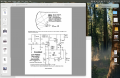
I googled and found this. https://transkommunikation.ch/datei...ungen/audio_circuits/Parabolic Microphone.pdf

Would this be better than the one I built? The chart is on the second page
 

MisterBill2

Joined Jan 23, 2018
27,524
YES, that is a better quality, lower noise and distortion audio amplifier. BUT it is also a lot more complex, and in addition, because it is direct coupled, it is much more critical as far as adjustment. I have no idea as to how the one that we have seen the circuit is assembled, but even with an accurate PC board, this amplifier will be more complex to assemble. Certainly it will be a learning experience.
Others will have additional comments, I am certain.
 

Thread Starter

riversun

Joined Oct 31, 2024
32
YES, that is a better quality, lower noise and distortion audio amplifier. BUT it is also a lot more complex, and in addition, because it is direct coupled, it is much more critical as far as adjustment. I have no idea as to how the one that we have seen the circuit is assembled, but even with an accurate PC board, this amplifier will be more complex to assemble. Certainly it will be a learning experience.
Others will have additional comments, I am certain.
Yes it does look more complex. However if it gives better sound the effort is worth it.
 

Thread Starter

riversun

Joined Oct 31, 2024
32
Yes it does look more complex. However if it gives better sound the effort is worth it.
Strangely it does not seem to have IC at all. I guess what I learned from the previous would help here too.
Does the 390 mean 390 ohm resistor? What is 56P? There is a place with 470K and just 470 (I take that meaning 470 ohm, am I correct?) What is TP? Does number xu mean xuF ?....other than these I could make it...
 

MisterBill2

Joined Jan 23, 2018
27,524
Strangely it does not seem to have IC at all. I guess what I learned from the previous would help here too.
Does the 390 mean 390 ohm resistor? What is 56P? There is a place with 470K and just 470 (I take that meaning 470 ohm, am I correct?) What is TP? Does number xu mean xuF ?....other than these I could make it...
No, it does not include an IC device. It uses low-noise transistors instead. IN this drawing, resistors are marked correctly, meaning that 390 means 390 ohms, and 47K means 47,000 ohms. That can be confusing, indeed. "T.P." means Test Point, which in this case is used for an important adjustment after the circuit is completed. The capacitors are in units of either picofarads or microfarads, so 220uF means 220 microfarads. That device will be a polarized electrolytic capacitor, so attention to the positive and negative matters for that one. Also see that the choice for the value of one resistor depends on the supply voltage that you plan on using, which I guess will be a 9 volt battery.
If you have other questions I will do what I can to answer them.
 

Thread Starter

riversun

Joined Oct 31, 2024
32
No, it does not include an IC device. It uses low-noise transistors instead. IN this drawing, resistors are marked correctly, meaning that 390 means 390 ohms, and 47K means 47,000 ohms. That can be confusing, indeed. "T.P." means Test Point, which in this case is used for an important adjustment after the circuit is completed. The capacitors are in units of either picofarads or microfarads, so 220uF means 220 microfarads. That device will be a polarized electrolytic capacitor, so attention to the positive and negative matters for that one. Also see that the choice for the value of one resistor depends on the supply voltage that you plan on using, which I guess will be a 9 volt battery.
If you have other questions I will do what I can to answer them.
Thank you! I get back to you when I start making it...now it is just finding the parts...
 

MisterBill2

Joined Jan 23, 2018
27,524
Thank you! I get back to you when I start making it...now it is just finding the parts...
Certainly, if a circuit board is available, that will make it a whole lot simpler to get it working correctly. This amplifier, because it is three stages direct coupled, DOES REQUIRE an adjustment after construction to provide correct operation. So it is quite different from the previous one.
 

Thread Starter

riversun

Joined Oct 31, 2024
32
Certainly, if a circuit board is available, that will make it a whole lot simpler to get it working correctly. This amplifier, because it is three stages direct coupled, DOES REQUIRE an adjustment after construction to provide correct operation. So it is quite different from the previous one.
ok. i will need help with the adjustment..never done one like this before...
 

Thread Starter

riversun

Joined Oct 31, 2024
32
Certainly, if a circuit board is available, that will make it a whole lot simpler to get it working correctly. This amplifier, because it is three stages direct coupled, DOES REQUIRE an adjustment after construction to provide correct operation. So it is quite different from the previous one.
I just realized one strange thing, why is there (I take they are capacitors) sometimes marked u and sometimes uF. For example 47 uF in the left corner and then an other place just 22u
 

MisterBill2

Joined Jan 23, 2018
27,524
The units markings on the values are different in these cases, probably because the creator of the drawing neglected to complete the notation of the units. also note that large value capacitors are usually polarized.
 

Thread Starter

riversun

Joined Oct 31, 2024
32
Thank you! I get back to you when I start making it...now it is just finding the parts...
As I got the parts finally I realized that this circuit chart does not have a microphone marked anywhere! And i was to make it for recording....also I wanted to make sure before start soldering...are all the grounds meant t connect? as they are here marked separately?
 

MisterBill2

Joined Jan 23, 2018
27,524
The TS has just pointed out the shortcoming of using the "ground" symbol! It can certainly lead to confusion. Now I need to go back to the original circuit and take another look. And now I am not certain as to which circuit the TS is referencing. My current advice will be that all of the similar GROUND symbols indicate connection to that common. Unfortunately I do not see the circuit under discussion, it must be in some link that I missed this time.
 
Last edited:

Thread Starter

riversun

Joined Oct 31, 2024
32
The TS has just pointed out the shortcoming of using the "ground" symbol! It can certainly lead to confusion. Now I need to go back to the original circuit and take another look. And now I am not certain as to which circuit the TS is referencing. My current advice will be that all of the similar GROUND symbols indicate connection to that common. Unfortunately I do not see the circuit under discussion, it must be in some link that I missed this time.
 

Attachments

MisterBill2

Joined Jan 23, 2018
27,524
As I got the parts finally I realized that this circuit chart does not have a microphone marked anywhere! And i was to make it for recording....also I wanted to make sure before start soldering...are all the grounds meant t connect? as they are here marked separately?
OK, and Thank You for re-posting that circuit!!
OK, if the microphone does not require phantom power, then the microphone signal connection is to the end marked "IN", and the signal shield connection is to the same "ground" that all of the other symbols connect to. I hope that makes sense.
Are you building this circuit on a printed circuit board, or between terminals???
AND the output to the recorder connection is to that point marked "OUT", with the shield again connected to the "ground" symbol line.

AND, if you are using an actual satellite dish reflector I am quite interested in knowing how well it works. You could even PM me with that if you choose.
 
Last edited:

Thread Starter

riversun

Joined Oct 31, 2024
32
OK, and Thank You for re-posting that circuit!!
OK, if the microphone does not require phantom power, then the microphone signal connection is to the end marked "IN", and the signal shield connection is to the same "ground" that all of the other symbols connect to. I hope that makes sense.
Are you building this circuit on a printed circuit board, or between terminals???
AND the output to the recorder connection is to that point marked "OUT", with the shield again connected to the "ground" symbol line.

AND, if you are using an actual satellite dish reflector I am quite interested in knowing how well it works. You could even PM me with that if you choose.
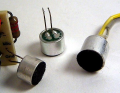
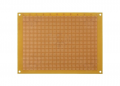
Thank you again! I can now see the IN of the circuit and I will connect all the grounds. I don't have a printed board, planning to use the basic board with copper at the bottom like this (picture at the bottom). I was planning to use small electret microphone. If you have any recommendations about that I would be glad to hear. and I was just going to use a large lamp shade for the 'satellite parabol'.


1733387758340.png1733387533131.png
 

MisterBill2

Joined Jan 23, 2018
27,524
A "lampshade horn" will certainly be different from a parabolic reflector, and "your results may differ", as that saying goes. I suggest a bit of research prior to spending much effort.
For any of those ELECTRET mic cartridges you will need to add a bias resistor to supply the operating current. Not a big deal, but required. That will be one simple addition.
I suggest thinking about the effective capture area of the tiny microphone diaphram, as well. If you have a small speaker or a dynamic mic cartridge that might be a more effective (sensitive) choice.
 

Thread Starter

riversun

Joined Oct 31, 2024
32
Hello, I am back to the parabolic mic project:)....question: the 2N3906 transistor (i need that to replace the 2N5087)has two different ingredient charts...should i just ignore this fact or what to do?
 

Attachments

Top