Analog microphone circuit not working

Thread Starter

robotDR

Joined Mar 17, 2020
138
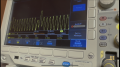
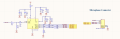
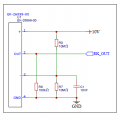
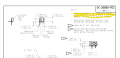
I am using an EK-26899-P03 microphone with codec CS5344-CZZ. Here is the schematic. 10V and 5V are up and running. Do I need a preamp between the microphone and codec? When I put an oscilloscope on the microphone, I got signal using - as my reference, and probing OUT. Clearly the codec isn't getting - signal from the microphone. Datasheet for the EK-26899-P03 can be found here: https://www.mouser.com/ProductDetai...ZEQ7fZZdIno5BCYH4lCcWnq_zlKE97glCFMa8JOH07gcn
1743438280487.png
1743438146755.png
1743437744104.png
1743437652465.png
 

schmitt trigger

Joined Jul 12, 2010
2,027
By applying 10 volts, your circuit as shown violates the 1.3 volts data sheet requirement..
Why are you connecting the minus terminal to a voltage divider? While the output pull down to ground? With a different resistor value?

In other words, why didn’t you follow the data sheet?
The device may already be damaged.
 

Thread Starter

robotDR

Joined Mar 17, 2020
138
By applying 10 volts, your circuit as shown violates the 1.3 volts data sheet requirement..
Why are you connecting the minus terminal to a voltage divider? While the output pull down to ground? With a different resistor value?

In other words, why didn’t you follow the data sheet?
The device may already be damaged.
Hi thank you for the reply. The 1.3V is a voltage they used during testing. The notes section right above that test circuit says device can work with 10V.

The microphone section of the circuit was given by Knowles. The test circuit in the datasheet is just how they tested some aspects of the microphone and not to necessarily be used as an application circuit.

but even though the microphone section was given by Knowles, I’m thinking they didn’t address the whole picture like preamps etc or whatever else might be needed depending on the codec choice.
 

schmitt trigger

Joined Jul 12, 2010
2,027
I had missed the 10 volts note. oooooops o_O
You mentioned that Knowles provided the amended circuit. Is there a separate datasheet or app note that you could share?
 

0ri0n

Joined Jan 7, 2025
161
To allow higher sound pressure, the two 10M resistors bias the gate of the JFET through the internal high-Z gate resistor with 5V. Probe the audio signal with the scope between OUT and GND (across the 100k resistor).

I see you are trying to keep the source impedance for the codec below the specified 2.5k. That's only the case if you assume the output impedance of the microphone is very low. The input attenuator R3/R18 has to be AC coupled to OUT. Is the attenuator necessary at all?
 
Last edited:

MisterBill2

Joined Jan 23, 2018
27,186
One unasked question, since I did not examine the specifications of either component, is about the relative signal levels. The signal output from a microphone is a small AC variation of a much larger DC component, if this is an analog microphone. Then I see no mention of the resolution of the codec device. So it may simply be that the AC portion of the signal is not enough to affect the output of the codec device.
AND, id the microphone output is some sort of digital signal, certainly the input circuit will attenuate that to a level that has no effect.
 
Top