Mandatory USB C Charge Ports Now In Effect In The UK

Thread Starter

MrAl

Joined Jun 17, 2014
13,765
I wouldn't want to be an electricial wiring a whole house with USB-C. Those 24 wires are awfully fiddly when all you have is a quarter-inch-wide screwdriver and a pair of wire cutters with three notches in them from when you once cut through a live cable.
The cables vary now and a lot of them use #22AWG, but I could see going to a larger wire diameter in a distribution system.
Long time ago I had to make my own notch for wire wrap wire.
 

Externet

Joined Nov 29, 2005
2,662
Hi Al.. Laziness and comforts are the drivers for everything this century. Just observe the implications of all products on the market. If takes more effort than pressing a button, bad business, wrong product.

You can see a guy in airconditioned car around and around a parking lot for a while until finally finds a slot very near the entrance... of a GYM ! Try to find a new car with crank windows. Not even that tiny exercise is respected :rolleyes: Then going after weight loosing pills... ordered by massaging the smart phone, not even dream to walk to the pharmacy.

 
Last edited:

Thread Starter

MrAl

Joined Jun 17, 2014
13,765
Hi Al.. Laziness and comforts are the drivers for everything this century. Just observe the implications of all products on the market.

You can see a guy in airconditioned car around and around a parking lot for a while until finally finds a slot very near the entrance... of a GYM ! Try to find a new car with crank windows. Not even that tiny exercise is respected :rolleyes: Then going after weight loosing pills...
Hi,

Haaaaa, yeah that's funny, and unfortunately, TRUE :)
 

Jon Chandler

Joined Jun 12, 2008
1,631
Geez oh grief. You guys are beyond belief.

The advantages of USB C PD are clear to anybody who understands the spec and reason for its implementation.
 

Jon Chandler

Joined Jun 12, 2008
1,631
You claim that it's done to make more profit. How do you figure that? Instead of including a proprietary charger with every device, you can use a universal charger for numerous devices, and a proprietary power supply doesn't needlessly end up in the trash when you upgrade a device.

Regarding the comment about the stupidity of providing multiple voltages on a single connector, chances are the cell phone you're using to complain about USB C PD, if it's not a PD device, uses the "Quick Charge" protocol, which was introduced ten years ago. The phone and charger negotiate an output of up to 20 volts to provide up to 18 watt charging instead of the 5 watt maximum of the original USB standard.

Screenshot_20241229_195608_Samsung capture.jpg
 
What a bunch of Luddites.

Why should we be surrounded by dozens of different DC power supplies all doing essentially the same thing that will eventually end up as e-waste (or in my junk box) when one type of power supply can handle all low voltage needs, no matter if the device is made by Apple, Samsung or Leon's garage shop? Imagine if every lamp and appliance in your house had a different proprietary plug? Wouldn't make a whole lot of sense would it?

I have a USB C PD power supply by Apple that can provide 140 watts – maximum 28 volts at 5 amps (currents above 3 amps require a high current cable). I share this power supply, which has the volume of two stacked phones, to power my CPAP, laptop, and to charge my phone. Each device negotiates for the power it needs seamlessly.

Compare that to the "Oh sh*t" moment when you destroy a device by plugging in a center-negative barrel connector, or when you plug in the 12 volt supply into a 5 volt device. I suppose a drawer full of assorted power supplies with indecipherable masking-tape labels makes more sense then realizing your phone is about to die while using your laptop, so you switch the cable from laptop to phone without a worry.

Sorry change is so difficult for some of you.
I've often wondered why companies purposefully put out poor technology. Two reasons are greed and power for sure but I think there's a lot more to it.

If you'll humor me, I tend to think in evolutionary terms in the sense that a power supply or circuit is a living organism. Most organisms are highly tuned to the environment and it has taken many iterations to make them what they are today. Just because a power supply (an idea) was made by humans doesn't mean it's exempt from the pressures of evolution. It's difficult to understate how deep this dance with evolution could be or what those pressures are.

What's interesting to me about USB in particular is that it seeks to be "universal" but getting everyone to agree on what constitutes universal is practically impossible from a statistical perspective. This is akin to a spider having thousands of eggs when few survive simply because they are overwhelmed by the complexity and ruthlessness of the environment.

All thing considered, I think USB and similar technology like UART were revolutionary for getting people to work toward a common goal in the communications world. I was personally very happy when my new phone used USB-C instead of Micro. The previous iteration nearly drove me nuts when I needed it most. I see the upgrade from Micro to C as a tiny improvement in the resiliency of the spider's eggs. The wheels of evolution turn slowly and most get crushed by the wheel.
 

Ya’akov

Joined Jan 27, 2019
10,278
And some of us can manage perfectly well without mobile phones.
At this point, most people would manage perfectly well without a mobile phone. Not having a network-connected mobile pocket computer is a different matter.

I have carried a cellular phone from the very early days of service when it was barely practical, but then I was carrying handheld transceivers for other bands before that. I also carried pocket computers, and then network-connected pocket computers, and then high-speed-network-connected pocket supercomputers as they became practical.

I would not be happy if I had to give mine up—it wouldn't kill me, but it would hurt.
 

Ya’akov

Joined Jan 27, 2019
10,278
I can't think of any better examples of bloatware than USB. It started off as 4 pins, power and a differential data line. Now it has 24 pins, with the capability of power at several different voltages and several data pairs. It wouldn't surprise me if someone invented a version of USB-C for charging electric vehicles.
The USB Type-C capabilities are a boon for compact devices such as notebook computers. The port is designed to handle both high speed data (including video) and with PD, up to 240W of power. I am constantly amazed and pleased at how quickly the combination of a good PD charger and cable can charge devices. And the price of genuinely capable chargers and cables is going down rapidly.

USB started as a replacement for serial data communications ports on DTE type devices, and it has grown to be a combination of that—at incredible data rates (up to 80 Gbps for USB4!) and by incorporating DisplayPort it can accommodate two 8K displays refreshing at 120Hz.

Of course, being a power provider was never a primary goal of the USB standard, but it did accommodate moderately needy bus-powered devices. This turned out to be just too convenient and as mobile and other rechargeable devices proliferated, and the battery capacities increased, USB tried to track that. The specific, proprietary quick charge standards were weak stop gaps and the PD standard—complex as it is—does a credible job of providing a common standard for power needs.

Personally, I use PD to power almost all my projects now—it's easy, voltage flexible, and makes finding a power supply much, much easier even if I need an unusual voltage. It also allows me to use standardized, modular battery supplies up to very high capacities.

So I can't agree that USB Type-C/PD is a good example of "bloat", particularly since it will work seamlessly even with USB 1.0 devices—an unprecedented level of backwards compatibility.
 

Ya’akov

Joined Jan 27, 2019
10,278
Hi Al.. Laziness and comforts are the drivers for everything this century. Just observe the implications of all products on the market. If takes more effort than pressing a button, bad business, wrong product.

You can see a guy in airconditioned car around and around a parking lot for a while until finally finds a slot very near the entrance... of a GYM ! Try to find a new car with crank windows. Not even that tiny exercise is respected :rolleyes: Then going after weight loosing pills... ordered by massaging the smart phone, not even dream to walk to the pharmacy.
I see things a bit differently. "Laziness" is a poor label for time saving. In the world of perl programming, a quote by Larry Wall is often paraphrased to describe a special kind of laziness.

I was working as a sysadmin and I was trying to generate some reports. I started out using all the usual UNIX tools: sed, awk, shell scripts, etc. But then I found myself writing programs to glue all these tools together. I thought, ‘Why not just write one tool to do it all?’ That’s when I started working on Perl. I was lazy, and I didn’t want to write the same code over and over again.

The idea that I can save time for other things—that might well include physical effort of the sort I want to exert—is attractive and I believe meritorious. Why would I want to spend time on things I don't have to when I can spend it on things I want to do. While many people are not productive, these things are often (not always) potential productivity enhancers.

I am not lazy, I am greedy. I want my time for the things I want, and I want to be able to have things that would take too much time to support if not for the accommodation of "laziness".
 

Jon Chandler

Joined Jun 12, 2008
1,631
Here's a picture representing some of the multitude of sizes of DC barrel jacks. Multiply this by two because power supplies come in both center positive and center negative versions. Now multipy by all of the different power supply voltages available. If a device and its power supply get separated, dig through your collection of old wall warts to find one with the appropriate barrel plug AND voltage. You're back in business.... IF the polarity is correct (too many devices and power supplies don't mark the polarity).

Explain to me how this is SO MUCH BETTER than a common power supply that just works for so many devices.

SmartSelect_20241229_233105_Edge.jpg
 

Ian0

Joined Aug 7, 2020
13,228
So I can't agree that USB Type-C/PD is a good example of "bloat", particularly since it will work seamlessly even with USB 1.0 devices—an unprecedented level of backwards compatibility.
Its complexity is intentional, and is designed to eliminate competition. When RS232 was the standard, any small firm could make a product which used it - it just needed a UART, and everyone could solder a D connector. By persuading governments to outlaw any standard other than their own, the manufacturers of USB-C devices favour their own products over the competition who have to buy the hardware from them, and increase the time-to-market and design expenses.
My experience of USB leads is that the original ones were quite robust, and have become less so as they have got smaller. Now they have more conductors, and also contain ICs, doesn't that increase the chance of failure. Will it really result in fewer discarded cables? Or will there be just as many due to failures, and having more conductors will they not be more difficult to recycle.
A further thought on universality: USB-C leads are already available in different types - data only, charging only, high power charging. How is this universal?
It seems absurd that serial data started with a 25-pin D-connector, and everyone said that for RXD, TXD and ground who needs 25 pins? So it got reduced down to 9 then to two-plus-power, and now where are we?
 

Ian0

Joined Aug 7, 2020
13,228
Here's a picture representing some of the multitude of sizes of DC barrel jacks. Multiply this by two because power supplies come in both center positive and center negative versions. Now multipy by all of the different power supply voltages available. If a device and its power supply get separated, dig through your collection of old wall warts to find one with the appropriate barrel plug AND voltage. You're back in business.... IF the polarity is correct (too many devices and power supplies don't mark the polarity).

Explain to me how this is SO MUCH BETTER than a common power supply that just works for so many devices.

View attachment 339209
One has to ask if there really was any need for anything other than the 2.5mm version. If it was thought to be a good idea to legislate on the subject, why was it left until now? There was a proposed standard (by the Japanese, a while ago) to make a small number of barrel jacks for three or four different voltages which would be only compatible with a socket of the right voltage, but presumably, it was not in the manufacturers best interests to comply.
One also has to ask, if most of the world can standardise on one mains voltage and frequency (with a few outliers) then why can't it standardise on a single DC voltage? Then there would be no negotiation and no cables with chips in them, and other things to go wrong.
 

Ya’akov

Joined Jan 27, 2019
10,278
Well... this is a kind of exercise in frame jumping, Ian. I addressed your "bloatware" comment, specifically, and you didn't respond to that.

Its complexity is intentional...
Its complexity is intentional in some sense—that is, it supports many functions and autoconfiguration which will necessarily lead to a level of complexity greater than three conductors. On the other hand those three conductors are nowhere near equivalent to USB Type-C, so why is it relevant?

...and is designed to eliminate competition.
Do you have any evidence of this? What would the competition be? If someone wants to use a UART in a product they can easily source a chip that will handle all of the USB-related functions ahead of that UART and work with it as they always did. This doesn't seem right, do you have examples?

My experience of USB leads is that the original ones were quite robust, and have become less so as they have got smaller.
My experience is both at odds with what and also that smaller has become a necessity as density increases. I would agree that going from USB B to Mini USB, pure mechanical robustness was reduced. Mostly, in my experience, Mini to Mirco was a wash, though the connector is a pain to use. Type-C has a been a general improvement for me.

Like the DB-25 or even DB-9, the USB A and B connectors are just too large for most modern applications. You could argue that devices don't need to be so small, or in some cases have so much I/O, but this is what we have, and personally I don't want a mobile phone with a USB B connector on it.

Now they have more conductors, and also contain ICs, doesn't that increase the chance of failure.
Yes, they do have more conductors, and some cables, the ones that handle the new functionality, have ICs. In general, if you want 5V at up to 3A, you don't need a cable with e-markers, just a couple of resistors. But the e-marker is big step forward since it allows the power source to know the limits of the cable connected.

The Type-C standard is very flexible, and a minimal functionality cable is no more complex than current non-Type-C cables.

As far as failure rate goes, I would aver that adding components necessarily suggests that the potential for failure increases. But in practical terms I have seen no increase in failed cables over non-Type-C cables, so I would have to see some broader statistical proof that his is a material change.

Will it really result in fewer discarded cables?
I don't know, but this is, of course not related to "bloat" either. I know this is a justification for the EU/UK initiatives, but I don't find it very compelling either way—in the absence of more information about reality.

A further thought on universality: USB-C leads are already available in different types - data only, charging only, high power charging. How is this universal?
Once again, not about "bloat" but to address it—all data cables will work for all Type-C data connections; all low power charging for low power charging PD connections; and so on with any species you might want to consider. And, there are the chargers, which, if following the PD standard will interoperate no matter the manufacturer. No more Apple chargers, and Samsung chargers, &c—just PD chargers.

So it got reduced down to 9 then to two-plus-power, and now where are we?
We are just about in the year 2025—and now the connectors that can be used for incredibly low speed serial data can also be used to incredibly high speed data. When the DB-9 connector was adopted, the idea of a pocketable supercomputer, 8K video, and data rates of 80Gbps (at all, never mind on consumer devices!) were absurd science fiction. Today, they are a commonplace.

We are at a place where a single (admittedly complex) connector/standard can do an amazing number of things amazingly well. I can't resonate at all with this comparison of the DB-9 to the Type-C—they aren't in the same domain.
 

Jon Chandler

Joined Jun 12, 2008
1,631
Regarding the complexity of USB being a tool to eliminate competition: bovine excrement.

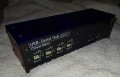
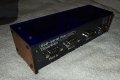
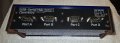
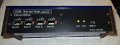
Here is a USB to octal serial port hub I designed and built. It's designed around a CH348 chip that handles all the USB–serial communication at up to obscene baud rates and costs less than five bucks. I used MAX232 chips to have 4 RS232 ports and 4 UART ports, each selectable for 3.3 or 5 volt operation.

Notice the wood end panels for that 70s look.

20241120_002210.jpg

20241120_002117.jpg

20241120_002432.jpg

20241120_010600.jpg


20241120_010651.jpg
 

MisterBill2

Joined Jan 23, 2018
28,032
Geez oh grief. You guys are beyond belief.

The advantages of USB C PD are clear to anybody who understands the spec and reason for its implementation.
When it was first introduced, USB meant "Universal Serial Bus", and it was intended as a replacement for the RS232 connection scheme which actually required the ability to enter connection parameters in order to use.
What I call STUPID, with no apology, is using that same connector for higher voltages.
It seems that some folks have no problem with the ability of a multi-output charger being able to destroy an $1500 smart phone, or some other device. And certainly it will happen. Already at this site an instance of just that was mentioned in a long past thread.
 

Ian0

Joined Aug 7, 2020
13,228
Well... this is a kind of exercise in frame jumping, Ian. I addressed your "bloatware" comment, specifically, and you didn't respond to that.
By "bloat" I was referring to the hardware bloat from four to 24 pins - the number of pins for a serial device when from 25 to 9 to 4 to 24. (DB9 was not the ultimate in connection reduction) Or does USB-C have aspirations in becoming HDMI?
Every device that needs charging has some type of buck or boost regulator in it. So why not fix on ONE charging voltage. 12V should do nicely. I can imagine that any device runs (or can run reliably) on the raw USB power input - they will all be regulated in one way or another. It will be a long time before I believe that a connector that small will deliver 240W reliably and safely. Two pins in parallel to carry 5A and a contact resistance of 50mΩ give over a Watt of power dissipation, which seems a lot for a connector of that size (I'm comparing it to a TO220 case power transistor).

I've only ever bought one USB-C lead, for an iPad Pro. There were a lot to choose from, and I just bought the first one I found of the right length - they are universal, aren't they? So any would work. And it didn't.

It will only be a matter of time before the de-factor USB-C connector is a 24-position connector with 4 contacts fitted, and the number of wires in a de-facto standard lead has also been reduced to four.
 

Externet

Joined Nov 29, 2005
2,662
Naaaahh ... The next USB link is built-in wireless; for both charging at 50 Amperes and data transfer... No need to have/buy/connect/do anything. Will recognize if there is need of charging, will perform data connection by voice command. So can be done while in bed not moving a finger. :rolleyes: Except the fingers scratching 'tonsills'
 

panic mode

Joined Oct 10, 2011
5,178
i love USB-C... it can power (some of) my computers, cell phone and what not. can be plugged in either orientation. fast data rates.
single cable powers my external display making it convenient to have second display while traveling or working on site.
it is practical and versatile.

my wife and son use iPhones and they are ALWAYS looking for stupid apple style cables/headphones that are only used on those products. as far as i can tell, hardly month goes by without one or both of them buying replacements.

so i welcome UK effort to standardize on this. i wish others would follow....
 
Top