Lighting Project

Thread Starter

And!

Joined Nov 9, 2024
11
Hello, I have a question. I’d like to run a 40 W LED light on a scissor lift. I’d like to remove the driver and run the light straight off 12 V DC. I may need a converter/DC regulator. Is there any hazard in doing this? overloading the battery? I have yet to find out how much current is drawn when a scissor lift is an operation. So it will be drawing 3.5amps plus whatever the scissor lift draws. Any thoughts? and how can I find out the current draw on a scissor lift? thanks.
 

Thread Starter

And!

Joined Nov 9, 2024
11
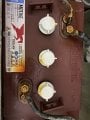
Also, the battery is T-105 6V deep cycle flooded lead acid battery. How can I find the max current draw for continuous and non-continuous loads?
 

MisterBill2

Joined Jan 23, 2018
27,159
Since you give us no hint as to what the voltage actually provided to the LEDs is, we have only guesses available. I have some 12 volt automotive lights that connect directly to 12 volts.
And now I am wondering about how many six volt batteries are in series to power the lift, snce probably it does ot actually operate on six volts.
 

nsaspook

Joined Aug 27, 2009
16,249
Also, the battery is T-105 6V deep cycle flooded lead acid battery. How can I find the max current draw for continuous and non-continuous loads?
How many T-105 batteries are in the energy bank? What's the scissor lift battery bank voltage and Ah specification?
 

bassbindevil

Joined Jan 23, 2014
918
If your 40W lamp uses a driver, it's possible it has a bunch of LEDs in series and runs at much more than 12V overall. I'd suggest buying a 12V floodlight or two.

Auto headlights and spotlights often have buck drivers that maintain constant power to the LEDs over a wide voltage range, like 8 V to 28V. Claimed watts may be for the incandescent equivalent, and not the actual power. This is based on my extensive experience with exactly two units I bought used.
 

Ian0

Joined Aug 7, 2020
13,097
Does the scissor lift use just ONE 6V battery? That would be unusual.
If it uses several, then don't connect the lamp to just one, as you will put the battery pack out of balance.
 

MisterBill2

Joined Jan 23, 2018
27,159
What voltage is the driver supplied from?? It may be that, if the driver has a label, that it includes the output information, and that information will allow avoiding a whole lot of guessing, both correct and totally wrong.
 

Thread Starter

And!

Joined Nov 9, 2024
11
How many T-105 batteries are in the energy bank? What's the scissor lift battery bank voltage and Ah specification?
225AH @ 20Hrs
185 AH @ 5Hrs

One lift has two in series and another is 4 in series. One one lift operates on 12V and another on 24V.

I’m not sure why it shows two different amp hours. I took the lowest one to calculate how long a 40 W LED would operate. I got 2220WH divided by 40 equals 55 hours of light. I just don’t know the current draw on the lift when it’s in operation or how to find out.
 

Tonyr1084

Joined Sep 24, 2015
9,744
[edit] the answer below started before you answered some of the questions. In retrospect, you nave one lift that runs on 12VDC and one that runs on 24VDC. [end edit]

Picked up two H11 type LED lamps (headlamps) for $2.99 for the set, another rectangular headlamp assembly for what I don't know, but it's LED and one LED fog light, also $2.99 each. Each one of them run on 12V automotive power, which can vary up to 15 volts at times. They're internally regulated.

The question others have asked, and is valid, is what kind of power source does the scissor lift have? If there are (for example) four 6V batteries in series then that's a 24V system. Not uncommon. OR it can be two 6V batteries in series with two more 6V batteries in series forming a 12V source with higher amp hour capacity (runs longer). There are many configurations. Tapping off a single or a set of batteries WILL unbalance the system just as @Ian0 said, and that will become a problem over time. How much time? Depends on the configuration of the batteries and how much time the lamp is powered.

An alternative would be to use the whole battery voltage and add an additional resistor to the power feed to the LED to control the current. LED's are current driven components. They DO have a forward voltage drop that needs to be satisfied. If an LED has a forward voltage drop (Vf) of 3.2 and you want to run it on 12V then a resistor would be needed to dissipate the 8.8 volts. (12V-3.2Vf) ÷ (desired current) = necessary resistance value. If you run the same LED (with 3.2Vf) on 48V then (48V-3.2Vf) ÷ (desired current) = necessary resistance value. Don't forget about wattage.

If you want to run said LED at 20mA then (48V-3.2Vf)÷20mA=2K24Ω. 48V x 20mA = 960mW (nearly 1 watt)
 

Thread Starter

And!

Joined Nov 9, 2024
11
If your 40W lamp uses a driver, it's possible it has a bunch of LEDs in series and runs at much more than 12V overall. I'd suggest buying a 12V floodlight or two.

Auto headlights and spotlights often have buck drivers that maintain constant power to the LEDs over a wide voltage range, like 8 V to 28V. Claimed watts may be for the incandescent equivalent, and not the actual power. This is based on my extensive experience with exactly two units I bought used.
I’m not sure what the output is on the driver yet. So u would not recommend using such a light? I’m hoping I can use them because I have them on hand. I was thinking I could use a dc to dc converter. But I’m concerned about maybe too much draw on the battery when the lift is in use and what effect it will have on the battery. I’m not sure how to find the operating current draw of the lift.

Are there any concerns I may not be seeing by running it off the battery? Any advice?
 

Tonyr1084

Joined Sep 24, 2015
9,744
Are there any concerns I may not be seeing by running it off the battery? Any advice?
You can run one 12V lamp on the lift that operates on 12V.
You can run one 12V lamp WITH EXTRA RESISTANCE on the lift that operates on 24V
Off hand I don't know what size and value resistor would be needed, but yes, you can run a buck converter of sufficient amperage to drop 24V down to 12V. Again, I don't know how many amps your lamps draw.

Post specs or a picture. Specs preferred. Part number of the lamp may prove useful.
 

Thread Starter

And!

Joined Nov 9, 2024
11
[edit] the answer below started before you answered some of the questions. In retrospect, you nave one lift that runs on 12VDC and one that runs on 24VDC. [end edit]

Picked up two H11 type LED lamps (headlamps) for $2.99 for the set, another rectangular headlamp assembly for what I don't know, but it's LED and one LED fog light, also $2.99 each. Each one of them run on 12V automotive power, which can vary up to 15 volts at times. They're internally regulated.

The question others have asked, and is valid, is what kind of power source does the scissor lift have? If there are (for example) four 6V batteries in series then that's a 24V system. Not uncommon. OR it can be two 6V batteries in series with two more 6V batteries in series forming a 12V source with higher amp hour capacity (runs longer). There are many configurations. Tapping off a single or a set of batteries WILL unbalance the system just as @Ian0 said, and that will become a problem over time. How much time? Depends on the configuration of the batteries and how much time the lamp is powered.

An alternative would be to use the whole battery voltage and add an additional resistor to the power feed to the LED to control the current. LED's are current driven components. They DO have a forward voltage drop that needs to be satisfied. If an LED has a forward voltage drop (Vf) of 3.2 and you want to run it on 12V then a resistor would be needed to dissipate the 8.8 volts. (12V-3.2Vf) ÷ (desired current) = necessary resistance value. If you run the same LED (with 3.2Vf) on 48V then (48V-3.2Vf) ÷ (desired current) = necessary resistance value. Don't forget about wattage.

If you want to run said LED at 20mA then (48V-3.2Vf)÷20mA=2K24Ω. 48V x 20mA = 960mW (nearly 1 watt)
225AH @ 20Hrs
185 AH @ 5Hrs

One lift has two in series and another is 4 in series. One one lift operates on 12V and another on 24V.

What does Vf mean in your calculations? Also, the voltage will probably fluctuate with the lift in operation. Would a current regulator be ideal in this situation instead of a resistor?
 

Tonyr1084

Joined Sep 24, 2015
9,744
Assuming a standard headlamp of 55W at 13.8VDC would draw just under 4 amps. Since LED's draw less current, a buck converter with an output of 4 amps would probably be sufficient for the 24V lift.
 

Tonyr1084

Joined Sep 24, 2015
9,744
225AH @ 20Hrs
185 AH @ 5Hrs

One lift has two in series and another is 4 in series. One one lift operates on 12V and another on 24V.

What does Vf mean in your calculations? Also, the voltage will probably fluctuate with the lift in operation. Would a current regulator be ideal in this situation instead of a resistor?
First, you need to speak about one lift at a time. It means very little to us that you have one set of batteries at 225Ah @ 20 hours. What that DOES mean is that the battery pack at whatever voltage it operates at (which we don't yet know) has a capacity that can deliver 225 amps for 20 hours. What voltage that is - we don't know.

As for Vf
If an LED has a forward voltage drop (Vf) of 3.2
Vf refers to the forward voltage drop - or forward voltage, which is more common in the language of electronics. Vf refers to how much voltage it takes to excite the electrons in the LED. But simply delivering a voltage matching the Vf of an LED will likely burn it out. LED's are "Current Operated Devices". That means with an LED of 3.2Vf you would want a power source higher than that Vf. In common practice, 5V would be plenty. With the appropriate size resistor you can safely operate a 3Vf LED on 5V. You can operate it on 6V, 12V, 24V, 48V or in theory a million volts DC. Whatever voltage you have, you need to control the amount of current passing through the LED. In my examples I've used 20mA (0.02A) since that is a most common value.

What you have - we don't know its configuration. Whether it has an internal resistor or a far more sophisticated internal regulation system.
 

Thread Starter

And!

Joined Nov 9, 2024
11
You can run one 12V lamp on the lift that operates on 12V.
You can run one 12V lamp WITH EXTRA RESISTANCE on the lift that operates on 24V
Off hand I don't know what size and value resistor would be needed, but yes, you can run a buck converter of sufficient amperage to drop 24V down to 12V. Again, I don't know how many amps your lamps draw.

Post specs or a picture. Specs preferred. Part number of the lamp may prove useful.
The specs from what I can see don’t have the driver info. I think I will have to open up a light tomorrow to get the needed info.
 

Attachments

Thread Starter

And!

Joined Nov 9, 2024
11
First, you need to speak about one lift at a time. It means very little to us that you have one set of batteries at 225Ah @ 20 hours. What that DOES mean is that the battery pack at whatever voltage it operates at (which we don't yet know) has a capacity that can deliver 225 amps for 20 hours. What voltage that is - we don't know.

As for Vf

Vf refers to the forward voltage drop - or forward voltage, which is more common in the language of electronics. Vf refers to how much voltage it takes to excite the electrons in the LED. But simply delivering a voltage matching the Vf of an LED will likely burn it out. LED's are "Current Operated Devices". That means with an LED of 3.2Vf you would want a power source higher than that Vf. In common practice, 5V would be plenty. With the appropriate size resistor you can safely operate a 3Vf LED on 5V. You can operate it on 6V, 12V, 24V, 48V or in theory a million volts DC. Whatever voltage you have, you need to control the amount of current passing through the LED. In my examples I've used 20mA (0.02A) since that is a most common value.

What you have - we don't know its configuration. Whether it has an internal resistor or a far more sophisticated internal regulation system.
The amp hours above came off a lift that was operating at 12 V. Why they give two different amp hours I’m not sure.
 
Top