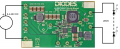
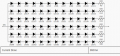
13.5V source nominal from the harness. PWM bat pulse for DRLNow I have seen the arrangement it looks like all will be lighted at one time. The first question is what is the basic source voltage? is it 12 or 48, as many EVs tend toward higher battery pack voltages. Does the light as shown need to be intensity controlled? As for DRLs, possibly??
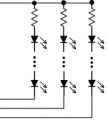
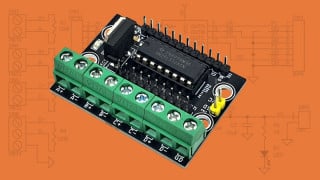
OK, so that could be a driver for series strings in parallel, using a small value series resistor for each string. So now the challenge of finding the most efficient string length and voltage That might be two strings of 36 LEDs or 4 strings of 18 in series. That will require examining the application notes, because they often describe the sweet spot for top efficiency.The AL8871Q is an LED driver, controller IC for driving external MOSFETs to drive high-current LEDs. It's a buck-boost topology
OK, so that could be a driver for series strings in parallel, using a small value series resistor for each string. So now the challenge of finding the most efficient string length and voltage That might be two strings of 36 LEDs or 4 strings of 18 in series. That will require examining the application notes, because they often describe the sweet spot for top efficiency.
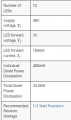
So in a boost led driver configuration how should I string these LEDs for max efficiency?72 / 12 = 6 string
2 x 0.25 = 1.5A total current
1.5. x (48 - 36) x 6 = 108W dissipated
Are you planning on a cooling fan for the resistors?
Multiple strings of LEDs plus a resistorconnected across a power source are independent of each other. So adding LEDs until the forward drop total does not leave room for another, and then adding a series resistor to each string to set the required current from the supply current is the simple way. A switching LED driver that can deliver a higher voltage at a controlled current so that no resistor is required is more efficient. 18 in series with a 66 volt supply could work, about 2 volts margin, so might not be max light out but rather close. So it is all a trade-off, electronics or a lot of resistors, both can work.
No, each string is independent of the others. Each LED in a single string will see the same current. By current in srting 1 is not the same as the current in string 2. Forward voltage varies from one LED to another of the same type. Each string will have a slightly different forward voltage. Also, some LEDs will get hotter than others, which changes their forward voltage.Therefore, the current draw will be the same for each LED string in this configuration.
15 in series with a 48volt supply and a regulator will only work if they are 3 volt LEDs. Have you ever seen a white 3.0 volt LED?Put 15 in series and and use an LM317 as a current regulator. It will drop 3V, which is enough for it to regulate and only dissipate 1/2W each, which does not require a heat sink.