isolation transformer

Variac_P1040860.JPG
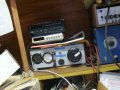
This is my isolation xformer/Variac. remember, put together some 50 years ago when I was in my early teens probablly.
The isolation is external and higher current. Not even sure how the fuse is wired.
I have no idea how I wired the ground.
You have Voltmeter, Ammeter, binding posts (no ground one), 3 prong outlet, Full on-OFF-Variable and the 3A variac.

No light is probably the most missed feature. Occaisionally, I would want variable an would get full on
 

SamR

Joined Mar 19, 2019
5,500
I got a little surprise in the mail today. The 4A Jameco Valupro Isolation Xfmr being sold by Amazon isn't. It's actually 7A. It rattled and the were 2 machine screws and washers lying in the box apparently missing from the bottom of the unit so I opened the case. The 4 tie-down pads on the xfmr were missing 2 nuts and the other 2 were loose. The nuts and washers were loose in the case so I bolted the xfmr back down. The 2 normal receptacles and the 2 isolated receptacles were all GND connected so I cut the connection and probed the receptacles to make sure there was NO crossover and the case was grounded to the primary only. The 2 Isolated receptacles are now truly isolated. Nice big heavy 1:1 xfmr and fused for 15A on the primary. Nice unit for $100.
 

SamR

Joined Mar 19, 2019
5,500
Actually when I read the fine print on Amazon (scarce as it is in detail) it does say 7A. Apparently an editing error in the title for it. The primary and secondary feed wires appear to be at least 18 AWG so for chassis wiring not sure why they derated the secondary when the primary is rated 15A but 7A will serve me well and give lots of headroom to the Xfmr. Says mfg. is MeanWell online but the paperwork has another name on it.
 
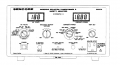
On the PR570 there are two LCD displays with a selector under it.

This is the basic layout of the Sencore variable isolation transformer - PR570

1581190589737.png

Critique: Only 3 AMPs which is reasonable
It does have the output on LED
It does have an electronic fuse.
It does have a front panel Earth binding post.

There is some merits of having a bar graph and/or analog meter especially for current. A switchable meter would be really nice. Their knob to adjust the AC voltage is small. It looks like it has to disconnect the DUT ground when doing the leakage measurements.

For audio testing like measure the output power 8 ohms, both channels driven which is about 200W for a 100 W amp is a reasonable limitation.

I don't own this unit. I did audio amp repairing professionally at home, but I was glad I used an isolation transformer once, The amp was fine, but it had a primary to chassis short mid-winding and a 2-prong plug.

AC volts
1. Hot to External Earth Ground (valid only when connected to external earth ground)
2. Hot to Safety ground
3. Hot to neutral
4. Isolated output

These basically check to see if the cords are connected right.

AC Current/Power
1. HOT Chassis (uAmps)
2. TRIP Set (Amps)
3. Trip reset

4. Current (amps)
5. Power (Watts)
5. Leakage (uAmps)

1-3 power is off, 4-6 power is on

This has lights that auto toggle
[ ] AC Line [ ] Safety GND
both must toggle

FP Layout is (L to R, top to bottom)
Sencore Variable isolation Transformer and Safety Anallyzer PR570
The two meters
AC volts (switch)
AC output voltage adjust (knob)
Current power switch
Trip set


Lighted power switch (Rocker)
Binding post - To external Earth Ground (see chart)
TP - 100 uA Leakage Calibration Check (Set AC voltage to 120V and touch safety probe here)
Safety probe input
Small LED (Isolated outlet on)
3 prong outlet

Limit statement 3A continuous and 4 intermittent.

In essence you have:
1.variable Isolation
2. Wiring sanity checks
3. Leakage checks (internal and to exposed parts)
4. Electronic fuse
5. Indication that outlet is live.
6. Power, voltage and current measurements.

Missing: bar graph and analog meter displays.
Bypass probably isn't appropriate.
 
Last edited:

Thread Starter

neospam

Joined Jan 13, 2020
110
On the PR570 there are two LCD displays with a selector under it.

This is the basic layout of the Sencore variable isolation transformer - PR570

View attachment 198629

Critique: Only 3 AMPs which is reasonable
It does have the output on LED
It does have an electronic fuse.
It does have a front panel Earth binding post.

There is some merits of having a bar graph and/or analog meter especially for current. A switchable meter would be really nice. Their knob to adjust the AC voltage is small. It looks like it has to disconnect the DUT ground when doing the leakage measurements.

For audio testing like measure the output power 8 ohms, both channels driven which is about 200W for a 100 W amp is a reasonable limitation.

I don't own this unit. I did audio amp repairing professionally at home, but I was glad I used an isolation transformer once, The amp was fine, but it had a primary to chassis short mid-winding and a 2-prong plug.

AC volts
1. Hot to External Earth Ground (valid only when connected to external earth ground)
2. Hot to Safety ground
3. Hot to neutral
4. Isolated output

These basically check to see if the cords are connected right.

AC Current/Power
1. HOT Chassis (uAmps)
2. TRIP Set (Amps)
3. Trip reset

4. Current (amps)
5. Power (Watts)
5. Leakage (uAmps)

1-3 power is off, 4-6 power is on

This has lights that auto toggle
[ ] AC Line [ ] Safety GND
both must toggle

FP Layout is (L to R, top to bottom)
Sencore Variable isolation Transformer and Safety Anallyzer PR570
The two meters
AC volts (switch)
AC output voltage adjust (knob)
Current power switch
Trip set


Lighted power switch (Rocker)
Binding post - To external Earth Ground (see chart)
TP - 100 uA Leakage Calibration Check (Set AC voltage to 120V and touch safety probe here)
Safety probe input
Small LED (Isolated outlet on)
3 prong outlet

Limit statement 3A continuous and 4 intermittent.

In essence you have:
1.variable Isolation
2. Wiring sanity checks
3. Leakage checks (internal and to exposed parts)
4. Electronic fuse
5. Indication that outlet is live.
6. Power, voltage and current measurements.

Missing: bar graph and analog meter displays.
Bypass probably isn't appropriate.
couple of your post gave me some good ideas to incorporate into my setup. Currently working on some other projects, will be back on this after saving up a bit more and collecting more parts.

When it rains, it seems to poor.. my treadmill motor control board went bad in the last few weeks. Will try and tackle that in the treadmill thread area soon. From what I read does not look promising, most looked unsolved.
 

Thread Starter

neospam

Joined Jan 13, 2020
110
still here gathering parts. Just about got all my parts for the variac and iso trans.

running though what is necessary or overkill. iso transformer - fused by itself and ability to be used by itself or along with variac. The variac fused by itself, and the ability to be used by itself or with the iso transformer and have in series with a incandescent light plug if needed.

I want to protect the iso transformer being it is limited to 2.1A out, and I want the variac protected.

I ended up buying digital amp and volt meters that are hardwired to get sensitive readings. Will this be to sensitive?

just some random thoughts. hope everyone is safe & well
 

MisterBill2

Joined Jan 23, 2018
27,683
still here gathering parts. Just about got all my parts for the variac and iso trans.

running though what is necessary or overkill. iso transformer - fused by itself and ability to be used by itself or along with variac. The variac fused by itself, and the ability to be used by itself or with the iso transformer and have in series with a incandescent light plug if needed.

I want to protect the iso transformer being it is limited to 2.1A out, and I want the variac protected.

I ended up buying digital amp and volt meters that are hardwired to get sensitive readings. Will this be to sensitive?

just some random thoughts. hope everyone is safe & well
The only possible issue that I see is if the digital meters require an external DC power source, because it might require isolated power supply for each meter. Other than that, if the ranges on the meters are correctly selected then it should work out very well.
 
Remember, the wiper of the Variac MUST be fused.

It's OK to fuse the line too. Sencore did.

e.g. 10A (power in) at 120V is 1200W, but 20A (Wiper) at 10V is 200W (Load), but 20A is bigger than 10A, so the wiper would be toast,
 
Last edited:

MisterBill2

Joined Jan 23, 2018
27,683
Remember, the wiper of the Variac MUST be fused.

It's OK to fuse the line too. Sencore did.

e.g. 10A (power in) at 120V is 1200W, but 20A (Wiper) at 10V is 200W (Load), but 20A is bigger than 10A, so the wiper would be toast,
certainly it is possible to fry a variac or powerstat by running excessive wiper current. I recommend a fast-tripcircuit breaker instead of a fuse, because it will provide better protection. AND, since the type of fuse required to protect the wiper is not cheap, the breaker will probably save money in the longer term. Also, it will be far more convenient.
 
@MisterBill2 I messed up a wiper the hard way. I was a teen and no Internet. Not sure how my bench Variac is wired, Built 50 years ago and I have a front panel fuse holder.

At work most of out Variacs were set near 40V, so the fuse was sized to the load, e.g. 8A). There was an oversized I2t semiconductor fuse (25A). Sencore used line and load fuses. They also had an electronic load fuse as well.
 

Thread Starter

neospam

Joined Jan 13, 2020
110
certainly it is possible to fry a variac or powerstat by running excessive wiper current. I recommend a fast-tripcircuit breaker instead of a fuse, because it will provide better protection. AND, since the type of fuse required to protect the wiper is not cheap, the breaker will probably save money in the longer term. Also, it will be far more convenient.
@MisterBill2 I messed up a wiper the hard way. I was a teen and no Internet. Not sure how my bench Variac is wired, Built 50 years ago and I have a front panel fuse holder.

At work most of out Variacs were set near 40V, so the fuse was sized to the load, e.g. 8A). There was an oversized I2t semiconductor fuse (25A). Sencore used line and load fuses. They also had an electronic load fuse as well.
thanks for input. Seems like there is always some changes or adjustments and have not started. Only have one shoot at drilling the cabinet. Getting close!

Wiper current, means output? The output of the isolation trans is 2.1A I was going to put a fast blow fuse @2A to protect the transformer? What kind of fast blow circuit breaker were you thinking? Fast blow might not be enough?

Will have to figure out a plan to use switches and/or plugs various scenarios to get all the functions, not sure thats possible.

I decided to use an old tool box for case, wondering if it is to big, just about dont have enough room..
 
Wiper current, means output?
Not exactly. If we were talking about the Variac alone, then yes.

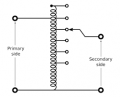
1590685545612.png

The autotransformer looks like the above. That's a tapped one instead of a wiper version. The socontary (wiper) MUST be fused.

You can have the variac first or second. I had the isolation transformer first and external to the case because it took up valuable bench space and then the Variac. Since the transformer is 1:1, it doesn't matter.

An isolation transformer prior means any circuits can be powered by the line voltage.

You also want to bond the ground and neutral after the transformer.
 

MisterBill2

Joined Jan 23, 2018
27,683
Not exactly. If we were talking about the Variac alone, then yes.

View attachment 208376

The autotransformer looks like the above. That's a tapped one instead of a wiper version. The socontary (wiper) MUST be fused.

You can have the variac first or second. I had the isolation transformer first and external to the case because it took up valuable bench space and then the Variac. Since the transformer is 1:1, it doesn't matter.

An isolation transformer prior means any circuits can be powered by the line voltage.

You also want to bond the ground and neutral after the transformer.
WHAT POSSIBLE BENEFIT would be gained by tying an isolated circuit back to the power system ground?? I have asked this question before and none of the answers ever make sense. The only purpose of isolation is to have a circuit NOT referenced to the earth ground.
The benefit is that if one contacts one side of an isolated circuit there is no path back to the other side to enable a shock current to flow. Is that concept too hard to understand? The basic concept of a circuit is a complete path for current toflow through. The purpose of an ISOLATION transformer is to break that path and eliminate the hazard. Why else would an ISOLATION transformer be used, except to provide isolation???
 

MaxHeadRoom

Joined Jul 18, 2013
30,694
There are two methods of using an isolation transformer, one is if you require total isolation from the original (usually mains) supply.
In this case the secondary circuit remains isolated from ground.
The other is where you are for e.g. feeding a control or other circuit from a higher level such as a 3ph supply transformer, in this case, when transformed, the 120v or 240v 1ph control circuit has lost the reference to earth ground, it is then recommended that one side of the secondary is taken to an earth ground point in order to re-reference to earth.
Just as it is done in a residential service supply transformer.
Ref: NEC, NFPA79 etc.
Max.
 
See: https://www.powervar.com/resources/knowledge-base

It does provide a low impeadance ground, eliminates ground loops and provides a clean ground. When added to a traditional surge supressor, it does a fantastic job which I can attest to. Look for some youtube videos from powervar. It had 17 years with a Mac Centris computer at work where the only failures were dust and a floppy drive. The SCSI hard drive was still working when de-comishioned.

It, an ISOBAR followed by a powervar power conditioner, was installed in a prior system with only floppy, power supply failures and fan failures and installed in the replacement system.

If you don't need an "always on" UPS, you can't beat the combination.

You have to be "very careful" when lifting protective ground. You might consider a switch to allow total isolation.

I really needed the Isolated Variac with two prong a Polarized and two prong non-polarized plug. Televisions with a 120V series filament and an audio amplifier with a power transformer insulation breakdown.

So far, the ground has not been an issue for me and I forget how mine is wired. I also have a set of binding posts. Two instead of 3.


See:
and
and


"Isolation" has a "different meaning" for different people. A 120:120 transformer might not have 5 kV of isolation and then there is maximum leakage. You see terms like "medical isolation".

There may be a reason to add a GFCI as well to your gizmo, but you really have to think that one through,

Here https://groups.google.com/forum/#!topic/uk.d-i-y/RZDCbckN6bU is suggested way of making a leakage meter, In another case you would want a probe to probe various exposed metal parts.

It's even useful to have a "Wiring OK" type of indicators too.

A LOT of times I might design something with all of the bells and whistles I can think of. Build what I need, but with space/hooks to accomodate everything I want. I'll add the budget/needs fit.

I love this method for computer programming of large projects.
 
Last edited:
Top