Is it feasible to design a user-friendly, DC-powered digital alarm clock without relying on....

BobTPH

Joined Jun 5, 2013
11,665
I built one using a single chip that did it all when I was in high school. It was my first PC board, drawn with a resist ink pen and then etched. The digit and segment drivers were a motley collection of transistors from dollar grab bags bought at Radio Shack. It was a huge DIP chip, probably 40- pins.
 

MisterBill2

Joined Jan 23, 2018
28,502
There are also electronic clocks that use other schemes, one was produced quite a while ago on this very forum. AND there are clocks using some alternative schemes to provide an analog dial display with LEDs found in the "Schematicsforfree" website. Not easy to find, but it is there, I saw it just a few days ago. There are also complete digital clocks with alarm functions on a single IC, such as found in most VCRs , especially those a few years older.
 

Thread Starter

MissFluffy

Joined Oct 25, 2023
16
As a point of reference, here's a 6 digit clock I started using BCD counters over 40 years ago when I was a technician. I didn't need any 7 segment decoders because the display I chose to use contained decoder logic. If you could find those displays now, they'd probably cost more than $25 each.

View attachment 305951

I was doing it with wire wrapping. I couldn't imagine doing it with soldering point-to-point routing or laying out a PCB.
Wow! Using BCD counters and a display with built-in decoder logic must have been quite advanced for its time. It's amazing how technology has evolved over the years. I can understand the challenge of wire wrapping versus soldering point-to-point or laying out a PCB. It's impressive to think about the dedication and precision required for such projects back then.

On a related note, I've come across a few articles online that touch on similar ideas. While there aren't many, I've been reading through some of them and I am planning to experiment with their concepts in multisim. I'll definitely be delving deeper into logic gates and BCD as part of this exploration. It's always exciting to see how old tech can inspire new projects!
 

dl324

Joined Mar 30, 2015
18,490
Using BCD counters and a display with built-in decoder logic must have been quite advanced for its time.
National Semiconductor was manufacturing clock chips, like the one in the datasheet I posted, before I started my clock using counters. The project was intended to let me use what I had learned in school. The only problem is that I had more interesting things to do at that point in my life and I never finished that project.

On a related note, I've come across a few articles online that touch on similar ideas. While there aren't many
What information are you looking for? Have you decided how low on the technology ladder you want to go for your clock?

I never did like Multisim. I used the free version from Newark or Mouser and stopped using it when they discontinued support. Multisim's suggested routing is retarded, and many users don't bother cleaning it up, or using the shift key to get better routes. I also had a lot of problems with things looking like they were connected but were actually disconnected. I got into the habit of grabbing a component and moving it around to make sure the connections I made stuck.
 

AnalogKid

Joined Aug 1, 2013
12,287
If you want to really geek out, consider a binary clock. Same core as a normal digital clock design, but no display decoders or drivers - each BCD counter drives four LEDs.

If you decide to go with one of the fully-integrated clock chips like ones from National, I probably have one I can donate to the cause.

Also, what is your concern about transformers? They step down and isolate AC power, and provide a cheap and accurate timebase, but both of those functions are a constant across any clock design with LED displays - microcontroller-based or not. If you are going for battery power, there are many ways to create a 1 Hz clock pulse. The most interesting is to use the chip in a standard battery-powered analog wall clock. I'm sure there are threads about that around here somewhere.

ak
 
Last edited:

Thread Starter

MissFluffy

Joined Oct 25, 2023
16
If you want to really geek out, consider a binary clock. Same core as a normal digital clock design, but no display decoders or drivers - each BCD counter drives four LEDs.

If you decide to go with one of the fully-integrated clock chips like ones from National, I probably have one I can donate to the cause.

ak
That's incredibly generous of you! I'll definitely consider using one of the fully integrated clock chips from National. If I decide to go that route, I'll reach out. Just to give you a heads up, I'm located a bit up north, so shipping might be on the pricier side. I'd be happy to discuss the logistics if we go ahead. Thank you so much for offering to help, this means a lot to me! :)
 

MisterBill2

Joined Jan 23, 2018
28,502
A really slick way to do a 60 LED circle uses two 4017s and the LEDs are in six groups of ten, selected and enabled by the tens counter. That is in the reference I suggested earlier.I don't recall how the hours worked, but a 4017 and a single FF can do it.
 

BobTPH

Joined Jun 5, 2013
11,665
Wow! Using BCD counters and a display with built-in decoder logic must have been quite advanced for its time. It's amazing how technology has evolved over the years.
The single chip alarm clock I built was 54 years ago. So, no, integrated counter and decoder was not new technology 40 years ago!
 

Papabravo

Joined Feb 24, 2006
22,115
I would say that the answer to your question would be no. It not a useful exercise using technology of the 1970's. That said if you want to do the job in an FPGA, this would be a useful and practical exercise, which would teach you the basics of circuit design and debugging in a convenient form. Development boards for most FPGAs are relatively cheap and have other uses after you finish the project.
 

MisterBill2

Joined Jan 23, 2018
28,502
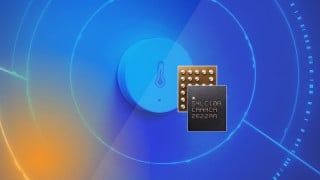
Cute chip, but impossible to use without a microcontroller.

ak
NONE of the clocks that used a single IC clock required a separate microprocessor. There was, nor is, any useful function that adding a separate processor could provide for a single display clock with a clock IC. Of course the availability of that first generation devices might be limited, but since digital clocks are still available today, some form of the single IC drivers must still be in production. Procurement may be a challenge.
 

AnalogKid

Joined Aug 1, 2013
12,287
NONE of the clocks that used a single IC clock required a separate microprocessor.

Not my point. In post #1, the TS was explicit:
I'd love a purely DC-powered design WITHOUT all those mentioned "transformers, arduinos, programming, microcontrollers.

However, the chip linked in post #33 (the post immediately before my response) is controllable/configurable only through in I2C port.

ak
 

MisterBill2

Joined Jan 23, 2018
28,502
Actually, there is no need for the seven segment displays unless the goal is a digital/numeric display. two columns of LEDs, one for hours and one for 5 minute intervals, or two more columns, for ones and tens of minutes can be rather simple, with no decoding required.
 
Top