ICE (Internal Combustion Engine) technologies

joeyd999

Joined Jun 6, 2011
6,458
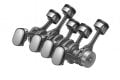
I don't think the future of gas ICEs will be significantly affected just by making the engine shorter for a given displacement and cylinder count. :rolleyes:
Oh, come on! Imagine how many Yugos could be sold if only they had a Ferrari engine!

 
Last edited:

WBahn

Joined Mar 31, 2012
33,223
While it's not hard to imagine applications where a shorter engine of the same displacement and cylinder count would be an advantage, I don't see how such applications are so critical as to let something like this rewrite the future of gas engines. I would imagine that the cost to produce such engines, and possibly reliability and maintenance concerns, would keep these limit to applications in which engine length was a non-negotiable constraint and the disadvantages would have to be accepted.

The problem of shortening an engine while maintaining displacement and cylinder count was much more effectively and elegantly addressed a century ago -- it was called the radial engine. It also had a very good power to weight ratio. None-the-less, it had disadvantages that resulted in it falling by the wayside once the need for large, powerful aircraft engines was supplanted by gas turbines.
 

musicalavtech

Joined Mar 23, 2012
84
Everybody's talking about EV's, Hybrids and battery technologies for transportation. But it draws my attention that technology for internal combustion engines is also always improving and evolving and barely anyone (other than us, nerds) takes notice. Here's an interesting proposal:

A long time ago I drew up a camless motor design. Not a great one, but it was posted to YT. I cannot find that video anymore.

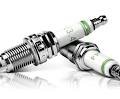
Another technology I thought was all that is the microwave spark plug. Very efficient indeed.
https://patents.google.com/patent/US20160265502A1/en

From AI...

AI Overview


Ex-Porsche CEO Advocates For Microwave Ignition To Replace ...
Microwave spark plugs represent an innovative approach to internal combustion where microwave energy is utilized alongside—or instead of—a traditional electrical spark to ignite fuel in an engine. This technology promises significant fuel efficiency improvements and reduced emissions. [1, 2, 3, 4]

How Microwave Ignition Works
  • The Process: Microwave-assisted ignition typically initiates a plasma using a standard spark discharge from an ignition coil, then expands the plasma and increases electron energy by emitting microwaves (often at 2.45 GHz) into the combustion chamber. [1]
  • Efficiency: Because the microwaves energize molecules to expand the flame speed and ignite the fuel evenly, it creates a more complete burn than traditional spark plugs. [1]
  • Benefits: This complete combustion can lead to up to a 26% to 30% reduction in fuel consumption and allows engines to run safely on leaner fuel-to-air mixtures. [1, 2]

Potential Applications & Challenges
  • Engine Adaptability: Proponents suggest microwave spark plugs could be threaded into standard boreholes and used in existing internal combustion engine architectures without requiring major design overhauls. [1, 2]
  • Industrial and Commercial Use: While passenger vehicles are transitioning to electric powertrains, microwave ignition holds strong potential for mass transit, trains, marine vessels, and large industrial engines that are not as easily electrified. []
  • Adoption Hurdles: Despite the promised benefits, widespread commercial adoption has been slow due to high implementation costs, the immaturity of the technology, and the complexity of accurately modeling microwave combustion. []
 

kiroma

Joined Apr 30, 2014
228
I worked in the automotive electronics industry for 15 years. I can tell you that those products are fully characterized and protected for load dumps and many other abnormal events.
Having said this, automotive electrical systems are evolving much faster than what the SAE and IEC can develop standards for.
I can tell you for instance, that creating a load dump condition while the engine and A/C cooling fans were running, several load dump-compliant modules would sometimes be damaged.
Thus, you should both write a disclaimer AND provide an additional level of protection.
I didn't quite get it. You said that the products are protected agaisnt these events. Then you said that they these compliant modules would sometimes get damaged.
So, they are protected and get damaged?
 

schmitt trigger

Joined Jul 12, 2010
2,244
Re-read my post, specifically this sentence:

automotive electrical systems are evolving much faster than what the SAE and IEC can develop standards for.

One may be protecting against legacy issues with well understood cause and effects. But with newer systems one can only predict, based on simulation and testing, what new issues will develop.
The automotive industry is littered with examples of failures. Not only electric, but mostly mechanical.
 

Thread Starter

cmartinez

Joined Jan 17, 2007
8,862
@WBahn , I think I remember having a small discussion with you about how fast a new technology actually effects change in the real world. The first 4 minutes of this video make an excellent argument of why quick adoption of new tech is seldom the case. Which if I remember correctly, was your argument.


Thread Starter

cmartinez

Joined Jan 17, 2007
8,862
From LinkedIn:

1790049340846.png​

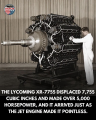
Seven thousand seven hundred fifty-five cubic inches. One hundred twenty-seven liters. Thirty-six cylinders. Over 5,000 horsepower at 2,600 RPM.

It is the largest and most powerful piston aircraft engine the United States ever built, and it never powered anything.

The layout was unusual. Nine banks of four cylinders each, arranged radially around a single crankshaft. Liquid-cooled rather than air-cooled, because moving that much heat out of a nine-bank arrangement through airflow alone was not realistic. Each cylinder displaced over 215 cubic inches, which is larger than most complete American car engines of the period.

Dual overhead camshafts. Fuel injection. Four variable-speed superchargers so the engine could be tuned for different altitudes, which mattered enormously for a bomber that would climb from sea level to 30,000 feet and needed to make power throughout.

Then the feature that sounds like something from sixty years later: the engine could run on one, two, or all four rows of cylinders to save fuel during cruise. Cylinder deactivation on a 1940s aircraft engine, so a long-range bomber could throttle back to a fraction of its capacity on the way to a target and still have everything available when it got there.

That is the same idea modern trucks use with Active Fuel Management, arriving about sixty years early on an engine the size of a small car.

It was intended for very large long-range bombers, including successors to the B-29 and designs in the same class as the B-36.

Development finished in 1946, and by then the argument was over.

A jet engine has no pistons, no connecting rods, no crankshaft, no valvetrain, and no reciprocating mass at all. It produces power with a spinning compressor and turbine, which means it can be made far lighter for the same thrust and requires a fraction of the maintenance. Against that, a 36-cylinder liquid-cooled piston engine with four superchargers and dual overhead cams on nine banks is not competing on merit. It is competing on the wrong side of a technological change.

Two engines were built. Both went to testing and display.

One survives at the National Museum of the United States Air Force in Dayton, Ohio, which is the usual destination for an engine that worked perfectly and had nowhere to go.
 

WBahn

Joined Mar 31, 2012
33,223
From LinkedIn:


Seven thousand seven hundred fifty-five cubic inches. One hundred twenty-seven liters. Thirty-six cylinders. Over 5,000 horsepower at 2,600 RPM.

It is the largest and most powerful piston aircraft engine the United States ever built, and it never powered anything.

The layout was unusual. Nine banks of four cylinders each, arranged radially around a single crankshaft. Liquid-cooled rather than air-cooled, because moving that much heat out of a nine-bank arrangement through airflow alone was not realistic. Each cylinder displaced over 215 cubic inches, which is larger than most complete American car engines of the period.

Dual overhead camshafts. Fuel injection. Four variable-speed superchargers so the engine could be tuned for different altitudes, which mattered enormously for a bomber that would climb from sea level to 30,000 feet and needed to make power throughout.

Then the feature that sounds like something from sixty years later: the engine could run on one, two, or all four rows of cylinders to save fuel during cruise. Cylinder deactivation on a 1940s aircraft engine, so a long-range bomber could throttle back to a fraction of its capacity on the way to a target and still have everything available when it got there.

That is the same idea modern trucks use with Active Fuel Management, arriving about sixty years early on an engine the size of a small car.

It was intended for very large long-range bombers, including successors to the B-29 and designs in the same class as the B-36.

Development finished in 1946, and by then the argument was over.

A jet engine has no pistons, no connecting rods, no crankshaft, no valvetrain, and no reciprocating mass at all. It produces power with a spinning compressor and turbine, which means it can be made far lighter for the same thrust and requires a fraction of the maintenance. Against that, a 36-cylinder liquid-cooled piston engine with four superchargers and dual overhead cams on nine banks is not competing on merit. It is competing on the wrong side of a technological change.

Two engines were built. Both went to testing and display.

One survives at the National Museum of the United States Air Force in Dayton, Ohio, which is the usual destination for an engine that worked perfectly and had nowhere to go.
The engine did not have dual overhead cams. Each bank had a single overhead cam, driven by a vertical bevel-geared shaft at the back of the engine. However, each cam had two sets of lobes and the camshaft could be moved forward and back, with the engine running, to select which set of lobes was in play, on for full takeoff power and the other for economy cruise. The front of each cam also drove things, but it differed by bank. Two drove magnetos, four drove distributors, two drove tachometers, and one drove the oil pump for the propellor pitch control.

I don't believe (am skeptical, anyway) that the engine could be operated using various numbers of rows to control power. My understanding is that this was primarily done by moving the cam shafts between positions and then controlling the manifold pressure and rpm.

Also, the engine as build only has one mechanically-driven supercharger that is always supplying air. But it required too much power when delivering the max 80 inHg boost at altitude, so there were plans to add two two-stage turbosuperchargers to feed the mechanical supercharger (a couple of different arrangements were considered) to get the desired high-altitude boost by providing the supercharger with sea-level air pressure at its inlet.

Furthermore, the two engines that were actually built completely were both -3 models, neither of which was fuel-injected. Though the -5 and -7 would have been, but I don't think either was ever completed.

This is what you get when a car guy talks aircraft engines.

Like this giant, the Soviet Yak M-501, which was a 8760 cu-in 42-cylinder 6-row radial diesel engine that could deliver 6200 HP, never flew, though it was modified for maritime use.
 
Top