ICE (Internal Combustion Engine) technologies

joeyd999

Joined Jun 6, 2011
6,389
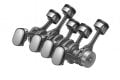
I don't think the future of gas ICEs will be significantly affected just by making the engine shorter for a given displacement and cylinder count. :rolleyes:
Oh, come on! Imagine how many Yugos could be sold if only they had a Ferrari engine!

 
Last edited:

WBahn

Joined Mar 31, 2012
33,023
While it's not hard to imagine applications where a shorter engine of the same displacement and cylinder count would be an advantage, I don't see how such applications are so critical as to let something like this rewrite the future of gas engines. I would imagine that the cost to produce such engines, and possibly reliability and maintenance concerns, would keep these limit to applications in which engine length was a non-negotiable constraint and the disadvantages would have to be accepted.

The problem of shortening an engine while maintaining displacement and cylinder count was much more effectively and elegantly addressed a century ago -- it was called the radial engine. It also had a very good power to weight ratio. None-the-less, it had disadvantages that resulted in it falling by the wayside once the need for large, powerful aircraft engines was supplanted by gas turbines.
 
Everybody's talking about EV's, Hybrids and battery technologies for transportation. But it draws my attention that technology for internal combustion engines is also always improving and evolving and barely anyone (other than us, nerds) takes notice. Here's an interesting proposal:

A long time ago I drew up a camless motor design. Not a great one, but it was posted to YT. I cannot find that video anymore.

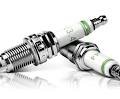
Another technology I thought was all that is the microwave spark plug. Very efficient indeed.
https://patents.google.com/patent/US20160265502A1/en

From AI...

AI Overview


Ex-Porsche CEO Advocates For Microwave Ignition To Replace ...
Microwave spark plugs represent an innovative approach to internal combustion where microwave energy is utilized alongside—or instead of—a traditional electrical spark to ignite fuel in an engine. This technology promises significant fuel efficiency improvements and reduced emissions. [1, 2, 3, 4]

How Microwave Ignition Works
  • The Process: Microwave-assisted ignition typically initiates a plasma using a standard spark discharge from an ignition coil, then expands the plasma and increases electron energy by emitting microwaves (often at 2.45 GHz) into the combustion chamber. [1]
  • Efficiency: Because the microwaves energize molecules to expand the flame speed and ignite the fuel evenly, it creates a more complete burn than traditional spark plugs. [1]
  • Benefits: This complete combustion can lead to up to a 26% to 30% reduction in fuel consumption and allows engines to run safely on leaner fuel-to-air mixtures. [1, 2]

Potential Applications & Challenges
  • Engine Adaptability: Proponents suggest microwave spark plugs could be threaded into standard boreholes and used in existing internal combustion engine architectures without requiring major design overhauls. [1, 2]
  • Industrial and Commercial Use: While passenger vehicles are transitioning to electric powertrains, microwave ignition holds strong potential for mass transit, trains, marine vessels, and large industrial engines that are not as easily electrified. []
  • Adoption Hurdles: Despite the promised benefits, widespread commercial adoption has been slow due to high implementation costs, the immaturity of the technology, and the complexity of accurately modeling microwave combustion. []
 

kiroma

Joined Apr 30, 2014
112
I worked in the automotive electronics industry for 15 years. I can tell you that those products are fully characterized and protected for load dumps and many other abnormal events.
Having said this, automotive electrical systems are evolving much faster than what the SAE and IEC can develop standards for.
I can tell you for instance, that creating a load dump condition while the engine and A/C cooling fans were running, several load dump-compliant modules would sometimes be damaged.
Thus, you should both write a disclaimer AND provide an additional level of protection.
I didn't quite get it. You said that the products are protected agaisnt these events. Then you said that they these compliant modules would sometimes get damaged.
So, they are protected and get damaged?
 
Re-read my post, specifically this sentence:

automotive electrical systems are evolving much faster than what the SAE and IEC can develop standards for.

One may be protecting against legacy issues with well understood cause and effects. But with newer systems one can only predict, based on simulation and testing, what new issues will develop.
The automotive industry is littered with examples of failures. Not only electric, but mostly mechanical.
 
Top