Facebook
 Google
 GitHub
 Linkedin
Hello, all,
I'm just beginning to learn about designing practical filter circuits. Using tools like Elsie, I think I can choose the components sizes for filters. However, I don't know how to size the components for the expected amperage (to choose the wire size for hand-wound inductors) or voltage (for voltage limits of capacitors). I'd like to learn the formulas for calculating these specifications.
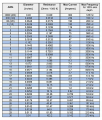
As an example, attached are the Elsie output for a 7.3MHz LPF (just above the 40M Amateur band). The standardized values for the inductor is 1.5µH and the capacitor is 620pF. If I want to design this filter for a typical radio amateur transceiver that outputs 100W into a 50Ω impedance, what amperage should I plan for in the inductor, and what voltage could the capacitor experience? Assume a dummy load of 50Ω and a perfect SWR of 1:1. What formulas would I use to calculate these values? I also think that these values change if the SWR is not 1:1. How would the formula change if the SWR was 5:1? Is there a worst-case formula?
Thanks so much for your advice and guidance. If you know of a website or resource that explains this, don't bother repeating it, just point it out to me.
-Kevin
I'm just beginning to learn about designing practical filter circuits. Using tools like Elsie, I think I can choose the components sizes for filters. However, I don't know how to size the components for the expected amperage (to choose the wire size for hand-wound inductors) or voltage (for voltage limits of capacitors). I'd like to learn the formulas for calculating these specifications.
As an example, attached are the Elsie output for a 7.3MHz LPF (just above the 40M Amateur band). The standardized values for the inductor is 1.5µH and the capacitor is 620pF. If I want to design this filter for a typical radio amateur transceiver that outputs 100W into a 50Ω impedance, what amperage should I plan for in the inductor, and what voltage could the capacitor experience? Assume a dummy load of 50Ω and a perfect SWR of 1:1. What formulas would I use to calculate these values? I also think that these values change if the SWR is not 1:1. How would the formula change if the SWR was 5:1? Is there a worst-case formula?
Thanks so much for your advice and guidance. If you know of a website or resource that explains this, don't bother repeating it, just point it out to me.
-Kevin
Attachments
-
3.8 KB Views: 3
-
94.8 KB Views: 3
-
94.5 KB Views: 3