Facebook
 Google
 GitHub
 Linkedin
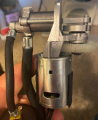
In the video he pulled the piston out of the cylinder, albeit by accident. When it was out you see a soft rubber cone shaped seal. When the piston pushes toward the cylinder head that piston seal expands and creates an even tighter seal. HOWEVER, when the piston pulls away from the head air can easily leak past that piston seal. If you've ever taken a bicycle pump apart you see a similar thing. As memory serves back in the days when dinosaurs and us kids roamed, that bicycle pump had a single valve at the bottom that consisted of a ballbearing and a spring. When you pulled the plunger UP air bypassed the piston seal and filled the pump chamber with air. When you pushed it down - that leather and grease seal would expand and prevent air from going anywhere except through the ball valve and out the hose. Using the method shown in the video is going to be nearly as useless as harnessing the energy of a house fly. Yeah, he got some vacuum, but probably not more than a centimeter of water for vacuum.Well alrighty then. Just do this. There done. With what is available this is about as good as it gets.
Ron
The thing about those tiny pumps is the fact that it uses thousands upon thousands of strokes to move small amounts of air. Yes, it will inflate a tire, but it takes several minutes to take a standard tire up to a useable pressure. But again, it's a "Pressure". Using it as a vacuum is highly impractical.