Keeley Compressor (guitar pedal) suffers from intermodulation - how to get rid of it? (schematic included)

Thread Starter

sonohe

Joined Jan 11, 2025
58
This is about the factory pedal, not a self made pedal. I have 5 pedals from different brands, 3 of them does the same, but I need the Keeley the most.

It suffers from terrible intermodulation. Becomes audible when you play intervals around frets 20-24. No matter what interval you play, you hear a 3rd phantom note appearing, sometimes being distorted. The note is always lower than the fundamentals of the interval.

Here is an example, I picked in a manner to exaggerate the problem:
https://drive.google.com/file/d/1NoETWBf0P1HNB3N2MVrtK6mJsYBq3wmI/view?usp=sharing

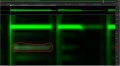
I hear the phantom note in the example as 540Hz. This was later confirmed in Spectralayers, it is there exatcly at 540Hz:
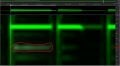
3rd note found.JPG

Beating outruled. f1 - f2 = fbeat I am fretting A#5 E6, That is 1318Hz - 932Hz = 386Hz.

Very likely intermodulation instead: 2f2-f1 = 1864-1318 = 546 Hz (540Hz in my case due to the intonation of the guitar).

Any advice where the intermodulation happens? Input gain is OK, measured, the intermodulation happens even if the input signal is as low as 5mv Vpp.

Was suggested to apply this solution:
"Two capacitors, almost always 100nF, in series from drain to ground and the junction connected to the FET's gate. That cancels even harmonic distortion to a great extent apparently."

I am not a pro so I have no idea where these are in the circuit. Can you help encircling it on the schematic? Where the capacitors should go. And also how the junction should be modified. Thank you!
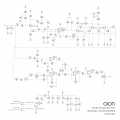
keeley-compressor-plus-trace-schematic.png
 

Thread Starter

sonohe

Joined Jan 11, 2025
58
I don't see any FETs in that circuit schematic.
Yeah. I am just a beginner so I have not verified it before, but I have just been notified as well that it uses bipolar transistors. But even so, do you have any idea which part causes the intermodulation? The transistors themselves?
 

MrChips

Joined Oct 2, 2009
34,626
Have you tried it straight through the amp without the pedal?
Does only happen above the 20th fret?
Does it happen on other strings, 6th, 5th, 4th strings?
 

Thread Starter

sonohe

Joined Jan 11, 2025
58
Have you tried it straight through the amp without the pedal?
Does only happen above the 20th fret?
Does it happen on other strings, 6th, 5th, 4th strings?
Actually all through the neck, but if you feed the compressor with the "normal" input amount, and you set the compressor to an average compression (35% for me mostly), then it is mostly noticeable around the locations mentioned. If you add more gain to the input (but still under the input limit Vpp) or add more compression, what happens is that the note start appearing on lower intervals as well, but as you move closer to the headstock, it sounds more and more like a noise. I guess this is because for those intervals, the phanotm note drops so low, that your ear cannot recognise it as a note. And, along with it, also for more compression or input gain, the note at the highest intervals starts distorting. But I do highlight it again: even if the input gain is below the input limit. So it is not a clipping problem on input. Anyway, if you feed the compressor with ultra low gain (tried with 5mV Vpp), it still happens. But you hear the 3rd note at the highest intervals, it is only silent. And the 3rd note changes interval to interval, of course. Every time a different note. But always the same note for the same intervals on different guitars. I tested a few guitars though, all humbuckers.

However this penomenon has a very interesting behavior, that I don't believe no instrument makers noticed so far. When you listen to the most problematic intervals, on some guitars, you can hear it from the guitar signal as well. Because so far I wrote about Guitar->compressor>usb interface (with heaphone) situations. But, on some guitar, like the Schecter Omen Extreme, that I have here now, you can hear the 3rd phantom note right from the guitar (guitar>interface>hedphone). But!!!! Believe it or not, it is not in the signal! Let me show it.

Be careful, set volumes low if you listen, this one is recorded loud!!!
https://drive.google.com/file/u/0/d/1j-5zVStqbwl7nT8r3RGoM5w86WmoQfIn/view

Listen, and loop the playback. Start raising the volume, and when I play the problem interval, if you raise the volume enough, the phantom note appears. You need to raise the volume quite much. Not sure you notice it because you need good ears, but you will hear that the clean and problem interval is different, the second one sounds distorted or somenthing like that.

I listened to that note from this video and identified it as 540Hz by ear.

And now the strangest stuff that I've ever seen: believe it or not, in spite of that the phantom note is audible from the guitar signal, it is not there!!!

I opened this test recording in Spectralayers, so this guitar->interface->headphone one, and I saw this:

Spectra no 3rd note.JPG

Az 540Hz, there is blackness, nothing is there. I thought: lest's delete the fundamentals and harmonics of the interval notes, maybe the harmonics of the phantom note will reveal at least. And guess what! After deleting only 1 fundamental, the phantom note disappeared!!! You couldn't hear it any more. If it was in the signal, that would not happen.

I recorded a signal from the compressor, because the phantom note is always very audible from the compressor signal. I expected it to be there now in the software. And Tadaaam!!! It was there, right at 540Hz as my ear caught it:

3rd note found.JPG

In this signal, if you delete one fundamental, the phantom note does not disappear. So that means it is in the signal indeed.

Since then I was doing some research on this, and after finding we may deal with intermodulation here, that appears in non linear systems, I think what's happening in this strange situation is that the phantom notes are not in the guitar signal. But your ear, as a non linear system can fool you and hear it. And some element in the circuit of the compressor also behaves similarly to the ear, and add it. But from that moment on it is imprinted in the signal indeed. Maybe that's why it's more audible.

But enough volume can reveal it from the guitar signal as well, as I described it. This is a problem for musicians as well. I can't believe noone noticed it. At least I haven't talked to anyone who noticed.

I have compressors thoguh that don't do this. The problem is: the Keeley is far more the smartest compressors available as pedal. So it would be nice to have it without this problem. This way it is unuseable. But I have 3 other brands that behave the same, add the phantom note.
 

MrChips

Joined Oct 2, 2009
34,626
I am a guitar player too but have never experienced this. You are into this much deeper than I would ever dare to go.
Note that a compressor circuit is exactly that, a non-linear system. Hence it is not surprising that you are encountering intermodulation distortion (IMD).

Why some compressors don't show this could be on account of the level of non-linearity.

How does the guitar volume setting affect the IMD? Does it go away if you turn down the volume?
 

Thread Starter

sonohe

Joined Jan 11, 2025
58
How does the guitar volume setting affect the IMD? Does it go away if you turn down the volume?


It doesn't affect at all.It is always there and always audible. What changes is how you hear the note at the problem locations on the fretboard, and where you hear it. If the input volume is low (I tried it at as low as 5mV), it is audible only at the problem frets (20-24). And it is easy to hear. The guitar sound is silent but you hear very well it is there. If you start turning up the input signal (but still under the tolerance limit of the compressor), the 3rd note starts becoming more and more distorted at the problem locations (frets 20-24), and starts becoming audible at higher frets as well (19,18,17, etc.) However there you hear it only as a noise or distortion, very likely because the frequency of this phantom note there is so low, that your ear cannot identify it in the multitude as a note, but as a noise. Or maybe at those locations the signal becomes more fractured to disturbing notes. This thing I still did not check.

Here is how it sounds from the compressor. I picked the strings in a manner to exaggerate the 3rd note:
https://drive.google.com/file/d/1NoETWBf0P1HNB3N2MVrtK6mJsYBq3wmI/view?usp=sharing

Listen these on good quality speaker or headphone because else you won't hear the phantom note. Like from laptop built in speakers. I can hear from them too because my ear got used to spotting it, but if you did not get used to it, you may just hear the note sounds bad or strange but nothing else.

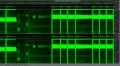
Here is it anyway on the graph:

Problem note.JPG

The other one below it is a beat, another acoustic phenomenon, but interestingly that one is not really noticeable. It is there in the guitar signal as well, but doesn't represent a problem.
 
Last edited:

Ian0

Joined Aug 7, 2020
13,097
Looking at the circuit, the most obvious point at which intermodulation could arise is at the LM13700. Its control current pin should have a DC current which changes only with the amount of gain required, and should not have any audio signal remaining on it. Have a good look at the voltage on the emitter of Q5 to make sure that there is no audio there.
 

Thread Starter

sonohe

Joined Jan 11, 2025
58
Looking at the circuit, the most obvious point at which intermodulation could arise is at the LM13700. Its control current pin should have a DC current which changes only with the amount of gain required, and should not have any audio signal remaining on it. Have a good look at the voltage on the emitter of Q5 to make sure that there is no audio there.
Thanks! I try to check it.

Meanwhile I did some more tests with another guitar. I don't know if it helps to identify the problem or not, but what revealed is that the 3rd note is not clean in every case. On this newly acquired humbucker gitar the 3rd not always appears distorted. If the volume pot is turned down to the minimum, I tried to listen carefully, but it sounds as if it would become a high pitch knock like effect. And as you turn the volume up, it goes into distortion.Interestingly, to me it sounds that besides the phantom note, the interval notes that you are fretting are clean. Or at least for me it sounds like that. Not sure but it sounds very much like that. Anyhow, the way the note appears depends on something, the way it sounds, but it is the same note for same intervals on different guitars, too. But in spite of the similarity, something seems to influence if the note is clean or distorted. So what happens is not only that the note is added to the signal.It's character is also influenced by something.OF course when I experience these, the Vpp of the signal is under the clipping limit at the compressor input. I took care of that, so the distortion is not because of clipping at the input.
 

Thread Starter

sonohe

Joined Jan 11, 2025
58
I have made a new test, this one turned out very good, because the problem is very audible.

The test shows how volume adjustments before the compressor influence the sound. The interesting is that if you turn down the volume on the guitar, the intermodulation seems to be gone (in reality not, it just becomes very silent). But in case you want to avoid loosing trebles by turning the volume pot down on the guitar either by a treble bleed mod on the guitar or with an active pad after the guitar, the intermodulation is quite audible again, in spite of that the gain has been reduced to 30% before the compressors.


https://drive.google.com/file/d/1LS4pbAPWhtpMml851ZptXGTjdr1qk0iX/view?usp=sharing
 

Ian0

Joined Aug 7, 2020
13,097
I have made a new test, this one turned out very good, because the problem is very audible.

The test shows how volume adjustments before the compressor influence the sound. The interesting is that if you turn down the volume on the guitar, the intermodulation seems to be gone (in reality not, it just becomes very silent). But in case you want to avoid loosing trebles by turning the volume pot down on the guitar either by a treble bleed mod on the guitar or with an active pad after the guitar, the intermodulation is quite audible again, in spite of that the gain has been reduced to 30% before the compressors.


https://drive.google.com/file/d/1LS4pbAPWhtpMml851ZptXGTjdr1qk0iX/view?usp=sharing
I can even hear that on my crappy laptop speakers.
Is the interval between the real note and the unwanted note consistent? It seemed as though the interval changed with the pitch of the note. Knowing the frequency relationship between the two might help find its origin.
 

Thread Starter

sonohe

Joined Jan 11, 2025
58
I can even hear that on my crappy laptop speakers.
Is the interval between the real note and the unwanted note consistent? It seemed as though the interval changed with the pitch of the note. Knowing the frequency relationship between the two might help find its origin.
Indeed this is the test that shows the most so far. I don't know why it is like that, but somehow when you want to record this problem, the problem becomes more difficult to catch in recorded materials. Maybe related to sampling, etc, I don't know, but when you are monitoring through the soundcard, it is much much easier to hear it. In the recording it diminishes a bit.

I don't know whether the interval between the fundamentals of the fretted note and the 3rd note is the same. I assume it is, but I will test it. On some intervals it is difficult to interpret it as a note, is sounds as if it was noise that seems to have a pitch, like percussion, sometimes sounds as a reverb. We'll see. What I listened to so far is that it changes interval to interval. So that is sure. We'll see what's up with the interval relations. I will get back with the news tomorrow the latest.
 

Thread Starter

sonohe

Joined Jan 11, 2025
58
Is the interval between the real note and the unwanted note consistent? It seemed as though the interval changed with the pitch of the note. Knowing the frequency relationship between the two might help find its origin.
I have done the tests, the result: YES, the relation between the interval notes and the added 3rd note is consistent. Actually they behave as if you were fretting a chord, and started moving it up or down the neck transponsing it. It very well audible. Here are the sound files (turn down the volume first, it may be loud!):

With the intervals:
https://drive.google.com/file/d/1isYCRkxFBSJRYffbiopdG-9kSHA6i4r6/view?usp=sharing

The 3rd note alone:
https://drive.google.com/file/d/1w0uA7pB-GFKlWYQv07WY4mj7dirX4CiL/view?usp=sharing
 

Ian0

Joined Aug 7, 2020
13,097
It is running on a PP3 or a power supply?
Thinking that if the 9V rail wasn't well enough decoupled then any ripple would get into the side chain, and modulate the output.
 

Thread Starter

sonohe

Joined Jan 11, 2025
58
It's running on a little more than 9V PSU that I took from a Digitech Multieffect. It is a heavy PSU, not the cheap light ones. Keeley once confirmed it in an email that I can use a 12V PSU as well for more headroom, but they wrote it does not affect the limit on the compressor side which will remain 1V no matter what PSU I use . 12V PSU did not make any change though in connection with the intermodulation. I took that from the Gurus Optivalve, that has a factory 12V PSU.
 

Ian0

Joined Aug 7, 2020
13,097
How can you verify that is the case?
I don’t know how feasible this would be, but you need a way to override the voltage on the emitter of Q5 with a very stable voltage.
i.e. The voltage from a battery that isn‘t used for anything else.
They you will know for certain where the signal is getting in. If it goes away when the control voltage is regulated, then that’s where it is getting in.
 

Thread Starter

sonohe

Joined Jan 11, 2025
58
I don’t know how feasible this would be, but you need a way to override the voltage on the emitter of Q5 with a very stable voltage.
Well, I understand now what you mean, but my knowledge is insuffucient to do it properly. I don't dare to do it myself, but I have a friend who can help. I will ask him, and if we tested it I will get back with the results.

However isn't there a demonstration on Youtube on how to do such a process? Meanwhile I could check it and maybe I could do that myself. Since I am struggling with the pedals I have learnt certain things about circuits, making them and measuring stuff so it's possible if I see the video I can do it on my own. I just want to verify how to do it properly because I don't want to ruin the pedal.
 
Top